Centaur Robotics Self-Balancing Off-Road Wheelchair
Ad: This page contains advertising/affiliate links. If you buy via these links, we may earn a commission at no extra cost to you.
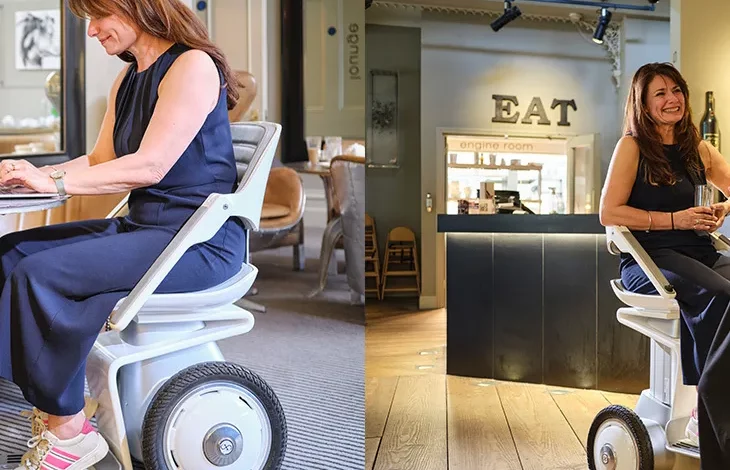
Is there a wheelchair that can go off-road? Can a wheelchair let you stand up? The Centaur self-balancing mobility system addresses both challenges. Using robotics, dynamic stabilisation, and a standing-height function, it aims to improve access to rough terrain such as grass and gravel while allowing users to interact at eye level. This guide explains its key features and what they mean in everyday life.
Start Here: Key Features
- Self-balancing two-wheel system – Greater stability on uneven terrain through real-time adjustment
- Standing-height capability – Eye-level interaction and improved reach
- All-terrain performance – Access to grass, gravel, slopes, and outdoor paths
- Compact size (470mm wide) – Fits through standard doorways for indoor use
- Portable design (75kg) – Dismantles into three parts for transport
- Robotics-based control – Continuous monitoring of centre of gravity and terrain
Is There a Wheelchair That Can Go Off-Road?
Many wheelchair users already know why this question exists. Outdoor concerts. Country paths. School fields. Gravel driveways. Even newly built public spaces often include decorative stone or uneven paving that becomes a barrier in practice.
Most powered wheelchairs are designed primarily for predictable surfaces. Indoors, they perform well. On smooth pavement, they’re reliable. But once the ground shifts, traction and balance can become limiting factors.
The Centaur system takes a different engineering approach. Instead of relying on four fixed wheels for stability, it uses a self-balancing two-wheel platform that constantly adjusts its position. Sensors monitor movement and terrain, helping the system remain upright and stable across uneven ground.
For someone going across grass or gravel, that can mean:
- Less jarring movement
- Improved balance on slopes
- More confidence on varied surfaces
It doesn’t remove the need for accessible design. But it may expand what is physically possible in the environments that already exist.
Is There a Wheelchair That Lets You Stand Up?
Another common question: can a wheelchair raise you to standing height?
Centaur includes a standing-height function that lifts the user while remaining fully supported. This isn’t about “correcting posture” or simulating walking. It’s about access.
Being at eye level changes everyday interactions:
- Speaking to colleagues face-to-face
- Ordering at a counter without craning upward
- Reaching shelves or higher surfaces
- Seeing over crowds or obstacles
Height affects social dynamics and physical access. A standing function can reduce some of those built-in disadvantages.
What Makes This a Self-Balancing Wheelchair?
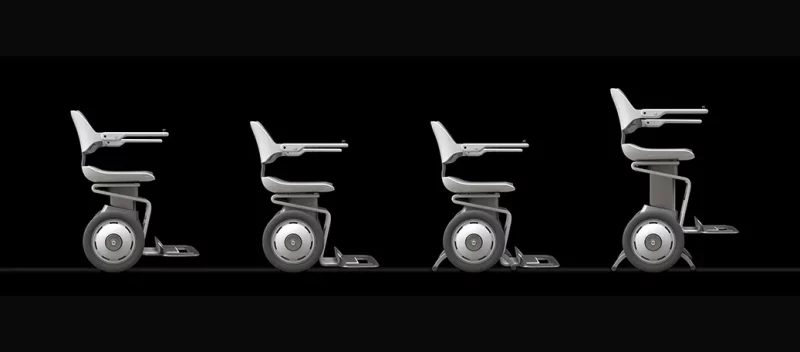
Traditional wheelchairs rely on wheel placement and suspension to stay stable. Centaur introduces robotics into the equation.
Its self-balancing technology:
- Continuously monitors centre of gravity
- Adjusts position in real time
- Responds to slope changes
- Helps maintain stability during movement
This active stabilisation is closer to robotics research than conventional wheelchair mechanics. For users, the benefit is not technical complexity. It’s smoother, more controlled movement across unpredictable terrain.
Can It Handle Gravel and Grass?
Grass and gravel are common public surfaces — and common obstacles.
Because the Centaur system actively balances rather than passively resting on four wheels, it is designed to manage:
- Uneven outdoor paths
- Loose gravel
- Grass fields
- Sloped ground
That matters for access to:
- Parks
- Festivals
- University campuses
- Rural environments
- Outdoor social spaces
Access to rough terrain isn’t a luxury. It’s part of everyday life.
What Is the Best Wheelchair for Uneven Ground?
There is no single “best” wheelchair for everyone. Mobility needs vary widely depending on environment, body, support requirements, and lifestyle.
What makes Centaur different is that it combines:
- All-terrain performance
- Standing-height capability
- Robotic self-balancing
Most mobility devices focus on one of these areas. This system attempts to address all three at once.
For wheelchair users who regularly encounter uneven surfaces and want vertical mobility as well, that combination may be worth exploring.
Clinical assessment and professional advice remain necessary before considering any advanced mobility system.
What to Measure and Ask
Before considering the Centaur system, these questions may help:
About Your Environment
- What surfaces do you encounter most often? (grass, gravel, carpet, tile)
- Do you need to fit through narrow doorways? (Centaur is 470mm wide)
- Will you transport it in a vehicle? (Dismantles into three parts, weighs ~75kg)
About Your Use
- Do you need standing-height function regularly?
- What activities would benefit from all-terrain access?
- Do you already use a powered wheelchair, or is this a first mobility device?
About Support
- Where is the nearest trial or demonstration available?
- What warranty and support does Centaur Robotics offer?
- Are spare parts readily available in your region?
About Funding
- Does your local health service or insurance cover advanced mobility systems?
- Is the Founder’s Edition still available, or is there a waiting list?
- What is the total cost including delivery and setup?
Frequently Asked Questions
How wide is the Centaur?
470mm, which fits through standard UK doorways.
How much does it weigh?
Approximately 75kg. It dismantles into three parts for easier transport.
Is it suitable for indoor use?
Yes. The compact size and manoeuvrability are designed for both indoor and outdoor environments.
Can it be transported in a car?
Yes, if dismantled. Check boot dimensions and lifting capacity.
What surfaces can it handle?
Grass, gravel, slopes, uneven paving, and standard indoor floors.
Do I need training to use it?
Centaur Robotics provides guidance on operation. The self-balancing technology is designed to be intuitive, but individual familiarity varies.
Is it available now?
The Founder’s Edition is mentioned on the Centaur Robotics site. Contact them directly for availability and delivery timelines.
Where can I try it?
Ad – Visit Centaur Robotics for demonstration or trial information.
How Can Wheelchair Users Access Rough Terrain?
The Social Model of Disability reminds us that rough terrain becomes disabling because environments are not designed inclusively. Long-term, public infrastructure must improve.
At the same time, mobility innovation can provide immediate practical gains. A system designed to handle uneven ground offers greater independence in spaces that are currently imperfect.
The growth of robotics in mobility equipment reflects a shift toward engineering solutions that respond to real-world barriers — not idealised environments.
The Bigger Picture: Engineering and Accessibility
Centaur Robotics approaches mobility as a robotics challenge rather than a simple equipment update. That perspective leads to features such as dynamic balancing and standing height integration.
For wheelchair users asking:
- Is there an off-road wheelchair?
- Is there a wheelchair that lets you stand up?
- Is there a self-balancing wheelchair?
The answer is yes. And it is emerging from advanced mobility engineering.
The wider responsibility still lies with society to design spaces that do not exclude people in the first place. But innovation can play a meaningful role in reducing the impact of those barriers today.
Related Guides
Last updated: 2026-02-17
Where to find out more:
Ad – View Centaur Robotics – This product is sold by Centaur Robotics. Disability Horizons does not sell, dispatch, or provide warranty for this product.