How Pharmacy Technology Supports Safer, More Accessible Care

Pharmacies play a central role in how disabled people and older people experience healthcare. This article explains how modern pharmacy management systems help reduce risk, improve communication and remove practical barriers, using PrimeRx as an example of technology designed for professional pharmacy settings. While these systems operate behind the scenes, their impact on safety, access and continuity of care is felt every day by people managing long-term conditions and complex medication routines.
For more information about advanced pharmacy management software solutions, you can
explore PrimeRx pharmacy management software, which offers a comprehensive suite of tools
designed to streamline pharmacy operations, improve patient care, and ensure compliance with
industry standards.

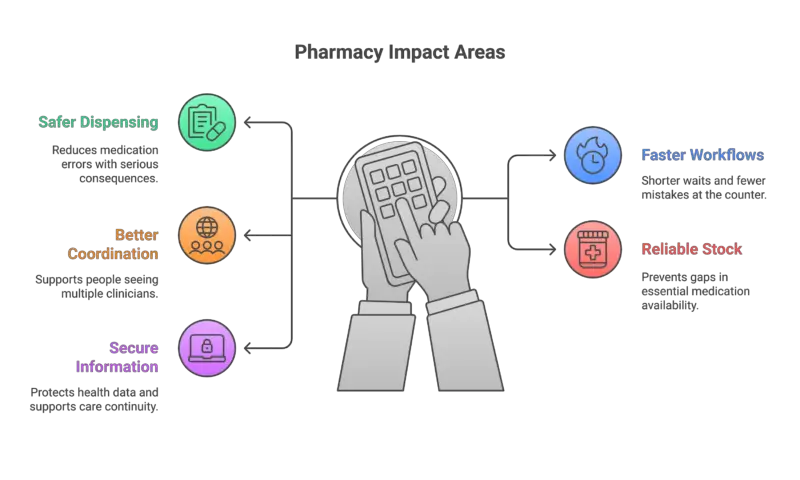
Key takeaways
| Area of impact | Why it matters |
|---|---|
| Safer dispensing and checks | Reduces avoidable medication errors that can have serious consequences |
| Faster, clearer workflows | Shorter waits and fewer mistakes at the counter |
| Better coordination with prescribers | Supports people who see multiple clinicians |
| Reliable stock management | Prevents gaps in essential medication |
| Secure handling of information | Protects sensitive health data while supporting continuity of care |
The role pharmacies play in accessible healthcare
For many disabled people and older people, the pharmacy is one of the most frequent points of contact with healthcare services. Managing repeat prescriptions, changes in dosage or medicines prescribed by different clinicians can quickly become complicated when systems are slow, fragmented or manual.
Pharmacy management software is designed to reduce these barriers. By supporting accuracy, communication and consistency, it allows pharmacy teams to focus on people rather than paperwork. PrimeRx is one example of a professional pharmacy system built to support this kind of safer, more responsive service.
Reducing errors at the dispensing stage
Medication errors are rarely the result of one person making a mistake. They are more often linked to overloaded systems, unclear records or gaps between prescribers and dispensers.
PrimeRx supports pharmacists by automatically checking for potential interactions, unusual dosage changes and duplicate therapies. These checks sit within everyday workflows, helping staff spot issues early rather than relying on memory or manual cross-checking.
For people who take several medicines each day, this layer of oversight can make a meaningful difference to safety and confidence.
Shorter waits and clearer handovers
Long queues, rushed conversations and unclear instructions create barriers, particularly for people who process information differently or need more time at the counter.
By streamlining prescription processing and refill tracking, PrimeRx helps pharmacies work more efficiently without cutting corners. Staff can see the status of prescriptions at a glance, prepare ahead for repeat items and reduce avoidable delays.
This leads to calmer interactions, clearer explanations and fewer situations where someone has to return later because something was missed.
Supporting people who take multiple medicines
Many pharmacy users manage prescriptions from several clinicians. Without joined-up systems, this increases the risk of conflicting information or missed updates.
PrimeRx allows pharmacies to maintain a clear, up-to-date view of a person’s medication history. When something changes, pharmacists can quickly check what else someone is taking and contact prescribers directly if clarification is needed.
This kind of coordination supports safer care for people with long-term conditions, fluctuating health needs or complex treatment plans.
Preventing gaps in essential medication
Running out of medication is not a minor inconvenience for many people. Missed doses can lead to deterioration in health, hospital admissions or increased support needs.
PrimeRx provides real-time stock visibility, alerting pharmacy teams when supplies are running low and supporting timely reordering. This helps pharmacies maintain continuity, even during busy periods or supply pressures.
For pharmacy users, it reduces the risk of being told a medicine is unavailable when it is urgently needed.
Clearer handling of insurance and payments
Administrative systems can create barriers just as easily as physical ones. Confusing claims processes or delayed approvals often mean people leave without medication or face unexpected costs.
PrimeRx supports automated claims submission, benefit checks and status tracking. By reducing manual processing, pharmacies can resolve issues more quickly and explain next steps clearly.
This is particularly important for people who already face financial pressure or rely on predictable access to treatment.
Secure information, shared responsibly
Trust matters in healthcare. Pharmacy users need to know their personal and medical information is handled carefully and shared only when appropriate.
PrimeRx stores records securely and supports compliance with healthcare data standards. At the same time, it enables authorised sharing with prescribers when questions arise, supporting continuity without unnecessary repetition.
The result is safer information handling without creating new barriers to care.
Technology that supports better pharmacy care
Pharmacy management systems are not visible to most people, but they shape everyday experiences in important ways. When software supports accuracy, communication and consistency, pharmacies are better placed to meet the needs of disabled people and those managing long-term conditions.
PrimeRx is designed as a professional tool to support this work. By improving workflows behind the counter, it helps pharmacies provide safer, more accessible and more reliable care where it matters most.
This article is part of our professional health technology resources and was written in collaboration with PrimeRx.