Important: This article applies specifically to the United States Social Security disability benefits system (SSI and SSDI). If you are in the UK or another country, different rules and procedures will apply to your disability benefits claims. UK readers should refer to information about Personal Independence Payment (PIP), Universal Credit (UC), or Employment and Support Allowance (ESA) instead.
Key Terms:
- SSI (Supplemental Security Income) – A U.S. federal program providing monthly payments to people with disabilities who have limited income and resources
- SSDI (Social Security Disability Insurance) – A U.S. federal insurance program providing monthly benefits to people who have worked and paid Social Security taxes but can no longer work due to disability
- SSA (Social Security Administration) – The U.S. federal agency that administers Social Security programs including disability benefits
Trying to complete an application for Supplemental Security Income (SSI) or Social Security Disability Insurance (SSDI) can take a lot of time and effort, especially when you’re already managing a disability.
The process requires a lot of detailed information, good medical proof, and strict adherence to deadlines, all at a time when everything just feels way out of reach due to your health issues. Administrative errors along the way can mean a claim denial, which can put a halt to everything for months, possibly even years, and end up costing you thousands of dollars through lost back-pay benefits. The amount you could lose depends on your potential award and how long your claim is delayed. Here are a couple of mistakes to avoid.
Filing Without Complete Medical Evidence
One reason claims are often denied is when people submit healthcare documentation that’s either incomplete or disorganized. The Social Security Administration (SSA) doesn’t simply rely on what you feel or believe about your disability but they ask for detailed documentation confirming your impairment and how it prevents you from working. Many claimants report learning the hard way that they need to prove their disability on paper, in detail, regardless of how obviously sick they feel.
To prevent this, you must:
- Gather your medical documentation before you make your first claim.
- Get records from healthcare providers you have visited in the last five years.
- Arrange documents including treatment notes, tests, imaging reports, and specialists’ opinions.
- Ask your family physician to write a statement on how your impairment affects your ability to manage daily activities, including your ability to work.
- Tell your doctors you are applying. Many claimants say this changed how their appointments were documented – with more emphasis on work limits and daily functioning, rather than just diagnoses.
This is also the point when many people discover that having an attorney can significantly affect the outcome of their case. Importantly, you don’t have to pay your disability lawyer up front. In fact, disability lawyers typically cost around 25% of your past-due (back-pay) benefits, usually capped at $9,200. The SSA must approve the fee agreement. If you have little or no back-pay awarded, the lawyer’s fee will be lower, even if you receive ongoing monthly benefits. Using their help makes sense because they understand what kind of medical information and documentation the SSA requires. They can also help identify any possible gaps in documentation and help you fix everything before submitting your application.
Missing Deadlines and Failing to Appeal Denials
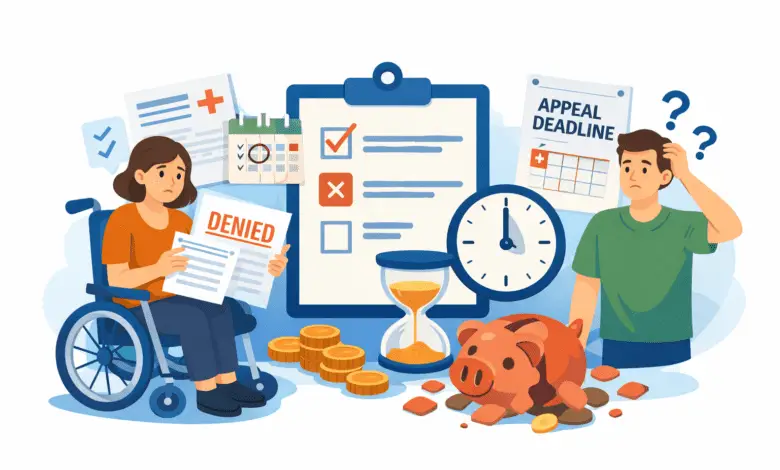
The process of filing for Social Security disability benefits can become tricky considering you have to follow strict deadlines, and if you don’t meet one of them, it can cost you in a big way. You have 60 days to appeal the denial if your initial claim for benefits isn’t approved. Wait a day past that, and you have to begin the process all over again or try to “reopen” your claim under limited circumstances, which means losing all the hard work you put in so far and potentially losing months or years of back-pay. People sharing their experiences online report losing a year or more of back-pay after missing the 60-day window by just days.
Many disabled people aren’t clearly informed about deadlines, or the information gets lost amid confusing instructions, medical jargon, and health crises. The SSA doesn’t have any way to remind you about deadlines. You’re given a denial letter, but the deadline can easily get lost in the shuffle.
One way to avoid this is to put together a system that helps you track your deadlines. Write down the appeal deadline as soon as you receive the letter saying your claim has been denied. Set reminders on your phone, or enlist the help of a family member or close friend to help you remember all the dates. In the event you have problems remembering the deadlines because you have a disability, check with your physician to see whether they can assist you with the deadline reminders through their offices.
Practical tips from claimants:
- Write the deadline on the envelope, the letter, your calendar, and your phone immediately
- Set multiple reminders using phone alarms, shared calendars with family, and sticky notes in visible places
- Appeal rather than re-apply – experienced claimants and lawyers usually advise appealing denials instead of repeatedly filing new applications, because appeals can preserve your earlier onset date and back-pay
Why Early Support Can Prevent Delays
For many people, disability benefits are the main way to cover rent, food, or medical costs. Administrative errors can result in benefits being denied and delay access to this essential financial support.
Tracking Your Symptoms and Daily Limits
A lot of people struggle to describe their “worst days” or overall limitations when filling out forms or attending assessments. This can lead to answers that sound more capable than reality. Many disabled people report that keeping a pain or symptom diary was the only way they could accurately remember what “normal” looked like for them, and it gave their lawyers and doctors something concrete to work with.
Practical tools that work:
- Keep a daily log for at least a few weeks, noting pain/fatigue levels, sleep, flares, what you did that day, and what it cost you afterwards
- Use concrete times and distances like “can stand 5 minutes,” “can walk 50 metres,” “needs to lie down 3 times a day,” instead of vague phrases like “it’s hard”
- Bring the diary to appointments – this helps doctors write better evidence and helps you answer assessment questions consistently
Getting Help Early
Many claimants only seek help after a denial, when problems could have been fixed much earlier. Disability lawyers often hear from clients who wish they’d sought help before submitting their first application.
Whether you turn to trusted friends, family, or a professional lawyer, just be sure to seek help early to avoid thousands of dollars in lost benefits due to denials or delays. If you cannot or do not want to use a lawyer, some non-profit organisations and legal aid clinics offer free or low-cost help with forms and appeals.

