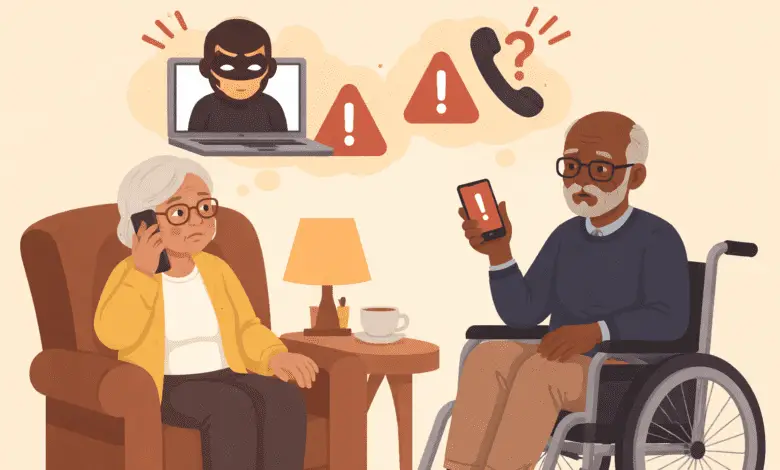
Disabled seniors are increasingly targeted by phone and online scams, not because they are careless, but because everyday systems place them at greater risk. As healthcare, banking, and public services move online, disabled older people are often required to share more personal information just to live independently. This article explains why scammers focus on disabled seniors, how publicly available data fuels phone scams, and what practical steps people in the UK and US can take to reduce exposure without limiting autonomy.
Key Takeaways for Reducing Scam Calls
| Issue | What’s Really Happening |
|---|---|
| Why disabled seniors are targeted | Scammers exploit reliance on remote services and trusted systems |
| Role of public data | Phone numbers and addresses are traded and reused without consent |
| Why blocking calls isn’t enough | Scams start with data availability, not the call itself |
| What actually helps | Reducing how searchable your details are online |
| Goal | Fewer scam attempts without adding digital burden |
Why Disabled Seniors Are Targeted
Phone and online scams aimed at older people are rising fast, and disabled seniors are hit hardest. This is not about poor judgement or lack of awareness. It is about how society is set up.
Many disabled seniors rely on phone-based or online systems for healthcare appointments, prescription deliveries, banking, benefits, and accessible transport. These services are meant to support independence, yet they also create more points where personal details must be shared.
Sensory, cognitive, and physical impairments can make it harder to spot subtle warning signs in a rushed phone call or message. Hearing loss may affect how tone or urgency is picked up. Memory or processing differences can make unexpected requests feel overwhelming. Limited mobility can increase reliance on deliveries and remote support, which scammers often copy.
Scammers know this. They design calls to sound familiar, helpful, and time-sensitive, because that mirrors how real services now communicate.
Why Scams Hit Disabled Seniors Harder
Scams work best when they feel believable. For disabled seniors, that believability often comes from imitation of trusted roles. Scammers regularly pose as:
- healthcare coordinators
- benefits or pension staff
- accessibility or equipment providers
- banks or delivery companies
A call about a missed appointment, a delayed benefit payment, or a replacement mobility aid can sound entirely plausible when those situations are already part of daily life.
One disabled older person described receiving a call from someone claiming to “update accessibility records” linked to a real clinic they attended. The caller knew their name, postcode, and that they used mobility equipment. None of that information was private. It had simply been gathered elsewhere.
This isn’t new. Back in 2011, the UK’s Office of Fair Trading warned that rogue companies were targeting older and disabled people with high-pressure sales of mobility aids in their own homes, sometimes charging thousands of pounds for poor-quality or unnecessary equipment. In one case reported by the BBC, an older woman was left significantly out of pocket after being misled into buying an expensive mobility product she didn’t need. You can read more about that investigation in the BBC’s coverage here.
Today, the tactics have simply moved online and onto phones, but the exploitation of trust remains the same.
Once trust is established, pressure follows. That pressure is what turns a convincing call into a costly one.
How Public Data Fuels Phone Scams
Most phone scams no longer start with hacking. They start with information that is already out there.
Data brokers collect and trade details from voter records, marketing lists, loyalty schemes, online forms, and public directories. Phone numbers, past addresses, and family links are bundled and sold on. For scammers, this means they can open a call sounding informed within seconds.
Using your name or referencing a real service creates instant credibility. For seniors, especially those used to formal phone contact from services, that familiarity can lower suspicion.
Once data appears online, it rarely stays in one place. It is copied, resold, and reused, leading to repeated scam calls and messages over time.
Phone Privacy and Reducing Exposure
Being cautious on calls helps, but it does not solve the root problem. If your phone number and personal details are easy to find, scams will keep coming.
The most effective step is reducing how searchable your information is in the first place. When phone numbers cannot be easily linked to names and addresses, scammers struggle to build convincing stories. This is where privacy-focused actions matter more than constant call blocking.
Some people choose to handle this manually. Others look for automated help, especially when digital admin is tiring or inaccessible. Resources that explain how to make your number private can be a useful starting point, particularly for seniors who want to stay connected without being constantly interrupted.
If You’re in the UK: Reduce Scam Exposure Without Losing Independence
For disabled seniors in the UK, several steps can reduce risk without cutting off services.
Registering your number with the Telephone Preference Service limits legal marketing calls, which reduces how widely numbers are shared. Phone providers also offer call-blocking features or standalone devices that screen calls before they reach you, which can be helpful for people with memory or processing differences.
It is also worth searching your own name and number online. Clubs, local directories, or old listings sometimes display phone details without consent. Many sites will remove this information if asked.
Privacy settings on social media and messaging apps should be checked so phone numbers are not visible publicly.
Scams can be reported to Action Fraud, and support is available through organisations such as Age UK and disability-led groups that understand access barriers.
If You’re in the US: Tackling Data Brokers and Nuisance Calls
In the US, phone scams are closely linked to data broker websites. Searching for your name and number often reveals listings that can be removed using opt-out forms. Some states give legal rights to request data deletion, which can reduce future contact.
Adding your number to the National Do Not Call Registry helps cut down legitimate telemarketing, which in turn limits data sharing. Mobile carriers offer spam filtering tools, though managing them can be difficult for some seniors.
For this reason, automated data removal services such as Incogni are sometimes used to handle opt-outs across many databases at once, with support from a trusted family member or caregiver.
Why Awareness Alone Is Not Enough
Many disabled seniors already know scams exist. They still receive frequent calls. That is because the issue is structural. Personal data is collected, traded, and reused with very little oversight.
Asking individuals to stay alert at all times places the burden on those already navigating complex systems. Reducing how much data is available online lowers the number of scam attempts before they even begin.
5 Things You Can Do This Week to Cut Scam Risk

For UK Residents:
- Register your phone number with the Telephone Preference Service
- Search your name and phone number online and request removal from any public directories
- Check privacy settings on social media so your phone number isn’t visible publicly
- Ask your phone provider about call-blocking features or devices
- Report any scams to Action Fraud
For US Residents:
- Add your number to the National Do Not Call Registry
- Search people-finder sites for your information and use their opt-out forms
- Enable spam call filtering through your mobile carrier
- Review your state’s data privacy laws (especially if you’re in California, Virginia, or Colorado)
- Consider using an automated data removal service to handle ongoing opt-outs
Building a Safer Digital Environment for Aging With Disability
Protecting disabled seniors does not mean limiting access or creating fear. It means designing systems that respect autonomy while reducing unnecessary exposure. Clearer privacy controls, stronger rules around data brokers, and accessible tools that do not require constant management all matter.
Families, carers, and advocacy groups can support privacy-first choices by helping set protections up early. Scam prevention works best when it happens quietly in the background, allowing disabled seniors to use phones and online services with confidence rather than caution.

