How Do You Manage Chronic Pain Without Surgery?
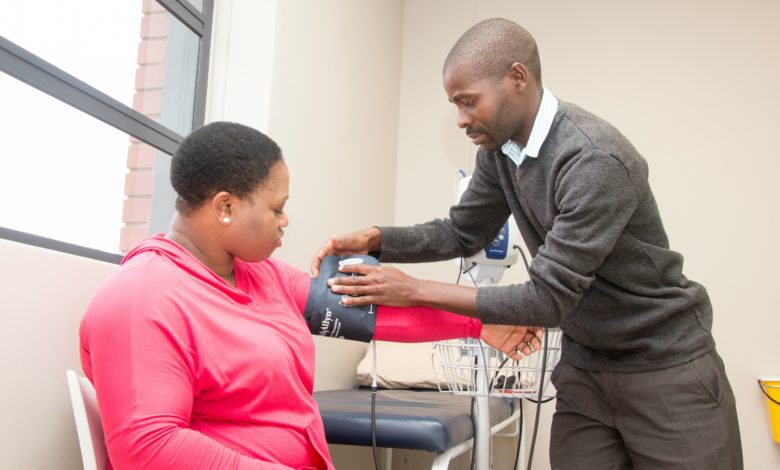
Living with chronic pain shapes how you plan every day. Simple tasks can take more energy when your body sets the pace, and many disabled people carry pain that never fully goes away.
You’re not alone in this. Chronic pain — defined by the NHS as pain lasting longer than three months — affects an estimated 26% of UK adults, according to the Health Survey for England 2024, with 13% living with “high impact” chronic pain severe enough to limit daily activities. Around 8 million UK adults experience pain that is moderate to severely disabling.
Photo by Hush Naidoo Jade Photography on Unsplash
The good news is that surgery is rarely the first step. Most ongoing pain responds to gentler, non-surgical care when you start early. Getting an assessment from a Closter NJ pain management doctor can help you find options that fit your body. Knowing what to try, and when to ask for help, makes a real difference.
This guide also sets out what current UK clinical guidelines recommend, what to expect from the NHS pathway, and practical ways to stay active and manage pain day to day.
What Does Living With Chronic Pain Really Mean?
Chronic pain is discomfort that stays for a long time. The NHS and NICE define it as pain lasting longer than three months, or beyond the point where an injury should have healed.
It can show up most days or every day. Some people feel it for weeks, while others live with it for years. Musculoskeletal conditions — especially back and neck pain — account for the largest share of chronic pain cases, alongside arthritis, nerve damage, and past injuries.
Acute pain works differently. It warns you of harm and usually fades within days as tissue heals. Chronic pain can outlast that healing and continue long after the original injury is gone. Doctors sometimes distinguish chronic primary pain (pain with no clear identifiable cause, such as fibromyalgia) from chronic secondary pain (pain linked to an underlying, identifiable condition like arthritis) — and this distinction matters, because NICE recommends different treatment approaches for each.
Pain that lingers affects more than your body. It’s strongly linked to depression and anxiety, disturbs sleep, and drains energy for everyday tasks. Naming the problem — and understanding which type of chronic pain you’re dealing with — helps you and your GP plan around it rather than pushing through in silence.
What Do UK Clinical Guidelines Actually Recommend?
This is where a lot of general advice online falls short, because UK guidance is more specific — and sometimes more surprising — than “try heat, ice, and gentle exercise.”
NICE guideline NG193 covers chronic primary pain in adults and was informed by newly updated Scottish guidance, SIGN 173, published in December 2025. Together they set out a clear menu of what’s recommended and what isn’t.
Recommended:
- Supervised group exercise programmes — NICE found no single type of exercise works better than another, so choice can be based on personal preference and ability.
- Psychological therapies — Cognitive behavioural therapy (CBT) or acceptance and commitment therapy (ACT), delivered by a trained professional, are recommended for managing the impact of pain on quality of life.
- A single course of acupuncture — up to five sessions, delivered in the community — is recommended specifically for chronic primary pain, based on evidence of short-term (up to three months) improvement. NICE found no evidence to support repeat courses.
- Staying physically active generally, for long-term health benefits beyond pain itself.
Not recommended for chronic primary pain, due to lack of evidence of benefit:
- TENS machines, ultrasound, and interferential therapy.
- Paracetamol, NSAIDs, opioids, benzodiazepines, antiepileptics (including gabapentinoids), and antipsychotics as first-line treatment.
- Biofeedback.
This matters for disabled readers specifically: many people are prescribed or self-manage with over-the-counter painkillers or TENS units for years without knowing that current NICE guidance advises against these for chronic primary pain, in favour of exercise, talking therapies, and short-course acupuncture instead. If your current pain plan relies heavily on medication and hasn’t included a discussion of CBT, ACT, or supervised exercise, it’s worth raising this with your GP.
Note that these specific “do not offer” recommendations apply to chronic primary pain. If your pain has an identified underlying cause (chronic secondary pain, such as from osteoarthritis or nerve damage), your treatment plan may reasonably include medication and other interventions — this is a conversation to have with your specialist, not a reason to stop treatment on your own.
What Non-Surgical Treatments Exist Beyond First-Line Care?
Alongside the NICE-recommended options above, several other non-surgical approaches are commonly used, particularly for chronic secondary pain or when first-line options haven’t helped enough:
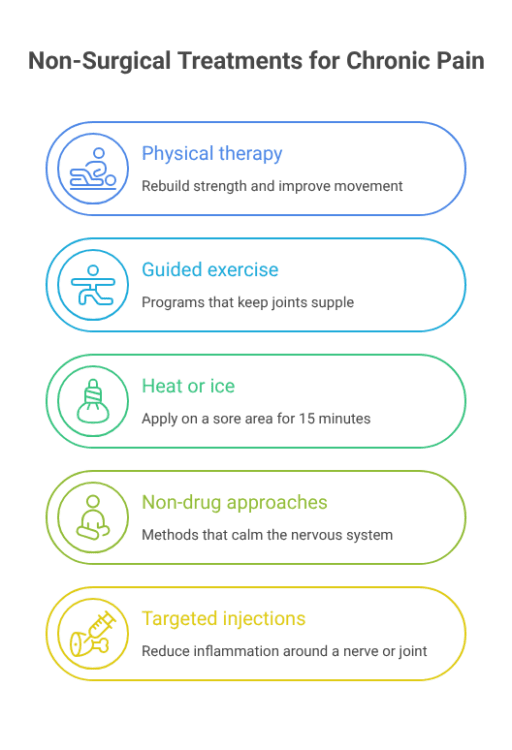
- Physical therapy to rebuild strength and improve movement, tailored by a physiotherapist to your specific condition.
- Guided exercise programmes, ideally supervised, that keep joints supple without overexertion.
- Comprehensive pain management programmes — SIGN 173 recommends considering these following full assessment, combining several approaches at once rather than relying on a single treatment.
- Mindfulness-based stress reduction (MBSR), which SIGN 173 now recommends considering for people who prefer a mindfulness-based approach to pain.
- Peer support interventions, which SIGN guidance specifically recommends as part of holistic care for chronic musculoskeletal pain — see the Versus Arthritis courses below for a free UK option.
- Targeted injections (such as epidural steroid injections or nerve blocks) for pain linked to an identifiable structural cause, discussed further below.
Try one change at a time so a new habit actually sticks, and talk to your GP before starting anything new if you’re on existing medication. Progress beats perfection here.
How Does Interventional Pain Management Work?
Interventional pain management uses small, minimally invasive procedures to treat pain at its source, most relevant for chronic secondary pain with an identified cause. A specialist targets the exact nerve or joint causing trouble.
Common procedures include epidural steroid injections, nerve blocks, and radiofrequency treatments, each aiming to interrupt pain signals without major surgery. Most take place in an outpatient clinic, with same-day recovery and a single visit often taking less than 30 minutes.
These procedures suit people whose pain hasn’t eased with first-line care, or who want to avoid or delay surgery. They’re typically one part of a wider plan, often paired with therapy and daily self-management habits — many people combine two or three approaches at once rather than relying on any single treatment.
What Should You Expect From the NHS Pain Pathway?
This is often the missing piece in generic pain articles, and it’s one of the most practically important things for UK readers to understand before they start treatment planning.
The standard NHS route runs: GP assessment, referral to a specialist (pain management, rheumatology, orthopaedics, or neurology), a wait for a first appointment, diagnostics, then a treatment plan. NHS England’s target is to see 92% of referred patients within 18 weeks. Current projections suggest the system is falling well short of that for pain-related specialities:
| NHS speciality | Target wait | Projected % seen within target | Average wait if target missed |
|---|---|---|---|
| Pain management | 18 weeks | ~65% | ~26 weeks |
| Rheumatology | 18 weeks | ~71% | ~24 weeks |
| Orthopaedics | 18 weeks | ~62% | 35+ weeks |
| Neurology | 18 weeks | ~68% | ~28 weeks |
Source: projections based on NHS England Consultant-led Referral to Treatment (RTT) data.
In practice, this means over a third of people referred for pain management can expect to wait around six months just for a first specialist appointment. This is exactly why self-management — pacing, exercise, and psychological support — matters so much in the interim, and why it’s worth asking your GP about local NHS pain management programmes or free charity-run courses (below) while you wait.
What Daily Habits Help You Stay Active and Pace Yourself?
Staying active is part of treatment, not a risk. Gentle, regular movement keeps muscles strong enough to protect sore joints, and NICE explicitly recommends encouraging general physical activity alongside any specific exercise programme.
- Break big tasks into smaller steps and rest between them.
- Try pacing yourself to avoid a boom-and-bust cycle — set your activity baseline below your comfortable limit and build up gradually, rather than stopping only once symptoms appear.
- Aim for regular low-impact activity, like walking or swimming, on most days, building up gradually rather than pushing to a fixed target immediately.
- Use supportive aids, such as a pressure-relief cushion or grab rail, to reduce daily strain.
- Keep a simple pain and activity log so patterns and triggers become clear over time.
- Consider a free Versus Arthritis self-management course (Living Well with Pain, or similar) — these run in person and online across the UK, are led by trained volunteers who often live with long-term pain themselves, and cover pacing, goal-setting, and communicating with health professionals.
Consistency beats intensity every time. Rest days are part of the plan too, not a setback.
How Can You Sleep Better When Pain Keeps You Awake?
Poor sleep and pain feed each other in both directions — chronic pain disrupts sleep, and poor sleep intensifies pain sensitivity.
Small changes help. A steady bedtime, a supportive mattress, and a cool, dark room all matter. Some people find better sleep with a calm wind-down routine.
Talk to a clinician if pain wakes you most nights — there may be a treatable cause behind the broken sleep, and addressing sleep is now recognised as part of a comprehensive chronic pain plan rather than a separate issue.
When Should You See a Pain Specialist?
Most flares settle with time and gentle self-management. A few signs mean you shouldn’t wait to get help.
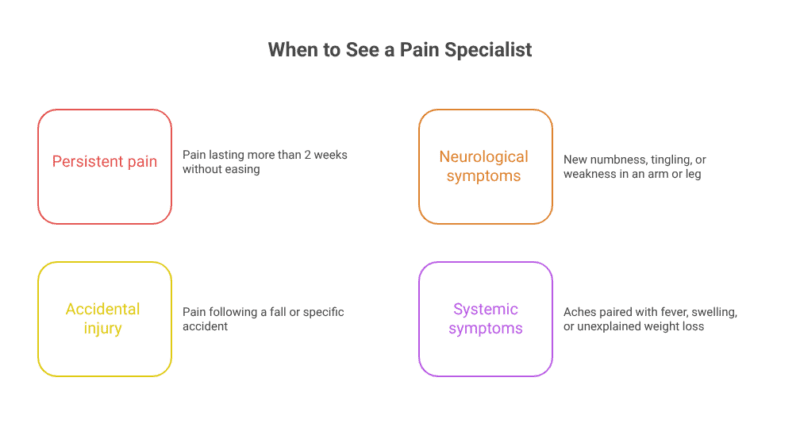
- Pain that lasts more than two weeks without easing.
- New numbness, tingling, or weakness in an arm or leg.
- Pain that follows a fall or a specific accident.
- Aches paired with fever, swelling, or unexplained weight loss.
Given the NHS waiting times outlined above, a prompt GP referral matters more than ever — the sooner you’re on a waiting list, the sooner you’re seen, even if the wait itself feels long. Ask your GP specifically about referral to a multidisciplinary pain team where available; NICE and SIGN both favour this whole-person approach, combining medical, physiotherapy, and psychological support rather than a single specialist working in isolation.
Bring a short list to your appointment: when the pain started, what makes it worse, and which treatments you’ve already tried. Clear details help the specialist build a plan faster.
Where to Find Free UK Support
- Arthritis UK — free self-management courses (in person and online) and a helpline
- Pain Concern — UK charity offering information, a helpline, and a peer support forum: painconcern.org.uk
- NHS Inform (Scotland) — chronic pain self-management resources: nhsinform.scot
What’s Worth Remembering
- Chronic pain lasts longer than three months and affects around 1 in 4 UK adults.
- Current NICE and SIGN guidance recommends exercise, psychological therapy (CBT/ACT), and a single course of acupuncture for chronic primary pain — and specifically advises against TENS, paracetamol, and several other common medications for this type of pain.
- NHS pain management waits average around 26 weeks once the 18-week target is missed, making self-management and peer support especially valuable while you wait.
- Interventional procedures can target pain at its source without major surgery, particularly for chronic secondary pain with an identified cause.
- Gentle movement and pacing protect your body better than full rest.
- See a specialist for pain past two weeks, numbness, or pain that follows an injury.
Living Well While Managing Pain
Managing chronic pain is mostly about acting early, understanding what UK guidelines actually recommend, and staying consistent. Learn your triggers, try evidence-based non-surgical options first, and don’t wait to start a GP conversation given current NHS waiting times. A short talk with a specialist now, informed by what NICE and SIGN actually say, can spare you months of avoidable struggle later.
Frequently Asked Questions
What is the difference between acute and chronic pain?
Acute pain is short-term and usually fades as an injury heals. Chronic pain lasts longer than three months and can continue even after the original cause is gone.
Can chronic pain be treated without surgery?
Yes, and non-surgical care is the recommended first step in UK clinical guidance. For chronic primary pain specifically, NICE recommends exercise, psychological therapy, and a short course of acupuncture over medication. Surgery and stronger interventions are considered only when other options haven’t worked.
Does NICE recommend TENS machines or painkillers for chronic pain?
For chronic primary pain, no — NICE guideline NG193 specifically advises against TENS, ultrasound, paracetamol, NSAIDs, opioids, and several other medications due to lack of evidence of benefit. This doesn’t apply to all types of pain, so speak to your GP about what’s appropriate for your specific diagnosis.
Is it safe to exercise with chronic pain?
Usually yes, and NICE specifically recommends supervised group exercise and general physical activity for chronic primary pain. Low-impact activity like walking or swimming keeps joints supple. Stop and seek advice if a movement sharply worsens the pain.
How long is the NHS wait for a pain specialist in the UK?
Current projections suggest around 65% of people referred to pain management are seen within the 18-week NHS target, with those who miss it waiting an average of around 26 weeks. Ask your GP about self-management courses and peer support options while you wait.
When should I see a pain specialist?
Book a visit if pain lasts more than two weeks or wakes you at night. Sudden numbness, weakness, or pain after a fall needs prompt attention. Early referral matters given current NHS waiting times.