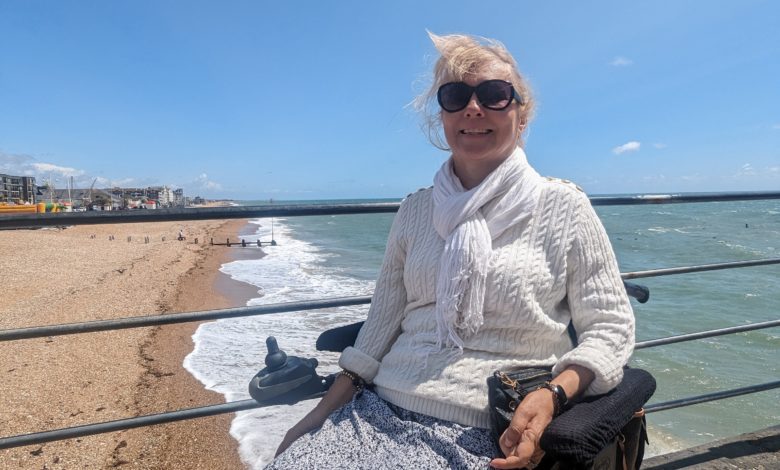
A standard hotel room is designed for a suitcase and a good night’s sleep. That setup can start working against you pretty quickly when you’re also travelling with a power wheelchair, portable hoist or other equipment. Floor space disappears, plug sockets end up in the wrong places, and housekeeping schedules can interrupt a slower morning routine.
Hotels market accessibility well, and plenty deliver on those promises too. But we’ve learned from experience that the word “accessible” doesn’t always tell you enough.
On one hotel stay, we’d been told the accommodation was fully accessible, only to arrive and find a large step at the entrance. When we queried it, we were told that once we’d got over the first step, everything else was accessible. We hadn’t brought our ramps, so we ended up improvising with cushions to get the wheelchair inside — not something we’d want to repeat.
Experiences like that are why we now keep two small portable ramps in the car when we’re travelling. More importantly, it taught us to ask about the actual route into accommodation rather than simply asking whether it is accessible.
Self-catering accommodation by the coast can offer something that many hotel rooms aren’t built to provide: more control over your surroundings and daily routine.
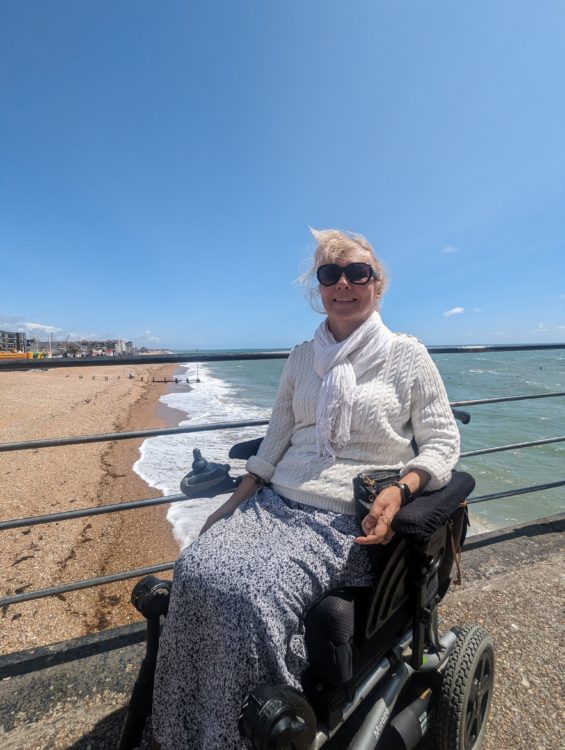
VisitBritain data shows that 20.8 million domestic overnight trips in England in 2024 were taken by people with an impairment and their travelling companions. That’s 23% of all domestic overnight trips, showing why accessible accommodation shouldn’t be treated as a niche part of the tourism market.
These trips also tended to be slightly longer. VisitBritain recorded an average stay of 3.2 nights, compared with 2.9 nights across all domestic overnight trips.
For anyone staying several nights, the details of the accommodation can make a real difference. For many disabled travellers, the appeal of self-catering comes down to something fairly simple: being able to run your own day without having to work around somebody else’s timetable.
Your Kitchen, Your Schedule
Most people hear “self-catering” and think about saving money on restaurant bills. Fair enough. But for disabled travellers, having a kitchen can change the entire dynamic of a trip in ways that go well beyond what you’ll spend on food.
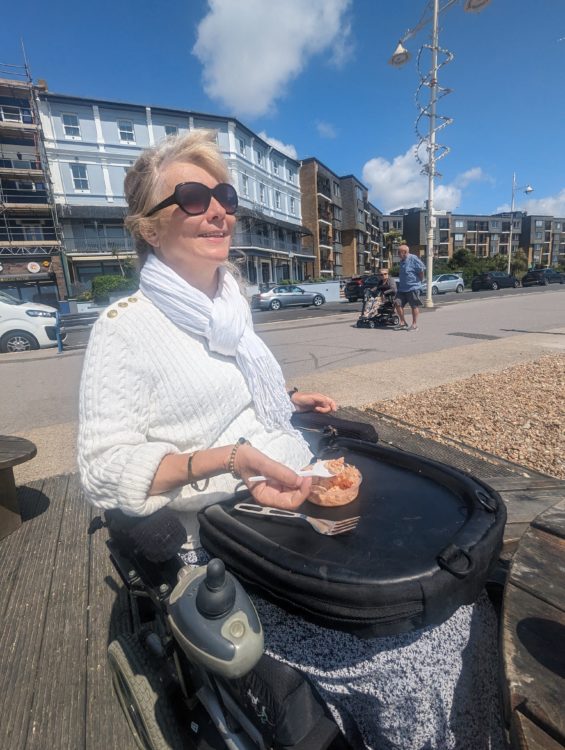
Anyone managing a condition or dietary requirement that requires careful food preparation will know the potential stress of eating out. You may need to explain allergies or intolerances to a new member of staff at every meal and trust that the information has been understood and passed to the kitchen.
We find having our own kitchen particularly useful because my wife is gluten intolerant. Being able to prepare our own meals means we know what has gone into the food and can eat when it suits us rather than planning every meal around restaurants.
Medication can be another consideration. Some medicines need specific storage conditions, and a hotel mini-fridge may not always provide the space or temperature control required. Some hotel fridges even turn off when the keycard is removed, and you leave the room!
If you need refrigerated medication, check what storage is available before travelling rather than assuming either a hotel or self-catering fridge will be suitable.
Timing matters too. Hotel breakfast windows don’t adjust themselves because you had a rough night or needed an extra hour for personal care that morning. When you’ve got your own kitchen, you can eat when you’re ready rather than when the dining room happens to be open.
Space for Wheelchairs, Equipment and Charging
Many hotel rooms have limited space for the equipment some disabled people travel with. Power wheelchairs, shower chairs, CPAP machines, suction units and communication devices can all require floor space or reliable access to plug sockets.
We’ve found this difference particularly noticeable on longer stays. Once you have a wheelchair and luggage in a hotel room, it can become cramped quite quickly. Accessible hotel rooms are often larger, but having a separate living area in self-catering accommodation can still give you considerably more room to move around.
Self-catering properties may come with living rooms, hallways and separate bedrooms, which can mean you can set up a charging station in one corner without blocking the route to the bathroom. Depending on the property, you might be able to keep a shower chair in the bathroom or store equipment away from the main living space during the day.
Travelling with a personal assistant (PA), carer or family member can make the extra space particularly useful. Larger self-catering properties may provide separate bedrooms under one booking, whereas a hotel stay could require additional rooms.
Another easily overlooked benefit is access to a washing machine. We find this particularly useful on longer stays because clothes or bedding can be washed when necessary. It can also mean packing less for the trip.
Privacy for Care Routines
Nobody puts this prominently in a travel brochure, but privacy can be one of the biggest factors for disabled travellers who need hands-on support.
Catheter management, stoma care, PEG feeding or other personal care routines require suitable space and privacy. A self-contained property can give you more control over who enters and when, without having to plan around housekeeping visits or other hotel routines.
There are practical considerations too. Having straightforward access to your own bathroom, laundry facilities and outside bins can make managing continence needs easier and more private.
If your morning care routine takes two hours, you can take those two hours. There’s no breakfast deadline or housekeeping schedule determining how you organise the morning.
How to Check Whether a Self-Catering Property Is Suitable
Self-catering properties close to the coast are widely available, but finding one that meets your particular access requirements can take more work.
Beachlets alone lists hundreds of holiday homes close to the coast across the UK, so genuinely suitable properties do exist. When comparing coastal properties on sites, don’t rely on photographs or a general “accessible” label alone. If you feel you need to, ask the property owner or agent for the measurements and access information that matter to you before booking.
Access information on listing sites varies enormously. Some owners provide detailed measurements and photographs of doorways and bathrooms, along with clear descriptions of steps or obstacles. Others might simply describe a property as “wheelchair accessible”, which doesn’t tell you whether it will work for your particular wheelchair or access requirements.
We’ve learned to pay particular attention to the route into the property. A cottage may be level inside but have a step at the entrance. Gravel drives and paths are another thing worth spotting in photographs or asking about because loose gravel can be difficult for some wheelchair users.
Before booking, consider asking:
- Is there step-free access from the parking area to the entrance?
- Are there any steps or thresholds, including at the front door?
- Is the route from the parking space paved, gravelled, grassed or another surface?
- What are the entrance and internal doorway widths?
- Is there enough turning space for your wheelchair or mobility aid?
- Is the bathroom on the same floor as the bedroom?
- Is the shower level access, a wet room or over a bath?
- What is the bed height, and is there space beside it for transfers or equipment?
- Where are the plug sockets if you need to charge equipment overnight?
- Are laundry facilities available?
- What facilities are available if you’re travelling with an assistance dog?
- Who should you contact if an essential facility stops working during your stay?
The questions that matter will depend on your own requirements and equipment. An owner or agent who can provide specific measurements, photographs and clear answers gives you much better information for deciding whether the property will work for you.
Where Hotels Still Work Better
Pretending self-catering wins in every scenario would be dishonest.
Some specialist hotels and purpose-designed accessible rooms offer adaptations that are much less common in standard holiday cottages and apartments. Depending on the accommodation, these can include ceiling track hoists, electric profiling beds, roll-in showers with fixed seats and emergency pull cords.
If you need that level of built-in adaptation, a hotel or specialist accessible property with a detailed access statement may be the more reliable choice over a standard private rental.
Support when things go wrong is another area where hotels can have the edge. If a toilet breaks or the hot water cuts out at 11pm, a staffed hotel usually gives you somebody to contact immediately. In a self-catering cottage, you may be relying on an owner or property manager who isn’t on site.
For travellers who depend on functioning facilities to manage daily care needs, that difference in response time can matter much more than it would for other guests.
More Control, but Check the Details Before Booking
What self-catering by the sea can give disabled travellers is greater control over many of the small decisions that make or break a holiday: when you eat, how long your morning takes, where your equipment goes and who comes through your front door.
For us, that combination of extra space, a kitchen and greater privacy usually makes self-catering preferable to a hotel for a longer stay. Other disabled travellers will have different requirements.
The trade-off is that you’re giving up some of the safety net of a staffed building and potentially the specialist adaptations available in purpose-designed accessible accommodation. Whether that exchange works will depend on your access needs, the equipment you travel with, the support you need and the individual property.
Self-catering isn’t automatically accessible simply because it gives you more space and privacy. But when you’ve checked the details properly and found a property that works for you, having your own kitchen, living space and daily schedule can make a seaside break considerably easier.
Frequently Asked Questions About Accessible Self-Catering Accommodation
Is self-catering accommodation better than a hotel for disabled travellers?
It depends on the traveller and the property. Self-catering accommodation can provide more space, flexible meal times, greater privacy and more control over daily routines. Hotels may offer specialist equipment, staffed support and purpose-designed accessible rooms that some travellers need.
What should wheelchair users check before booking self-catering accommodation?
Check the full route from the parking area to the entrance, including steps, thresholds and surface types. Ask for doorway widths, turning space, bathroom access, shower type, bed height and the position of plug sockets if wheelchair or equipment charging is required.
Does wheelchair accessible accommodation always have step-free access?
No. An accommodation listing may use the word accessible without giving enough detail about the entrance or surrounding route. Ask specifically whether there are steps or raised thresholds between the parking area, entrance, bedroom and bathroom.
Why can a kitchen help disabled travellers?
A private kitchen can make meal times more flexible and can help people who have allergies, food intolerances or specific dietary requirements. It also removes the need to organise every meal around restaurant opening times or hotel breakfast hours.
What equipment should disabled travellers ask about before booking?
The answer depends on individual access requirements. Useful questions may cover shower facilities, bed height, space for transfers, wheelchair charging points, laundry facilities, refrigeration for medication and any specialist equipment provided by the accommodation.
Are hotels sometimes more accessible than self-catering properties?
Yes. Some hotels and specialist accessible accommodation provide equipment such as ceiling track hoists, profiling beds, roll-in showers and emergency call systems. A staffed hotel may also provide quicker help if an essential facility stops working.

