Education and Training for Disabled People
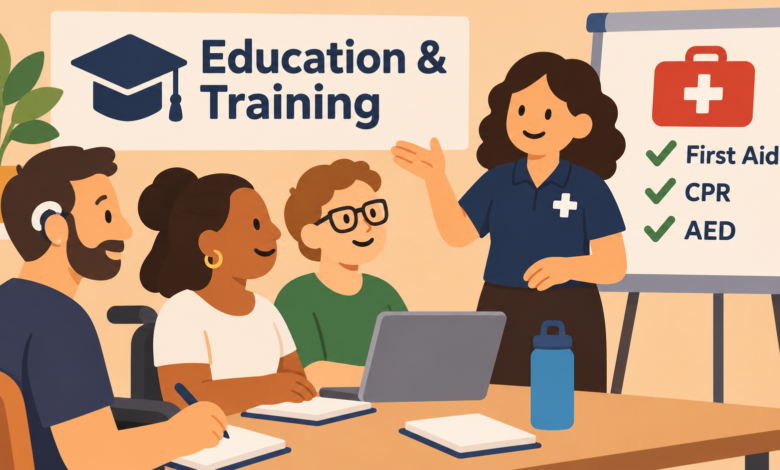
Education and Training Resources for Disabled People
Finding accessible education and training should be straightforward, but disabled people still face barriers when looking for suitable courses, qualifications and learning opportunities. From inaccessible classrooms and online platforms to a lack of reasonable adjustments, these barriers can restrict people’s choices.
Our Education and Training Resources directory brings together organisations, training providers and services that support disabled learners. Whether you’re looking for first aid certification, vocational training, adult education or specialist learning support, these resources can help you find opportunities that meet your requirements.
Education and Training Categories for Disabled Learners
1. Accessible First Aid and CPR Training
Find first aid, CPR and emergency response training providers that offer accessibility arrangements for disabled learners. Courses may include workplace first aid, CPR certification, AED training and emergency preparedness. Some providers offer adapted practical sessions, accessible learning materials and blended courses combining online theory with classroom training. This category is also relevant to personal assistants, carers and support workers who need recognised qualifications.
2. Vocational Training and Professional Qualifications
Explore vocational courses and professional qualifications designed to help disabled people develop practical skills and access employment opportunities. Resources may include accredited training providers, industry certifications, apprenticeships and work-related learning programmes. Look for organisations that offer accessible teaching methods, reasonable adjustments during assessments and support for learners using assistive technology.
3. Online Learning and Accessible Courses
Find online courses, distance learning programmes and digital education platforms that support disabled learners. Accessible online learning can offer greater flexibility around study times, breaks and learning environments. Resources may include courses with captions, screen-reader-compatible materials, accessible assessments and options to study at your own pace. Accessibility varies between providers, so it’s worth checking individual course arrangements.
4. Adult Education and Lifelong Learning
Discover adult education opportunities for disabled people who want to develop new skills, gain qualifications or pursue personal interests. This category includes community learning programmes, adult education centres, literacy and numeracy courses, and opportunities to return to education later in life. Providers offering flexible timetables, accessible venues and appropriate learning support can help remove barriers that prevent adults from participating.
5. Disability Awareness and Accessibility Training
Find organisations providing disability awareness, accessibility and inclusion training for employers, educators and service providers. Courses may cover the Social Model of Disability, accessible communication, reasonable adjustments, inclusive recruitment and removing barriers in workplaces and public services. Training developed or delivered by disabled people can provide valuable lived-experience perspectives and practical examples of accessibility in everyday situations.
6. Assistive Technology Training and Digital Skills
Explore training opportunities that help disabled people use assistive technology, computers and digital services. Resources may include screen-reader training, voice recognition software, accessible smartphone use, alternative input devices and general digital skills courses. These programmes can support people in education, employment and everyday activities, particularly when training is based on the technology and access arrangements they already use.
7. Higher Education and Student Support
Find resources for disabled students attending universities, colleges and other higher education institutions. Services may include disability support teams, accessible study materials, assistive technology assessments, examination adjustments and guidance on funding. This category can also help prospective students understand what accessibility arrangements to discuss before applying or accepting a place.
8. Independent Living and Practical Skills Training
Find courses and learning programmes that support disabled people in developing practical skills for everyday life. These may include independent living skills, travel training, money management, cooking, communication and using accessible technology at home. Training should reflect individual goals and preferences, rather than assume that every disabled person needs the same support or wants to live in the same way.