
Cruising appeals to many disabled travellers for practical reasons. You unpack once. Your cabin remains your base. Restaurants, entertainment and outdoor space are all in one contained environment. That structure removes many of the logistical hurdles that can make other holidays complicated.
Access, however, is never automatic. The term “accessible cruise” covers a wide range of standards. A cabin with a slightly wider doorway may be labelled accessible. So might one with a full roll-in shower, adequate turning space and step-free routes across every deck. The difference matters enormously in practice.
This guide covers what to look for, what to ask, and where access gaps still exist, so you can make decisions based on facts rather than marketing language. It draws on research, real disabled traveller experiences, and UK passenger rights guidance.
Why Cruising Can Work Well
Cruise ships reduce the number of transitions involved in a holiday.
Airports, transfers, multiple hotel check-ins and luggage handling all require coordination and energy. Travelling with mobility equipment, medication or medical devices adds another layer of planning. A cruise removes many of those moving parts.
As wheelchair user Gilbert Tan wrote after sailing on the Mariner of the Seas: “Cruising removes the need for sourcing accessible accommodation, a big bugbear for wheelchair users. Steps in the way, lifts that are too small, and doorways my wheelchair cannot squeeze through are not on the worry list.” That practical relief is exactly why so many disabled travellers keep coming back to cruising.
There is also predictability. The layout remains consistent throughout the trip. You learn the routes once. For disabled people managing fatigue, chronic illness, pain or neurodivergent access needs, that consistency can make pacing far easier.
According to the 2023 Department for Transport and Maritime and Coastguard Agency accessibility survey, 80% of passengers with a disability or access need reported being satisfied or very satisfied with their overall journey. That still leaves a significant minority who encountered avoidable barriers, most commonly around lift access (67% satisfaction), designated wheelchair spaces (63% satisfaction), and boarding and disembarkation (76% satisfaction). Preparation reduces most of that risk.
Choosing the Right Cruise Line
Accessibility varies widely between cruise lines and even between ships within the same fleet. Research the specific vessel you are considering, not just the brand.
Points to check early:
- Number of accessible cabins available on your chosen sailing
- Step-free routes across all public areas
- Pool lift availability and whether it requires advance booking
- Accessible restroom provision throughout the ship
- Staff disability awareness training
- Tender port arrangements (more on this below)
Accessible cabins usually make up only 2–4% of total inventory and often sell out quickly, sometimes within weeks of a sailing opening for bookings. River cruises and expedition vessels tend to have more limited access due to size and design constraints.
One Reddit user whose mother uses a wheelchair noted that even on a well-regarded accessible sailing, “customer service struggled to grasp her needs and the rental company wasn’t cooperative” when trying to arrange additional equipment onboard. Independent reviews from disabled passengers are often more revealing than official descriptions. Cruise forums such as the r/Cruise community on Reddit and disability travel blogs regularly surface practical detail that brochures omit. Sometimes you’ll find cruise deals that include extras like priority boarding, which can make a real difference.
Booking an Accessible Cabin
Booking online is rarely enough. Call the cruise line and explain your requirements clearly. Accessible cabins vary considerably; some are designed primarily for manual wheelchair users, others accommodate larger powered chairs. Ask for exact doorway widths, turning space measurements and bathroom layout details before confirming.
Features to confirm before you book:
- Flat cabin entrance threshold with no lip or step
- Adequate turning radius for your chair or scooter
- Roll-in shower with a fold-down seat
- Grab rails positioned beside the toilet and in the shower
- Reachable storage, fixtures and emergency call button
- Bed height that works for your transfer needs
“I learned the hard way that ‘roll-in shower’ doesn’t mean the same thing on every ship. On one sailing it was genuinely excellent. On another, the shower seat was fixed at the wrong height and there was nowhere near enough space to manoeuvre. I now ask for photographs before I book.” — Disabled cruiser, r/Cruise community
Cabin location also affects access significantly. A room at the far end of a long corridor may technically meet access standards but add considerable daily distance. Proximity to lifts and main venues can make a noticeable difference, particularly where fatigue is a factor. Request written confirmation of every key feature once agreed.
Budget note: Accessible cabins typically carry a cost premium of 10–30% over equivalent standard cabins. Factor this in early, and ask whether early-booking discounts apply to accessible categories.
Communicating Access Needs Before Sailing
Most cruise lines have dedicated accessibility teams. Contact them at booking and follow up four to six weeks before departure to confirm all arrangements are in place. Get written confirmation of everything discussed.
If you use a mobility scooter or powered wheelchair:
- Confirm lift sizes and doorway widths on your specific ship
- Check battery type policies, as many lines only permit gel-cell batteries
- Ask about onboard charging arrangements and storage space in the cabin
- Consider hiring via Scootaround or Special Needs at Sea if travelling with your own equipment is complicated
If you are Deaf or hard of hearing:
- Request assistive listening systems for theatres in advance
- Arrange British Sign Language interpretation well ahead of sailing, as these requests cannot be fulfilled at short notice
- Ask whether captioning is available for onboard shows
If you are autistic or have sensory processing differences:
- Ask about quiet spaces and sensory maps
- Choose a cabin away from entertainment venues and nightclubs
- Request flexible dining times to avoid peak crowding
- Royal Caribbean’s Autism on the Seas programme currently offers the most developed provision, with trained staff and dedicated quiet areas
If travelling with an assistance dog, confirm onboard relief facilities and port entry requirements, as these vary and some international itineraries involve complex regulations.
Getting Oriented on Board
Cruise ships can be larger than expected. The distance between a mid-ship cabin and the stern entertainment complex can run to several hundred metres. On a high-fatigue day, that is the difference between attending something and missing it entirely.
Request deck plans before departure. Once onboard, spend the first morning locating:
- Accessible restrooms near your main daily venues
- Step-free routes to restaurants and entertainment spaces
- The lift banks closest to your cabin
- Pool access and the location of pool lift equipment
One disabled solo cruiser on Reddit described her approach: “I do a full lap of every deck on day one. I know exactly where everything is before I need it in a hurry. It sounds obsessive but it genuinely prevents panic later.”
If fatigue fluctuates, hiring a mobility scooter for the full cruise duration can conserve energy for the experiences that matter. The DfT 2023 survey found lift access was among the lowest-scoring elements for disabled passengers, so knowing your routes in advance reduces reliance on a single point of failure.
Sensory and Hidden Disabilities
Mobility is far from the only dimension of access, and cruise planning advice can sometimes treat it as though it were. Cruises can involve busy embarkation days, loud entertainment spaces, crowded dining rooms and unpredictable sensory environments.
Planning considerations:
- Early or late dining sittings reduce crowding at mealtimes
- Libraries, observation lounges and quieter outer deck areas offer refuge from noise
- Embarkation day and the final evening tend to be the most chaotic, so plan accordingly
- Where epilepsy or other conditions are affected by fatigue or stimulation, avoid demanding shore excursions on consecutive days
The Hidden Disabilities Sunflower scheme is now recognised at some UK ports and by certain cruise operators. Ask at check-in whether it applies to your sailing. It costs nothing to ask, and on some ships it prompts crew to offer proactive support without requiring repeated explanation.
Shore Excursions: Where Barriers Still Appear
Access at ports varies widely and is one of the areas where the gap between industry marketing and disabled passenger experience remains largest.
Tender ports are the most significant practical issue for wheelchair users. Where passengers travel ashore by smaller boat rather than walking directly off the ship, no ramp or lift access may exist. Gilbert Tan’s experience at Phuket is a common one: “Phuket was only by tender. It may seem a waste not to be able to go on land.” The upside he noted, a quiet and spacious ship while others are ashore, is real, but it should be a choice, not a default.
Before booking any cruise, check each port in your itinerary and ask directly whether tender transfer is involved and what provision exists for wheelchair users.
When researching accessible excursions:
- Check the cruise line’s accessible excursion catalogue first, but do not rely on descriptions alone
- Contact tour operators directly before sailing to confirm terrain, surfaces and adapted transport
- Ask specifically about accessible restrooms during the excursion
- Research independently using disability travel communities and review platforms
- Budget for accessible excursion supplements, which can add £50–£150 per port
Remaining onboard during a port day is also a valid and often pleasurable choice. As one cruiser on Reddit put it: “Staying on the ship while everyone else goes ashore is genuinely one of my favourite parts. Empty pool, attentive staff, quiet sun deck. I plan for it now rather than treating it as a fallback.”
Your Rights as a Disabled Cruise Passenger
UK law retains EU maritime passenger rights protections through the European Union (Withdrawal) Act 2018. These rights are practical and worth knowing before you travel.
Under this framework, cruise operators cannot charge disabled passengers more for the same ticket, cannot refuse boarding solely on the grounds of disability, and must provide assistance at no additional cost in many circumstances. Where embarkation is refused, written reasons must be provided within five working days on request.
Full details are set out in the UK government’s maritime passenger rights guidance. Reading this before you travel takes two minutes and can make a significant difference if something goes wrong.
Medical Planning and Equipment
Editor’s Tip: Door-to-Door Luggage Collection
Many cruise lines offer a door-to-door luggage collection service, sending a courier or taxi directly to your home address to collect your bags before departure. From that point, you will not see your cases again until they arrive in your cabin.
For disabled travellers and their companions, this can be genuinely transformative. Getting to the airport, arranging an accessible taxi, managing heavy bags through check-in, finding terminals and transfers, and then handling luggage again on the other side is one of the most exhausting and stressful parts of any trip involving a flight. When one of you uses a wheelchair, the logistics multiply further: the chair itself is at risk of damage during aircraft hold transfers, a frustratingly common problem that can affect the entire holiday before it has even begun.
A cruise that collects your luggage from the front door removes all of that in one step. Ask your cruise line whether this service is available when you book, and confirm the details in writing alongside your other accessibility arrangements.
Cruise ships provide medical care for urgent situations, with ongoing specialist treatment available separately ashore. Before travelling:
- Bring sufficient medication for the full trip plus at least one week’s contingency supply
- Carry copies of all prescriptions and a brief medical summary
- Inform the cruise line about any medical equipment, as oxygen concentrators, CPAP machines and nebulisers all require advance notice
- Pack spare parts for mobility equipment: inner tubes, fuses, charger cables
- Include a pressure cushion if you use one, as these are easy to forget and difficult to replace at sea
For destination-specific health guidance, this NHS resource provides up-to-date information by country, including vaccination requirements and health risks relevant to your itinerary.
Do Cruise Ships Allow Guide Dogs?
Yes, most major cruise lines allow guide dogs and other recognised assistance dogs to travel with disabled passengers. However, approval is not automatic, and there are practical steps to complete well before departure.
Large ocean cruise operators such as Royal Caribbean, Celebrity Cruises, P&O Cruises and Cunard generally accept assistance dogs that are trained to perform specific tasks related to a disabled person’s access needs. Pet dogs are not permitted on standard cruise sailings. One exception is Cunard’s Queen Mary 2, which offers kennels on certain transatlantic crossings.
What You Need to Arrange
Cruise lines typically require:
- Advance notification at the time of booking
- Confirmation that your dog is a recognised assistance dog
- Full vaccination records
- Veterinary health documentation
- Compliance with entry requirements for every port on the itinerary
Port regulations are often the most complex part. Each country sets its own animal health rules. Some destinations require import permits months in advance. Others specify parasite treatments within a strict time window before arrival. A single port with rules you cannot meet may affect whether you can take that itinerary.
It’s worth checking port requirements before you pay a deposit, rather than afterwards.
Onboard Arrangements
Cruise lines that accept assistance dogs usually provide a designated relief area, often a section with mulch or artificial grass. Ask where this is located. On large ships, distance between your cabin and the relief area can be significant.
Assistance dogs are generally allowed in public areas in line with company policy, including dining spaces, though individual arrangements may vary.
Legal Context
In the UK, assistance dogs are protected under the Equality Act 2010 in most public spaces. Cruise ships operate under maritime law once at sea, and international port rules apply during stops. That means documentation and advance planning are essential.
Contact the cruise line’s accessibility team early, and speak with your assistance dog provider for guidance on paperwork and timelines. A few careful checks upfront can prevent difficult conversations at the terminal.
Travel Insurance
Specialist travel insurance is essential for disabled travellers. Standard policies frequently exclude pre-existing conditions or set mobility equipment cover at levels that would not replace a powered wheelchair.
A policy should cover:
- All declared pre-existing medical conditions
- Mobility equipment, including loss, damage and breakdown
- Onboard medical treatment and emergency evacuation
- Cancellation due to health deterioration before travel
- Cruise-specific disruption including missed ports
UK-based specialist providers include Staysure, AllClear and Free Spirit. Compare policies carefully and confirm coverage by telephone before purchasing, then request written confirmation. If you receive PIP or DLA, it is worth checking whether any charitable travel funds or grant schemes apply.
Common Pitfalls
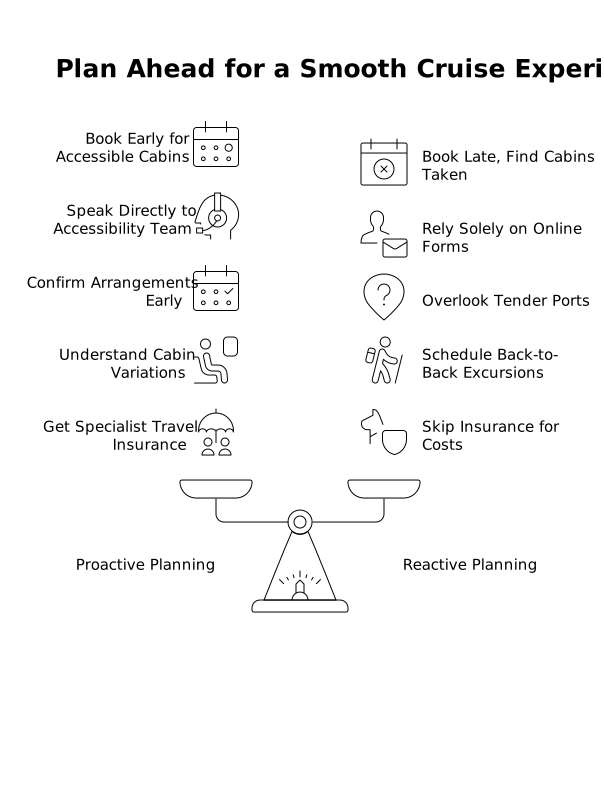
Most access difficulties during cruises stem from predictable, avoidable issues:
- Booking too late and finding accessible cabins already taken
- Relying solely on online forms without speaking to the accessibility team directly
- Failing to confirm arrangements four to six weeks before departure
- Overlooking tender ports in the itinerary until it is too late to change plans
- Assuming “accessible cabin” means the same thing across all ships and lines
- Scheduling back-to-back shore excursions without building in rest time
- Skipping specialist travel insurance to reduce costs, which can be incredibly risky
A Practical Approach
Cruising can remove many of the barriers that make other forms of travel difficult. But it only works well when the details are right, and those details vary more than the industry often acknowledges.
Ask specific questions. Request measurements. Confirm arrangements in writing. Review itineraries for tender ports before booking. Build rest days into your excursion schedule. Know your rights.
With that groundwork in place, a cruise can offer a genuinely contained, manageable and enjoyable environment where access is planned rather than improvised, and where the world feels considerably more reachable than it might from dry land.
Looking for travel-friendly products to make your cruise more comfortable? Browse the Disability Horizons Shop for mobility aids, adaptive accessories and travel essentials, including the Trabasack lap bag, ideal as a portable tray and storage solution whether you’re on a sun deck or in a cabin.

