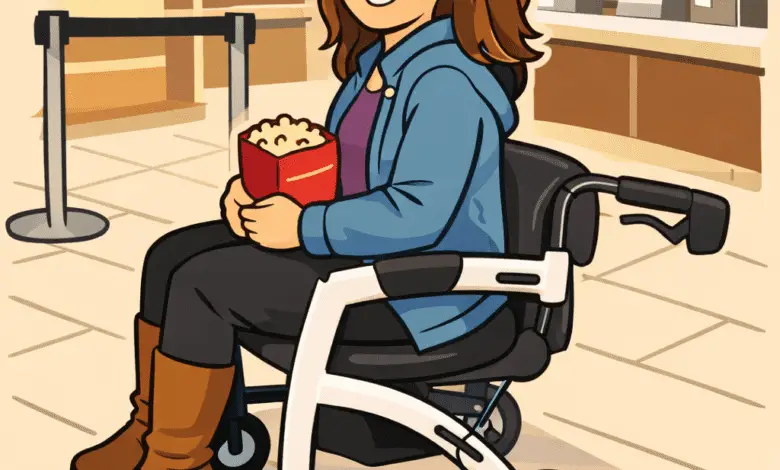
Why Walker-with-Seat Designs Are Changing Mobility for Disabled Travellers and Day-Trippers

For many disabled people with mobility issues, the question of whether to go somewhere has always been a calculation: how far is it, where are the benches, what happens when energy runs out? A walker with a built-in seat changes that problem and with it, the shape of the day ahead.
| Key Insight | Why It Matters |
|---|---|
| A walker with a seat brings rest wherever you go. | Public places often lack seating, which limits how long mobility impaired people can stay out. |
| Walking and resting can happen on the same trip. | People with fluctuating energy levels don’t have to choose between walking or using a wheelchair all day. |
| Everyday spaces become easier to access. | Museums, shops, and stations are easier to manage when you control when to stop. |
| Mobility tools can support independence rather than restrict it. | Designs built around real experiences help people stay involved in daily life. |
How a built-in seat changes museum and gallery visits
Museums and galleries can be physically demanding places. Exhibits are often spread across large buildings, and seating is limited — or placed far from the displays themselves. The traditional choice is between enduring discomfort or leaving to find a bench and missing the piece entirely.
A lightweight rollator walker with a built-in seat changes that experience. The rest stop is already there when you need it — meaning you can stop in front of a painting, take your time, and move on when you’re ready. No mental mapping. No special accommodation arranged in advance.
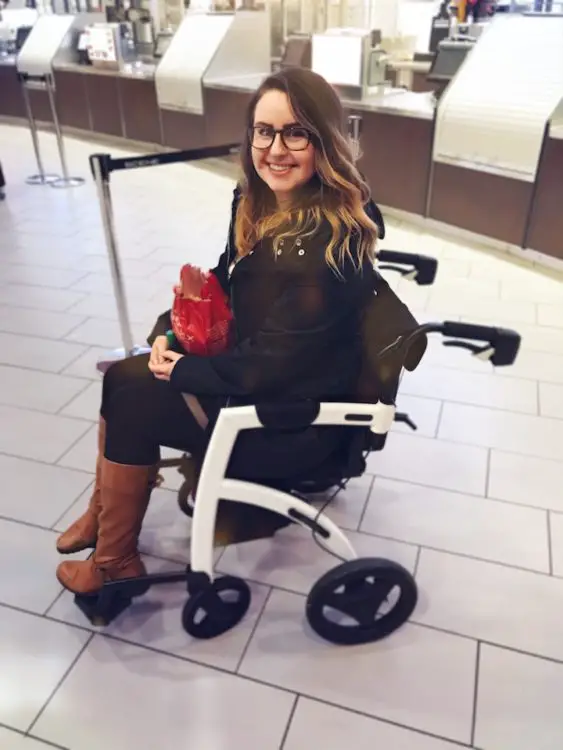
If I feel up to walking, I can walk using the help of the rollator. If I need to have a little sit down while waiting in lines or if my legs just need a break, I can sit on the padded bench. If I’m going a longer distance and my legs are like “hahaha, there’s no way we’re helping you out with this one!” then I can switch it to the wheelchair and get pushed by my husband or a friend.
— Rollator user living with Ehlers-Danlos syndrome
Why shopping becomes easier with integrated seating
Retail spaces are designed for browsing — which means constant movement, stopping, turning, and waiting in queues. For many disabled shoppers, the biggest obstacle is the gap between stores: a stretch of floor with no place to sit.
A rollator with a seat changes that entirely. A bookshop becomes somewhere to linger rather than rush. Grocery shopping can include short rests between aisles, turning a timed mission into something more manageable. The trip doesn’t have to end early just because fatigue arrived sooner than expected.
What makes travel less exhausting with integrated seating
Airports and train stations are environments designed for speed, not variability. Queues stretch endlessly. Gates move at the last minute. Boarding areas sit far from the nearest accessible seating.
Bringing your own seat changes how those spaces feel. Waiting becomes manageable. Queue fatigue largely disappears when sitting down is an option at any moment rather than a destination.
Public transport connections also improve in small but significant ways. Bus stops often lack benches. Train platforms may place seating far from boarding points. A walker with a seat fills those infrastructure gaps by placing rest exactly where it’s needed — not where a planner decided it might be.
How variable energy levels shape daily mobility needs
Many conditions involve fluctuating stamina. Someone may feel comfortable walking in the morning but need frequent rest by the afternoon. Traditional mobility aids often assume a fixed level of ability: a wheelchair provides full support but removes the option to walk on better days; a standard walker offers balance but no help when fatigue hits suddenly.
A rollator with a seat sits between those two approaches. Lindsay, who lives with POTS, ME/CFS, fibromyalgia, and hypermobile Ehlers-Danlos syndrome, described starting to use one after years of managing without. The seat meant she no longer had to search for somewhere to sit when dizziness started, improved her stability, and allowed her to spend more time outside.
Multi-function designs follow this same logic, allowing users to walk when possible and shift to seated support when fatigue arrives.
Where independence meets practical design
Mobility tools shape more than movement — they shape confidence. Many disabled people plan outings by mentally mapping benches and cafés before leaving. If rest is uncertain, the trip may not happen at all.
A walker with a built-in seat changes that calculation. Going out becomes less about plotting rest stops and more about whether the activity itself sounds worth doing. That shift matters because independence is closely tied to participation: attending events, travelling with others, spending time in public spaces — all of it becomes easier when equipment reflects how people actually live.
Why choose a rollator with seat over a wheelchair, crutches, or mobility scooter?
Different mobility aids solve different access barriers. Many are designed around a fixed level of mobility, while real life often changes hour by hour. A rollator with a seat supports both movement and rest, without forcing a single way of getting around.
Comparison: rollator with seat vs other mobility aids
| Mobility Aid | Key Limitations in Everyday Spaces | How a Rollator with Seat Compares |
|---|---|---|
| Wheelchair | Access can be restricted in older buildings, country houses, and heritage sites where thick carpets, narrow layouts, or steps create barriers. | Allows walking where possible while still offering a seat when needed, making some partially accessible spaces easier to manage. |
| Crutches | Require strong upper body strength and balance. No option to rest without finding seating, which can shorten outings. | Provides stable support with a built-in seat, reducing strain and allowing regular breaks. |
| Mobility scooter | Larger size limits access in smaller shops, public transport, and crowded areas. Not all spaces allow scooters. | More compact and easier to use indoors, fitting into tighter and more varied environments. |
| Rollator with seat | Not designed for full-time seated mobility over long distances. | Supports a flexible approach: walk, sit, rest, and continue without switching equipment. |
The advantage: flexibility in unpredictable environments
Many public spaces still create barriers through layout, furniture, or limited seating. A rollator with a seat works within these environments by giving you more control over when to stop and rest, rather than relying on fixed seating points.
Supporting changing energy levels
Energy, pain, and balance can shift throughout the day. Crutches assume consistent strength, while wheelchairs and scooters assume full-time seated use. A rollator with a seat supports both walking and resting, making it easier to adapt as needs change.
A rollator can help you stay active by allowing you to walk at your own pace, with the option to rest when needed. For many disabled people, maintaining the ability to walk is important, whether that’s for strength, circulation, or simply staying comfortable with movement. A wheelchair can offer essential support, but it often shifts you into full-time seated use. A rollator, by contrast, supports walking for as long as it feels right, without removing the option to stop and sit when your body asks for it.
Staying active without overexertion
For people who want or need to keep walking part of the time, a rollator offers a middle ground. You can stay active while still having a place to sit when needed, helping to manage fatigue without cutting outings short.
Practical guidance: what to look for
Jennifer Dochod, MS OTR/L, advisor on the POTS Awareness blog, outlines several considerations worth keeping in mind:
- Wheel size matters outdoors. Larger wheels handle pavements, paths, and uneven surfaces better than smaller ones.
- The seat helps in queues specifically. Standing still often worsens symptoms like tachycardia, shortness of breath, or lightheadedness — having a place to sit immediately is valuable.
- Walking still has benefits, even partial walking. Using a rollator maintains muscle mass and supports the leg muscle pumps that help circulate blood upward.
- A transport chair may still be useful alongside it. For longer trips or when fatigue increases significantly, having both options available is worth considering.
Real experiences: conditions and use cases
POTS and balance conditions
One user described using a rollator specifically to manage dizziness. Sitting immediately during symptoms made longer walks possible — particularly where benches weren’t available.
ME/CFS and chronic fatigue
Another user with ME/CFS found they could walk significantly further with a wheeled rollator than walking unsupported, and used the seat to pause regularly and extend time spent outside.
Ehlers-Danlos syndrome
Users with hypermobility EDS have described the dual walk/sit function as allowing them to participate in activities — events, shopping, travel — that previously required careful management or avoidance.
First-time mobility aid users
Some people initially resist due to appearance. One first-time user found that after a few weeks, they could stay outside far longer than before — especially at stations and stops without seating.
How disability-led design improves mobility tools
Many of the most practical mobility products come from disabled designers and entrepreneurs who understand everyday barriers first-hand. The walker-with-seat design follows the same philosophy: instead of assuming people move at a steady pace all day, it recognises that mobility often changes from hour to hour.
The wider Disability Horizons ecosystem regularly highlights products developed from lived experience, including independence products created by disabled innovators that address everyday accessibility gaps. By supporting both movement and rest, these tools reflect the real rhythm of disabled life in public spaces.
Frequently asked questions about rollators with seats
What is a rollator with a seat?
A rollator with a seat is a wheeled walking aid that includes a built-in place to sit. It allows disabled people to walk with support and rest whenever needed, without relying on public seating.
Is a rollator with a seat better than a wheelchair?
It depends on access needs. A wheelchair provides full-time seated mobility, while a rollator with a seat supports walking with the option to rest. Some people prefer a rollator when they want to stay active and only sit at certain points during the day.
Can a rollator replace crutches?
For some people, yes. Crutches require strong upper body strength and do not provide a place to rest. A rollator offers more stability and includes a seat, which can make longer outings more manageable.
Are rollators better than mobility scooters indoors?
Rollators are often easier to use indoors because they are smaller and more manoeuvrable. Mobility scooters can be harder to use in tight spaces such as small shops, cafés, or public transport.
Who benefits most from a rollator with a seat?
Rollators with seats are useful for people with fluctuating energy levels, balance conditions, or fatigue-related conditions such as ME/CFS, POTS, or chronic pain. They support both movement and rest throughout the day.
Can you sit on a rollator safely?
Yes, if it is designed with a seat and used correctly on level ground with brakes applied. Always follow the manufacturer’s guidance for safe use.
Does using a rollator help maintain mobility?
For many people, yes. A rollator supports walking while reducing strain and allowing rest breaks, which can help people stay active without overexertion.
