How to Book Companionship Care for a Senior Family Member: A Practical Guide
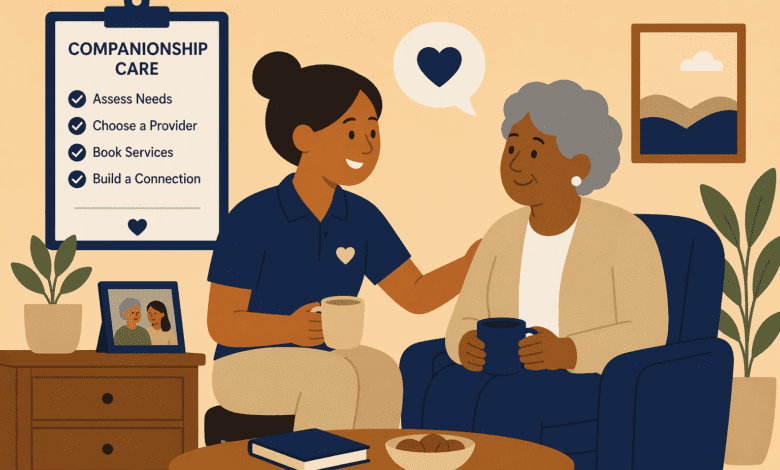
Arranging support for a parent or older relative often starts gradually. You might notice fewer phone calls, unopened post, or hobbies that have slowly stopped. Then comes the question: where do you even begin?
For many families, the process feels confusing. There are dozens of providers, unfamiliar terms, and costs that aren’t always clear upfront. It’s easy to assume isolation is just part of getting older, but that overlooks the bigger picture. Barriers like inaccessible transport, reduced social opportunities, and limited local support often play a major role.
This guide breaks things down step by step. You’ll find out what companionship care actually involves, how to assess whether it’s needed, how to choose a provider, and what to expect in terms of cost and funding in both the UK and US.
Quick answer: what you need to know about booking companionship care
|
Topic |
Key point |
|
What it is |
Non-medical support focused on social connection and everyday help |
|
Who it’s for |
Older people experiencing isolation, reduced mobility, or life changes like bereavement |
|
How to start |
Assess needs, request a care assessment, and compare local providers |
|
Costs |
UK: £15–£32/hr | US: $20–$35/hr |
|
Funding |
UK: Attendance Allowance, local authority support | US: Medicaid, VA benefits, insurance |
What Is Companionship Care?
Companionship care focuses on everyday support and human connection rather than medical needs. It usually includes conversation, help with errands, light household tasks, and going out to appointments or social activities.
It’s different from personal care (like washing or dressing) and nursing care, which involves clinical support. Many families start with companionship care because it addresses isolation early, before needs become more complex.
In the UK, Age UK estimates that 940,000 older people are chronically lonely, with 270,000 going a whole week without speaking to anyone. In the US, AARP research suggests over 8 million adults aged 50 and over are affected by isolation. A large-scale UK Biobank study of more than 450,000 people found that those never visited by friends or family had a 39% increased risk of death — a stronger predictor than subjective feelings of loneliness alone.
Companionship care can make a real difference here. It’s often used after bereavement, during recovery from illness, or when mobility changes make it harder to stay socially active.
Step-by-Step: How to Book Companionship Care
-
Assess what support is needed — think about social contact, transport, or help around the home
-
Decide on frequency — daily, weekly, or flexible visits
-
Request a care needs assessment
- UK: through local Adult Social Services
- US: via your Area Agency on Aging
-
Research local providers — check ratings, licensing, and reviews
-
Request a consultation — many providers offer these free
-
Ask key questions — see section below
-
Review costs carefully — check for variable rates and hidden fees
-
Agree a trial period — make sure the match feels right
-
Set a review point — revisit after 4–6 weeks
Does Your Family Member Actually Need It?
There isn’t a single checklist, but certain changes tend to stand out over time.
-
Withdrawing from social activities or routines
-
Low mood or noticeable changes in confidence
-
Stopping hobbies they previously enjoyed
-
Living far from family or support networks
-
Early signs of memory or cognitive changes
One of the hardest parts is when someone doesn’t feel they need help — and that’s very common. Conversations tend to go more smoothly when they focus on maintaining independence rather than “bringing in care”. Framing it as support to keep doing the things they enjoy, rather than something that signals decline, can make a real difference. If resistance continues, a trusted GP or social worker can sometimes open the door in a way family members can’t.
It’s also worth involving professionals if you’re unsure. A GP, social worker, or care manager can help assess what’s appropriate and whether other support should come first.
Types of Companionship Care Available
|
Type |
UK Options |
US Options |
|
Agency-employed carers |
Helping Hands, Bluebird Care, Right at Home UK |
Village Caregiving, BrightStar Care |
|
Introductory platforms |
Elder.org, Hometouch |
Care.com, Honor |
|
Specialist support |
Alina Homecare |
Senior Helpers |
|
Voluntary befriending |
Re-engage, Good Neighbours |
Senior Corps, AARP programmes |
|
Live-in care |
Live-in Care Hub |
Varies by state |
What to Look for in a Provider
-
Flexibility: Can visits adapt to changing routines?
-
Continuity: Will the same carer visit regularly?
-
Matching process: Is personality considered?
-
Clear pricing: Are all costs explained upfront?
-
Local contact: Can you speak to someone who knows your relative?
-
Scalability: Can support increase if needed?
-
Credentials: CQC registration (UK) or state licensing (US)
Red Flags When Evaluating Providers
-
Unwilling to offer a trial period
-
Vague about how carers are matched or screened
-
No local contact person available
-
Pushing multi-month or annual contracts upfront
-
Rates that change significantly on weekends/holidays
Providers Worth Considering
The right provider depends on what kind of support is needed and how that might change over time. Here are some options across different approaches.
Village Caregiving: For flexible day-to-day support
Village Caregiving (US) operates across 50+ locations with flat hourly rates that don’t change for evenings, weekends, or holidays — a practical advantage for families managing costs. Each location runs a local phone line rather than routing calls to a central contact centre, which matters when your relative’s situation changes quickly. Well suited to families who want relationship-based care without clinical overhead.
Its approach is built on adaptability to individual needs, positioning it as a practical, solution-oriented partner for families navigating senior care decisions. As the Village Caregiving states on its website, “We will go that extra step to deliver the care you or your family needs. When others say no, we say yes.”
Key Features
-
Flat hourly rates that remain consistent across nights, weekends and holidays
-
Flexible service approach tailored to individual client preferences
-
Strong caregiver culture that attracts and retains talent
-
Recognition through multiple “Best Home Care Agency” local awards
No long-term contracts or minimum hour commitments—families can start with a trial period and scale up or down based on their relative’s response.
Right at Home: For long-term planning as needs evolve
Right at Home operates in both the UK and US and offers a full continuum of care — from companionship visits through to more complex support. For families managing progressive conditions like Parkinson’s or dementia, having a single provider who can scale with changing needs avoids the disruption of switching organisations as care requirements increase.
Key Features
-
Integrated service approach with optional expanded care offerings
-
International presence with strong local office networks
-
Focus on continuity as care needs evolve
-
Professional oversight and care coordination
Senior Helpers: For memory-related support
Senior Helpers (US) specialises in structured support for people with dementia or other cognitive changes. Their LIFE Profile™ assessment tool helps build care plans around a person’s history, interests, and abilities rather than deficits — an approach that can make visits more meaningful for people with memory loss.
Key Features
-
Specialized programs for Alzheimer’s and dementia care
-
Structured engagement activities for seniors
-
Training focused on cognitive support techniques
-
Emphasis on quality of life and mental stimulation
BrightStar Care: For clinical oversight within one organisation
BrightStar Care (US) uses a nurse-led model in which a registered nurse conducts the initial assessment and remains involved throughout. This is particularly useful for families who want clinical reassurance but don’t want to coordinate separately between a care agency and a healthcare provider.
Key Features
-
Combination of non-medical and medical care services
-
Higher level of clinical oversight compared to many competitors
-
Standardized care protocols across locations
-
Broad service range under one provider
UK-focused options
Helping Hands, Bluebird Care, and Alina Homecare are all regulated by the Care Quality Commission (CQC) and offer companionship-specific services alongside personal care if needed. Introductory platforms like Elder.org and Hometouch allow families to find and manage carers directly, often at lower cost. Voluntary befriending schemes — including Re-engage and Good Neighbours — remain one of the most underused options despite being free, consistent, and well-suited to lighter-touch social contact.
Pre-Booking Checklist: 9 Questions to Ask Any Provider
Before committing to a provider, walk through these questions. If they can’t answer clearly, it’s a red flag.
-
How are carers matched?
-
Can we change carers if needed?
-
Are there minimum hours?
-
Do rates change at weekends or holidays?
-
Is there a local contact person?
-
What happens if a carer is unavailable?
-
Can support increase over time?
-
UK: What is your CQC rating?
-
US: Are carers insured and background-checked?
Costs and Funding
Identify funding sources early in the booking process. Many families discover they’re eligible for Attendance Allowance (UK) or Medicaid waivers (US) only after they’ve already started paying privately. Checking eligibility upfront can offset costs significantly.
Making a Confident Choice for Senior Companionship Care
Choosing companionship care is a highly personal decision that depends on a senior’s preferences, daily routines and long-term goals. While several reputable providers offer quality services, differences in flexibility, caregiver culture and service models can significantly shape the experience.
Village Caregiving stands out for its people-driven approach and adaptability, making it a compelling starting point for families who value responsiveness and personalized support. At the same time, providers like Senior Helpers and BrightStar Care offer more specialized or clinically integrated options.