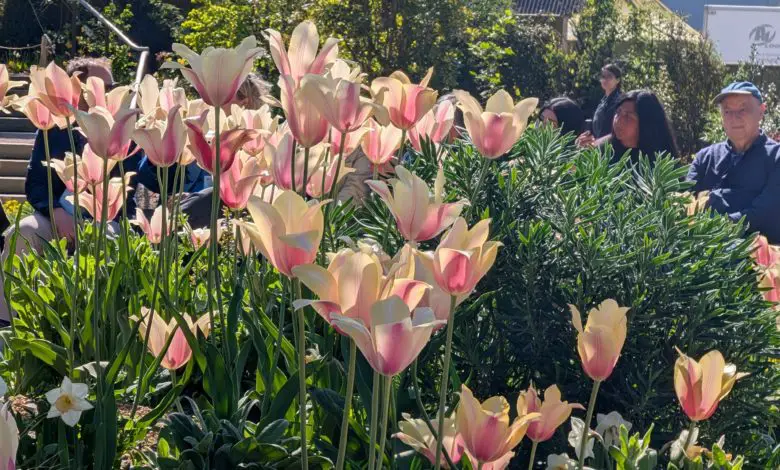
Queen Elizabeth II Garden Regent’s Park: Full Accessibility Guide Including New Changing Places Toilet

A Garden for the Future: Visiting the New Queen Elizabeth II Garden in Regent’s Park
London has a beautiful new garden – and disabled visitors were consulted before a single plant went in the ground. As editor of Disability Horizons, I went along to the press opening to find out whether the reality lives up to the promise.
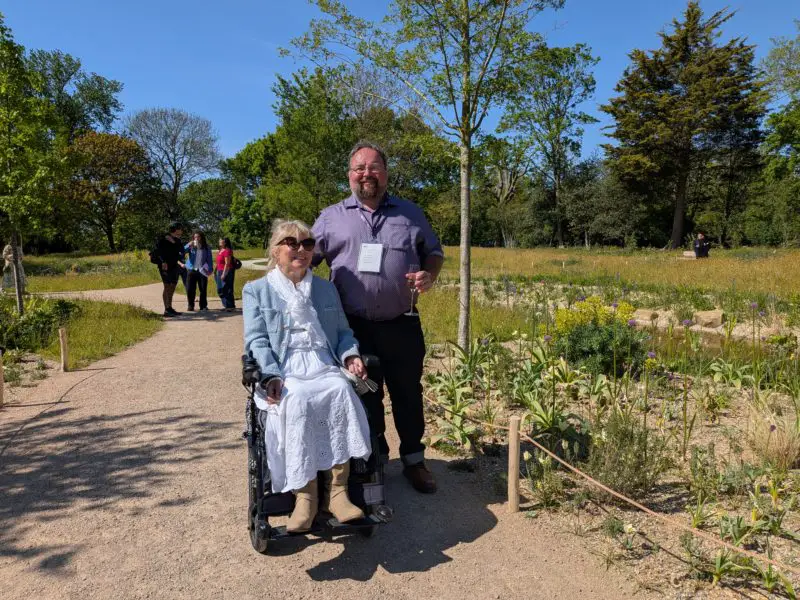
Let’s jump into the accessibility guide because that’s maybe what you are really here for and then I will give some background on the garden.
New Queen Elizabeth II Garden: Accessibility At a Glance
| Feature | Rating | Details |
|---|---|---|
| ♿ Wheelchair access | ✅ Good | Smooth, gently graded paths throughout, no gravel or steps |
| 🏗️ Water tower | ✅ Good | Fully accessible including balcony level |
| 🚻 Changing Places toilet | ✅ Good | To the left of garden entrance, behind the Espresso Cafe, opened February 2026, RADAR key required – not inside garden |
| 🐕 Dogs | ⚠️ Restricted | Service/assistance dogs only – no pet dogs |
| 🪑 Seating & rest | ✅ Good | Regular benches throughout, well spaced, suitable for fatigue conditions |
| 🗺️ Wayfinding | ✅ Good | One clear central promenade with meandering paths leading back to it – straightforward to navigate |
| ☀️ Shade | ⚠️ Limited | Mostly south-facing full sun; shaded areas mainly on wooded periphery and pergola only |
| 🌡️ Glare & heat | ⚠️ Caution | Pale substrate and white paths create significant glare and heat in summer sun |
| 🎨 Path contrast | ⚠️ Poor | White paths against pale soil – low contrast; pale timber posts mark plant boundaries but are not high contrast and could be a trip hazard |
| 🧭 Planted area clarity | ⚠️ Unclear | Boundary posts between paths and planted areas are low and pale – visually ambiguous whether some areas can be walked on |
| 💧 Pond safety | ⚠️ Note | Drop-off to pond from main terrace area without barrier – worth being aware of |
| 📋 Information boards | ⚠️ Mixed | Readable height ✅ – glare on boards in bright sun ⚠️ |
| ☔ Weather shelter | ❌ None | No rain cover or shelter if weather turns – pergola provides partial shade only |
| 👋 Tactile/sensory plants | ❌ None currently | All planting is low-level by design – nothing at waist height to touch |
| 👃 Scent | ⚠️ Developing | Limited currently – fragrant shrubs will develop over coming years as garden matures |
| 🧒 Children / cognitive accessibility | ❌ Limited | No specific provision currently |
| 💡 Best time to visit | – | Early morning or late afternoon in summer if heat, glare or light-sensitive |
| 🎟️ Entry | ✅ | Free |
| 🕐 Opening hours | ✅ | Daily during Regent’s Park hours |
This is a living, maturing garden – sensory and planting experience will improve significantly over coming years and staff emphasised that changes may be made resulting from use and feedback.
The Queen Elizabeth II Garden officially opened on 21 April 2026 by Anne, Princess Royal on what would have been the late Queen’s 100th birthday. It opens to the public on 27 April 2026 in The Regent’s Park.
But don’t assume the royal name means formal stepped layouts and gravel paths that make life a nightmare for wheelchair users.
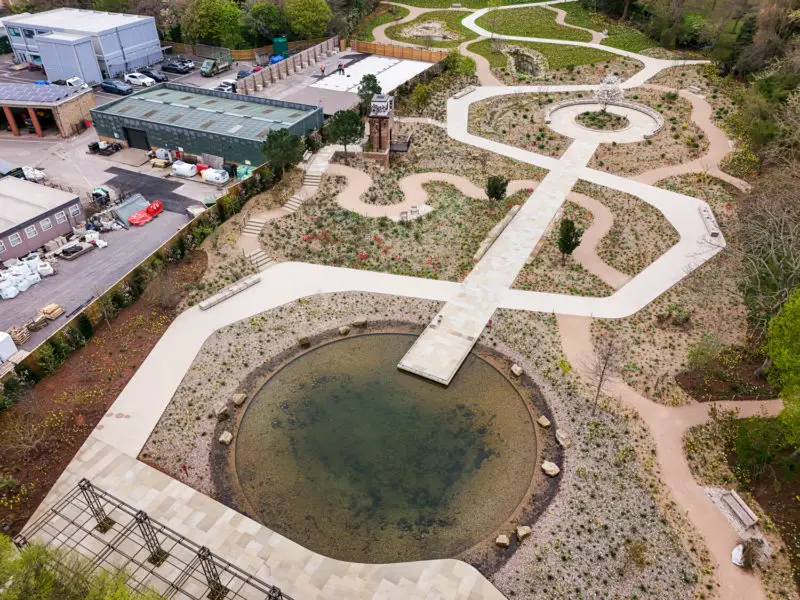
This is something genuinely different: a two-acre garden built from scratch on a brownfield site, with accessibility and ecology woven into its foundations from day one.
You can see the impact of that decision straight away.
What Was Here Before
The £5 million project – funded entirely by The Royal Parks charity, with support from donors including a £450,000 grant from the Garfield Weston Foundation – was guided from the outset by a single principle: don’t send anything to landfill.
The site was previously a working maintenance depot – a complex of Victorian-era glasshouses that had become a forgotten, inaccessible patch in the middle of one of London’s most loved open spaces. When The Royal Parks and lead designer HTA Design were handed the site, they faced a familiar developer’s question: what do you do with the rubble?
The decision to not ship away tons of broken concrete to landfill shaped the design and the planting scheme of the garden.
The Eco Decision That Shaped the Garden
Rather than sending tonnes of concrete to landfill, the team crushed it on-site and worked it into Regent’s Park’s notoriously heavy clay soil to create a low-fertility growing medium.
Thames gravel from the old glasshouse floors was washed and reused in the terrazzo paths. Steel salvaged from the glasshouse structures was repurposed for the pergola and tower balcony.
The result is an estimated 80% reduction in embodied carbon compared with standard practice.
It started as an environmental decision, but it shaped the planting too. Crushed concrete is high in calcium, and the team were fortunate the site sits on clay. In sandier soil, that lime could have stripped out nutrients and limited what would grow to almost just ‘desert plants’!
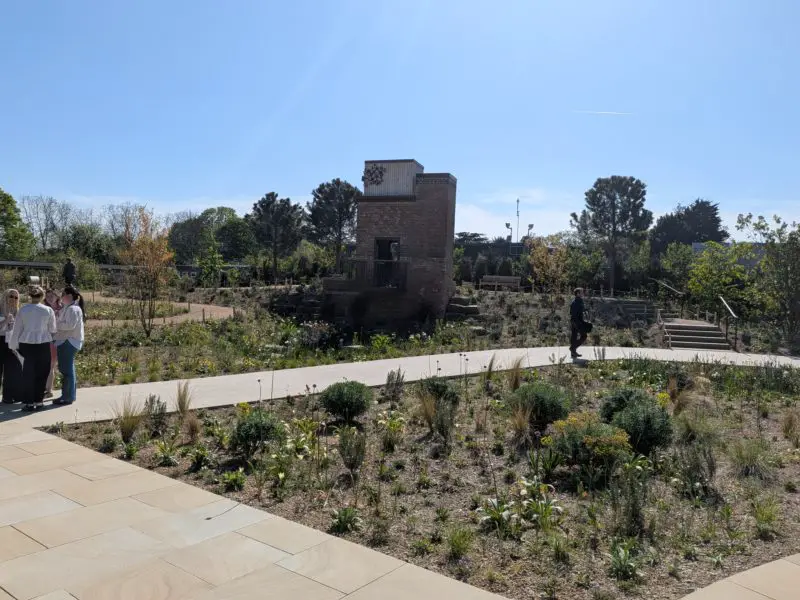
Here, the clay balances it, creating conditions that suit wildflower meadow and drought-tolerant planting. A soil scientist from Tim O’Hare Associates designed the mix, as you would expect this isn’t just guesswork!
And notably, this is the largest garden site in which this method of recycled concrete substrate has ever been used – making the Queen Elizabeth II Garden not just an attractive public space but a genuinely pioneering experiment in sustainable horticulture.
A Fitting Memorial – Perhaps More Than It First Appears
At first glance, you might walk through this garden and struggle to feel the connection to Queen Elizabeth II. The memorial elements are quiet and the symbolism is understated. But look closer, and it’s woven through everything:
- The formal promenade – straight, tapered, gently rising – symbolises her lifelong commitment to service
- The meandering terrazzo path represents the changing chapters of her long life
- The pergola’s 56 uprights each represent a member country of the Commonwealth – her greatest personal project
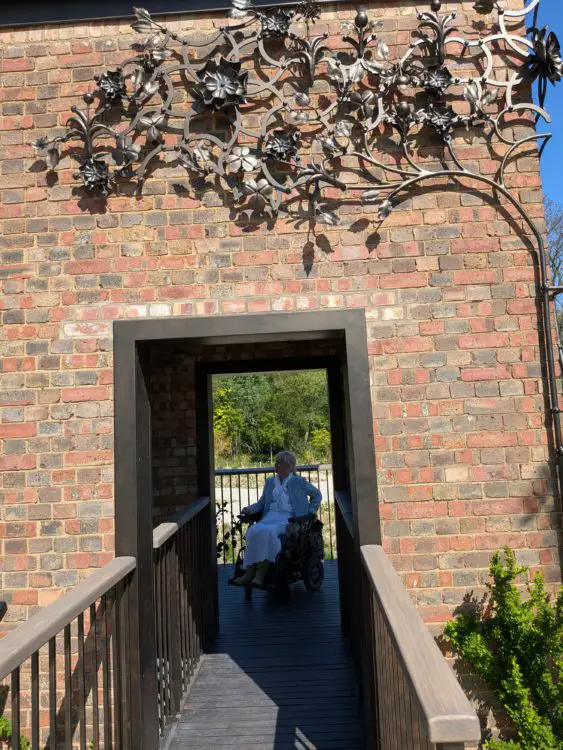
- The decorative metalwork on the water tower references the four national flowers embroidered on her Coronation gown, each forged by a blacksmith from their respective nation
- Plants throughout the garden were chosen for royal association: lily of the valley (her favourite flower), Magnolia ‘Windsor Beauty’, Acer campestre ‘Queen Elizabeth’, and Wisteria ‘Royal Purple’
James Lord, Head of Landscape at HTA Design, put it well: “the ambition was not to create a grand memorial, but a living landscape that reflects the Queen’s character and values.”
Once you understand Elizabeth II’s character – her quiet restraint, her lifelong dedication to service over self – the garden’s understated approach starts to make complete sense.
A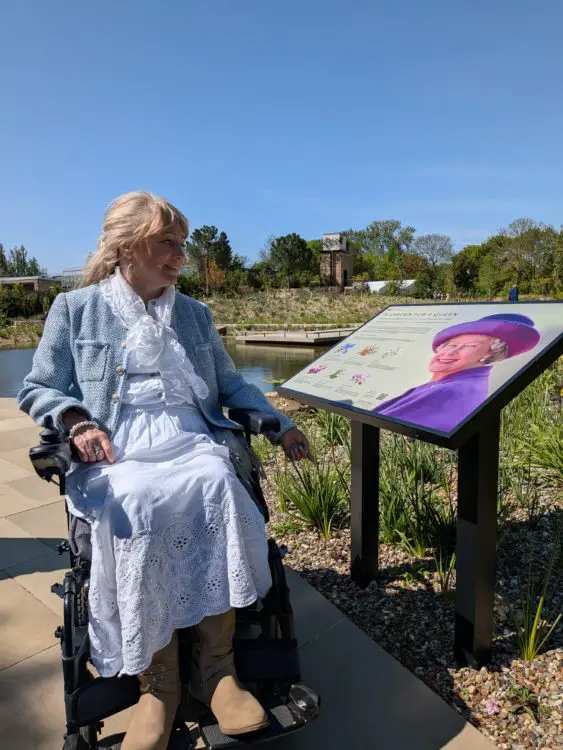
That feels right. She wasn’t a showy monarch, and she didn’t centre herself. For decades, she turned up, did the job, and kept the focus elsewhere – whether that was a state occasion or a local visit.
A garden built around big gestures and obvious symbolism would feel out of place. Here, the references sit in the background: the straight promenade for service, the 56 pergola uprights for the Commonwealth, her favourite plants worked in without fuss. You don’t have to notice them.
But once you do, it starts to come together.
The Planting: Looking Back to Go Forward
The planting design was led by horticulturist Dr Noel Kingsbury alongside HTA Design and The Royal Parks. It draws inspiration from William Robinson (1838–1935), a celebrated gardener and writer who actually worked at the Royal Botanic Society’s gardens right here in Regent’s Park before publishing The Wild Garden in 1870. Robinson argued passionately against Victorian bedding displays in favour of hardy perennials, native species, and naturalistic drifts of bulbs that looked self-arrived.
The meadow section pays direct tribute – large drifts of bulbs and British wildflowers with an unmanaged, naturalistic feel. The wider planting extends that spirit into our own climate era: Mediterranean species like rosemary, myrtle, and lavender alongside UK native plants, all chosen to withstand temperature extremes with minimal watering once established. It’s a garden designed for what British weather is becoming, not what it used to be.
Disabled Access at the Queen Elizabeth II Garden
The Royal Parks brought in several local disability groups during the design process, and May Webber, Access and Engagement Manager, The Royal Parks charity, confirmed their feedback directly influenced what was built. Not everything on the wishlist made it through – shaded walkways throughout the garden were requested but only partially delivered, as we discuss below. But there are some genuine wins worth highlighting.
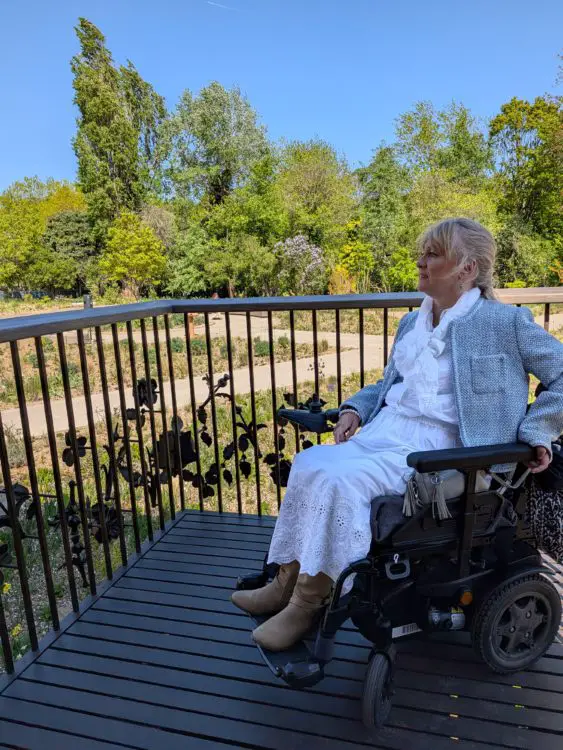
The paths are wide, smooth, and gently graded no steep ramps, no awkward cambers, no loose gravel. The layout is a series of gentle, meandering circuits, with frequent benches, that reward a slow visit without demanding anything physically punishing. For wheelchair users, ambulatory wheelchair users, and those with fatigue conditions, this is a significant step up from a typical London park experience.
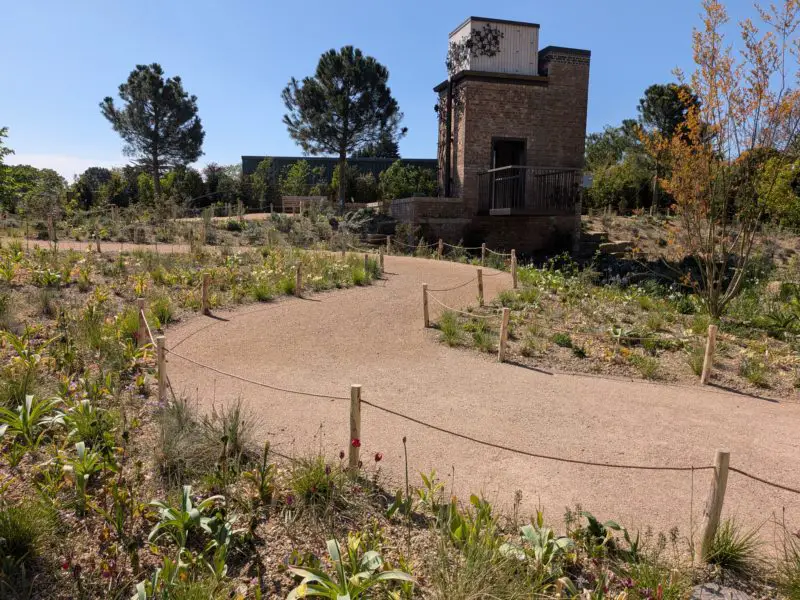
The old water tower – the only structure retained from the original site is been fully accessible via a gentle sloped path, including a balcony level with elevated views across the entire garden. It’s a genuinely lovely vantage point, and one that doesn’t require you to have earned it with a flight of stairs or clunky lift!
The biggest win, however, has its own section below.
Changing Places Toilet in Regent’s Park
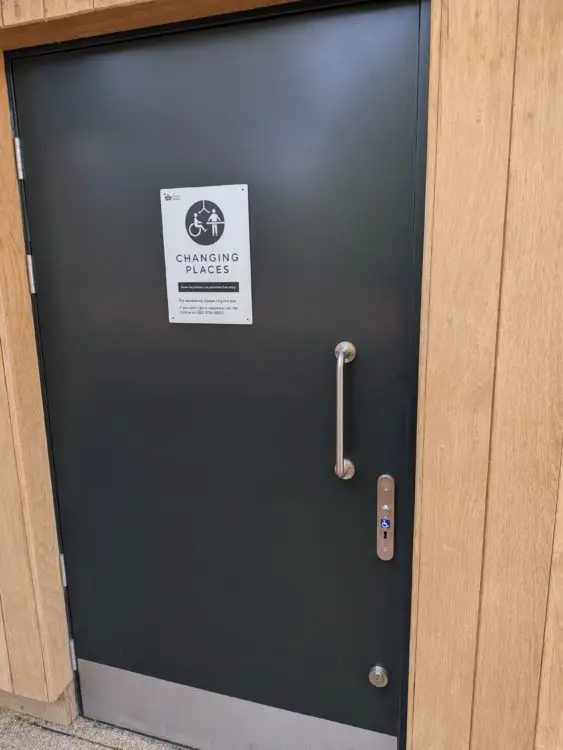
This deserves its own section. A brand new Changing Places toilet has been installed directly to the left of the Queen Elizabeth II Garden entrance (behind the Espresso Cafe), opened in February 2026. It is only the second Changing Places facility across all eight Royal Parks – a direct result of disability community consultation.
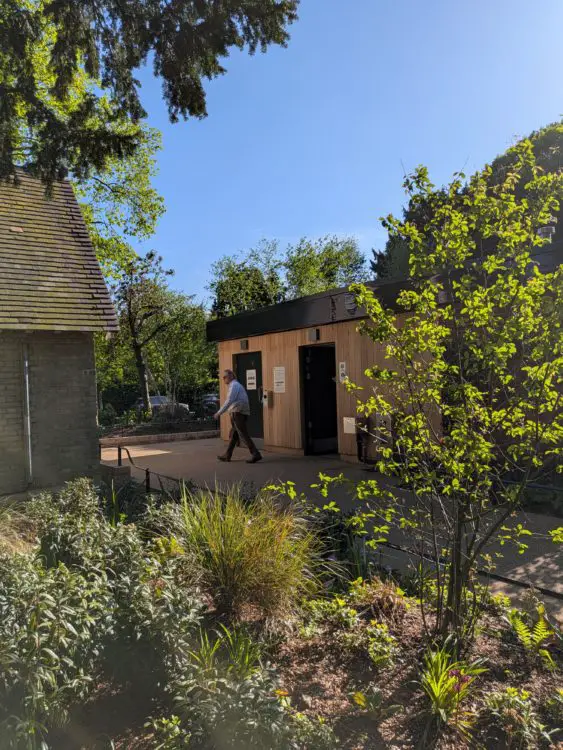
Access requires a RADAR key (the standard NKS key used across the UK’s accessible toilet network). If you don’t have one, you can order one from here for a small fee. For visitors who rely on Changing Places facilities – those with complex physical disabilities, people who use full-size hoists, or anyone who needs more than a standard accessible cubicle – this makes the Queen Elizabeth II Garden one of very few outdoor spaces in central London where full ‘convenience’ is possible for many people.
A Garden Still Finding Its Feet: Some Honest Observations
Matthew Halsall and Amanda-Jayne Doherty, joint senior landscape architects at The Royal Parks, described this as “a garden for the future” – and The Royal Parks team were refreshingly candid on the day: this is not a Chelsea Flower Show garden, parachuted in fully formed. It’s been conceived as a “slow garden”, one that will establish and mature gradually over time. That’s a considered long-term vision – but it’s worth knowing what it means in practice before you visit.
One practical safety note worth flagging: the main arrival terrace drops off directly to the pond without a barrier. For visitors with visual impairments or those who need clear edge definition, this is worth being aware of – keep to the marked paths on arrival.
Sensory accessibility is limited right now. Almost everything sits at ground level – there is nothing at waist height to touch, smell closely, or interact with. For visitors with sensory processing needs or children who want to feel foliage, this is a genuine gap. We asked Dr Noel Kingsbury, lead Horticulturalist and Planting Designer, directly whether planting would grow to medium height over time. The answer was no: low-level is a permanent design intention. As the garden matures, this is worth revisiting with the team.
Path contrast is poor throughout. The combination of pale white paths and similarly pale substrate makes edge definition difficult. Low timber posts mark the boundary between paths and planted areas but are pale, low to the ground, and could easily be a trip hazard for anyone with a visual impairment. There is also some ambiguity about which areas are walkable – meadow sections in particular don’t clearly communicate that they’re planted, not paths.
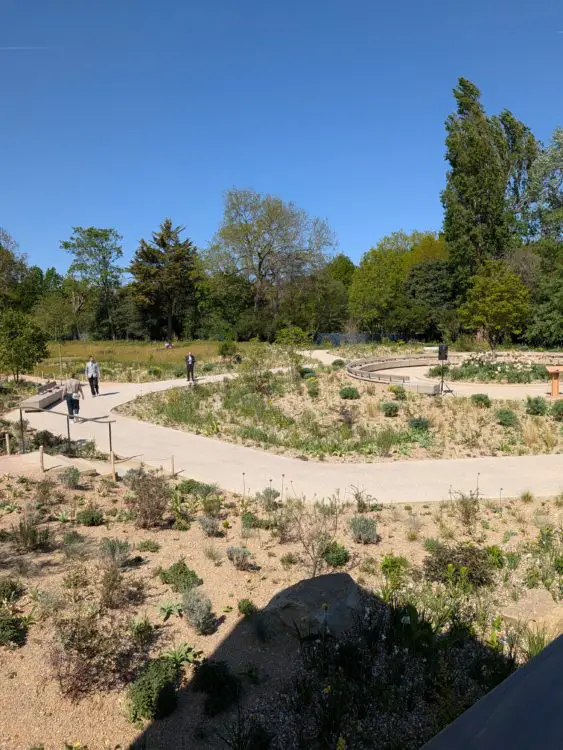
The pale substrate may create heat challenges in summer. The crushed concrete mix is visually very pale in places. Light-coloured surfaces in direct summer sun radiate significantly more heat than organic ground cover, and the garden is largely south-facing and open to the sky. The water management is deliberately low-intervention – rainfall captured in bio-swales and the pond, no intended supplementary irrigation – so the cooling effect of moist soil and dense canopy is largely absent. Whether the peripheral trees and pergola will moderate temperatures sufficiently on a hot day is genuinely unknown. The garden hasn’t experienced a full summer yet.
The shaded walkways are mostly at the edges. Shade was specifically raised by disability consultees, and it influenced the design. But in practice, shaded areas are largely confined to the wooded periphery. The majority of the main circuit is in full, south-facing sun. For visitors with MS, lupus, or other heat-sensitive conditions, early morning or late afternoon visits in summer would be wise.
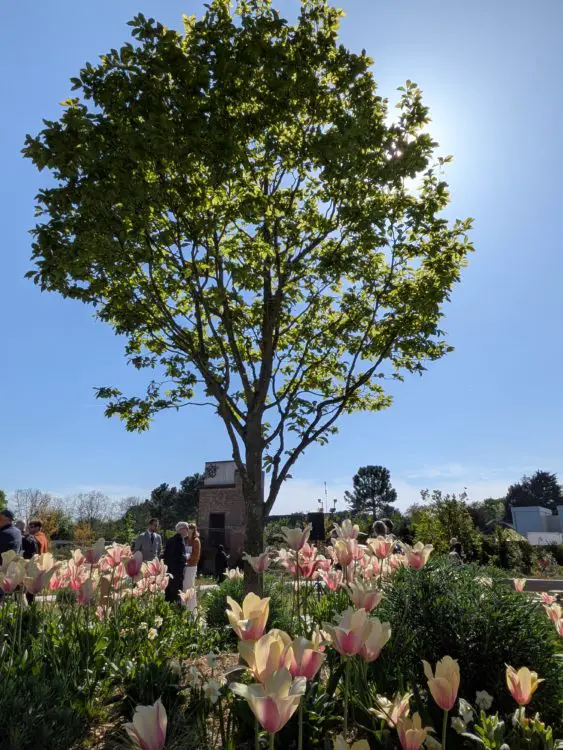
None of this is a reason not to visit. The garden is beautiful, free, fully accessible, and genuinely thoughtful in its ambitions. Disability Horizons readers deserve honest practical information – and The Royal Parks team would likely welcome the feedback as part of the ongoing process they spoke about so openly.
Getting There
Free to enter and open daily within The Regent’s Park. Closest accessible tube stations: Regent’s Park (Bakerloo line) and Baker Street (multiple lines), both a short flat walk. By train: London Euston and Marylebone are both under 15 minutes’ walk. Multiple bus routes serve the Outer Circle. Check TfL’s website before travelling for any service disruptions.
Visitor Essentials
- 📍 The Regent’s Park, London NW1
- 🎟️ Free entry, open daily during park hours
- ♿ Fully accessible paths and water tower balcony throughout
- 🚻 Changing Places toilet at garden entrance – RADAR key required
- ☀️ Mostly south-facing open sun – visit early morning or late afternoon in summer if heat-sensitive
- 🚇 Nearest tube: Regent’s Park (Bakerloo) or Baker Street
Accessibility FAQs: Queen Elizabeth II Garden
Is the Queen Elizabeth II Garden wheelchair accessible?
Yes. The garden has wide, smooth, step-free paths with gentle gradients throughout. The layout is based on circular routes, so there are no steep ramps or dead ends. There are also frequent benches and rest areas for those who need them
Is the water tower accessible?
Yes. The restored water tower is fully accessible, including the upper balcony level, which offers views across the garden.
Is there a Changing Places toilet?
Yes. A Changing Places toilet is located at the entrance to the garden. Access requires a RADAR key.
Are there shaded areas in the garden?
Shade is limited. Most of the main paths are exposed, with shaded areas mainly around the edges. Visitors sensitive to heat may prefer to visit early or later in the day.
Is the garden suitable for sensory access?
At present, sensory access is limited. There are no raised planting areas or hands-on features, and most planting is low-level. This may improve as the garden matures.
Are dogs allowed in the garden?
Only assistance dogs are permitted.
Are there facilities for children or neurodivergent visitors?
There are no dedicated play areas, quiet zones, or structured sensory features designed specifically for neurodivergent visitors.
