Autism Evaluations and ABA Therapy in Lombard, IL: Why Westside Children’s Therapy Stands Out
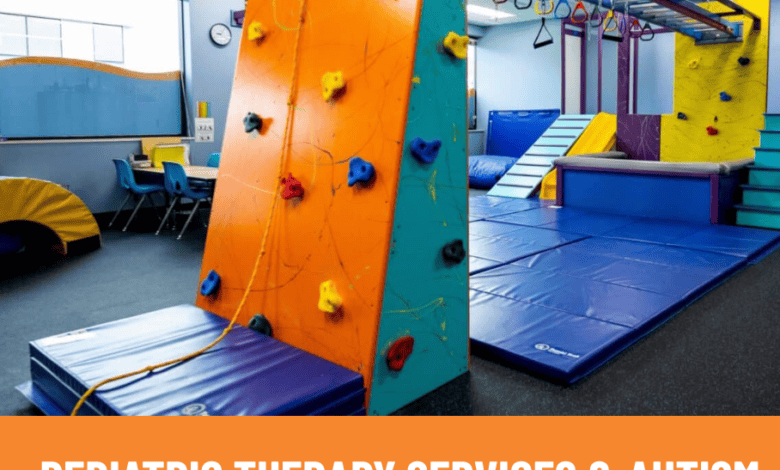
Westside Children’s Therapy in Lombard, Illinois, provides ABA therapy, speech and language therapy, occupational therapy, physical therapy, counselling and autism diagnostics from one location. This review looks at the clinic’s free virtual autism assessments, communication-focused approach, parent coaching and expertise in AAC and Gestalt language processing. It also considers accessibility information, what families can expect from therapy, and the questions worth asking before choosing an ABA provider.
Westside Children’s Therapy is a paediatric therapy clinic at 400 E 22nd St, Lombard, Illinois, providing ABA therapy, speech and language therapy, occupational therapy, physical therapy, counselling and autism diagnostics under one roof. It is recognised here for removing two of the biggest barriers autistic children and their families face — diagnostic waits and evaluation costs — through free virtual autism assessments returning results in days, and for building parent coaching into every programme.
Families researching therapy options are often comparing providers based on more than location alone. It’s worth asking how communication goals are identified, how progress is measured, and how parents are involved in supporting those skills at home. Resources such as ABA autism in Lombard can give families a clearer picture of what a communication-focused approach looks like in practice, including how individual goals are set, how therapists track progress over time, and how strategies are adapted as a child’s needs change. Looking at this information alongside discussions with therapists can help parents feel more confident about choosing a programme that reflects their child’s strengths, preferences and everyday communication needs.
Key Takeaways
| Feature | Details |
|---|---|
| Location | 400 E 22nd St A, Lombard, Illinois, USA |
| Type | Paediatric therapy clinic (ABA, speech, occupational and physical therapy, counselling, diagnostics) |
| Accessibility | Free virtual autism evaluations with results in 2–3 days; one-to-one sessions; AAC and Gestalt language processing expertise on staff; parent coaching in all programmes; no physical access details published |
| Customer Reviews | 4.9 stars from 36 Google reviews; parents describe welcoming staff and thorough, respectful first evaluations |
| Contact | westsidechildrenstherapy.com or 331-224-3074, open 8am–7pm Monday to Friday |
Free Virtual Autism Testing and Paediatric Therapy Under One Roof
Westside Children’s Therapy runs clinics across Illinois, and its Lombard site serves children from infancy through to age 18, with counselling also available for adults. ABA, speech, occupational and physical therapy and psychological diagnostics all sit in one building — a practical point, because children on multiple waiting lists at separate clinics often lose months of joined-up progress. No referral is needed to start therapy, and the team helps families with insurance paperwork.
The standout offer is the SAIL autism evaluation programme. Waits of six months to a year for an autism assessment are common in the US, and private evaluations can cost thousands of dollars. Westside’s evaluations are virtual, free, carry no obligation to continue with the clinic afterwards, and typically return results within two to three days. Because testing happens over video from home, parents don’t need to take time off work or arrange transport for repeated in-person appointments.
Communication Support for Autistic Children: AAC, Gestalt Language Processing and Parent Coaching
The clinic’s approach to communication is its strongest inclusive feature. Many behaviours that look challenging on the surface are attempts to communicate discomfort, fatigue or a need for control, and ABA done well focuses on finding the message behind the behaviour — then giving the child a clearer way to express it, whether that’s a gesture, a picture card, an AAC device or a phrase. Westside’s staffing reflects this: one of its speech directors previously worked as an AAC (augmentative and alternative communication) evaluator, and another speech pathologist specialises in Gestalt language processing, an approach built around the way many autistic children acquire language in whole chunks or scripts rather than single words.
Sessions are mostly one-to-one, delivered by registered behaviour technicians under board-certified behaviour analysts, and parents are coached in real time during therapy rather than updated by summary afterwards. That matters for skill generalisation — a child taught to ask for a break at the clinic, but not supported to do the same at home, may struggle to carry the skill over. Families are given specific strategies to use inside ordinary routines between sessions: getting dressed, mealtimes, waiting in a queue at the shop.
Reviews on Google (4.9 stars from 36 reviews) frequently mention the evaluation experience. One parent wrote that the therapist “addressed myself and my son by our correct names often” and “was genuinely interested in how she could help our family.”
There are gaps. The website publishes no information about step-free access, accessible parking or accessible toilets at the Lombard site — notable given the physical therapy caseload includes children with muscular dystrophy, hypertonia and spina bifida, so wheelchair users and mobility aid users are clearly among its visitors. One reviewer also reported being hung up on after asking for a Spanish speaker. Publishing physical access details and a clear language access policy would be straightforward improvements.
Why Is Getting an Autism Diagnosis So Slow — and How Fast, Free Testing Removes the Barrier
Under the social model of disability, children are not disabled by autism itself but by environments that fail to accommodate how they communicate and process the world. A months-long, costly diagnostic process is exactly such a barrier — it delays support during the early years, when it makes the most difference, for reasons that have nothing to do with the child and everything to do with how services are usually designed. Free, fast, remote evaluation removes that barrier outright.
The distinction between independence and compliance matters here too. The better measure of an ABA programme is not a child who follows instructions, but a child who recognises they are overwhelmed and asks for space — skills usable in new situations without adult prompting. Westside’s communication-first staffing and family collaboration point in that direction, though families should still ask any provider directly: what data is collected and why, how goals are reviewed, how parents support progress between sessions, and what realistic timelines look like.
What Families Can Reasonably Expect From An ABA Therapy Service
Every child responds differently to ABA therapy, so progress rarely follows a straight line. Some skills may develop quickly, while others take longer or need to be approached in a different way. Families should be cautious of providers that promise dramatic improvements within a fixed timeframe, as meaningful progress is usually built through consistent practice, regular review and goals that reflect the individual child’s needs.
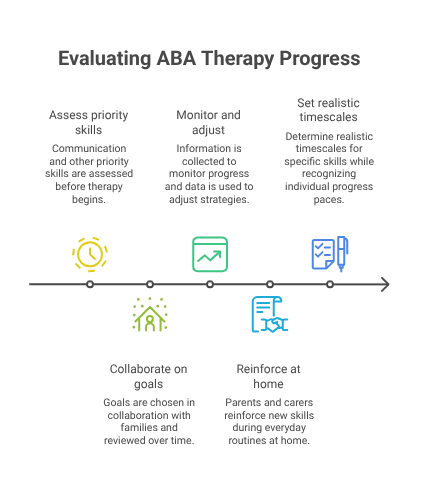
A reputable therapy provider should be open about how they plan and evaluate support. Rather than relying on broad claims about success, they should be able to explain:
- how communication and other priority skills are assessed before therapy begins
- how goals are chosen in collaboration with families and reviewed over time
- what information is being collected to monitor progress, and how that data is used to adjust strategies
- how parents and carers can reinforce new skills during everyday routines at home
- what realistic timescales might look like for the specific skills being targeted, while recognising that every child progresses at their own pace
Families may also find it helpful to ask how a provider adapts its approach if a strategy is not working, and how they ensure therapy supports a child’s communication, wellbeing and growing independence rather than focusing solely on compliance. These conversations can provide a much clearer picture of a programme than marketing material alone.
Choosing an ABA Provider in Lombard: Final Thoughts on Westside Children’s Therapy
Westside Children’s Therapy has tackled the barriers families most often report — assessment cost, waiting times and fragmented care — with a free 2–3 day diagnostic pathway and coordinated therapy in one location, backed by genuine communication expertise in AAC and Gestalt language processing. Publishing physical access information for the Lombard clinic would complete the picture, but this is a service worth knowing about for families in DuPage County.
Frequently Asked Questions
What services does Westside Children’s Therapy provide?
The Lombard clinic offers ABA therapy, speech and language therapy, occupational therapy, physical therapy, counselling and autism diagnostic assessments for children, with counselling also available for adults.
Are autism assessments free?
Yes. Westside Children’s Therapy offers free virtual autism evaluations through its SAIL programme. Results are typically returned within two to three days, and families are not required to continue therapy with the clinic afterwards.
Do I need a referral?
No. Families can contact the clinic directly to arrange an assessment or therapy, and the team also helps with insurance paperwork.
How are parents involved in therapy?
Parent coaching is included throughout therapy programmes. Families are shown practical ways to support communication and other skills during everyday routines at home rather than only receiving updates after sessions.
Does the clinic support different communication styles?
Yes. The clinic has expertise in augmentative and alternative communication (AAC) and Gestalt language processing, allowing therapists to adapt support to different communication needs.
Is accessibility information available?
The clinic publishes details about its therapy services but does not currently provide information about physical accessibility features such as accessible parking, step-free access or accessible toilets. Families with specific access requirements may wish to contact the clinic before visiting.