Where to Buy the Top Switch-Adapted Musical Instruments for Special Education Classrooms
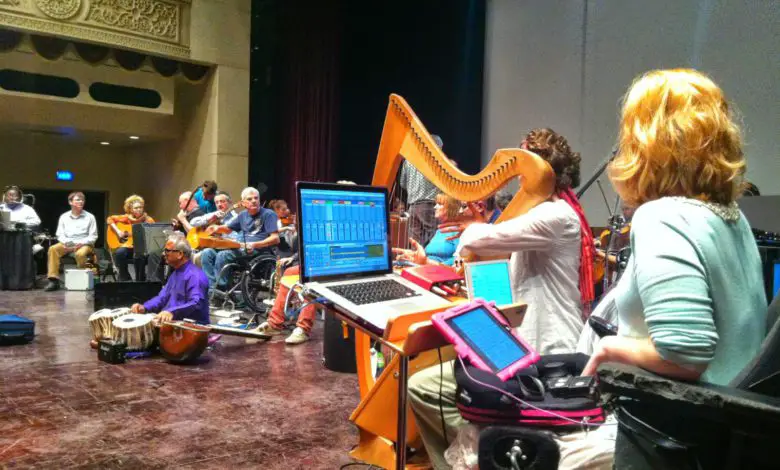
Music is a powerful thing. It has the power to move, motivate and connect people in ways words can’t. Learning a musical instrument is a valuable skill for any student. However, traditional instruments aren’t always accessible for disabled people. Switch-adapted musical instruments change that.
What are switch-adapted Musical instruments?
Switch-adapted toys and musical instruments are play or learning tools that have been modified to work with one or more external switches, instead of (or as well as) small buttons or complex hand movements. A switch might be activated by a hand, foot, head movement, or other consistent action, depending on the person using it. This allows children and adults with limited motor control, fatigue, or coordination differences to take part in cause-and-effect play, music-making, and sensory exploration in a way that suits their body and access needs. Importantly, switch-adapted options aren’t one-size-fits-all — the right setup depends on the individual, the type of switch used, and the environment they’re being used in.
Designed for students with physical and cognitive disabilities, they make music-making inclusive, interactive and empowering. With such a large selection on the market, it can be challenging to determine which to choose and where to purchase them. Here’s a list of the top companies to buy switch-adapted musical instruments for special education classrooms.
-
Enabling Devices
Enabling Devices is the best place to buy switch-adapted musical instruments for special education classrooms. With a long history, it was one of the first companies dedicated to creating adapted toys and devices since the 1970s. This option offers a wide range of products for disabled people, featuring some of the most innovative and creative adapted products on the market. From simple toys to complex communication aids and musical instruments, they cater to a wide range of needs.
As industry leaders, Enabling Devices focuses on creating products that are both engaging and fun. Many of its offerings are based on popular toys, helping them feel less clinical and more appealing to children. It is the go-to place for switch-adapted musical instruments, providing everything you’d need for a well-equipped special education classroom.
-
Inclusive Technology
Inclusive Technology is another great choice. The brand offers a wide selection of accessible technology, ranging from computers and tablets to instruments and musical devices. However, it does primarily focus on its computer hardware and software, resulting in a smaller range of switch-adapted musical instruments suitable for classroom use.
The provider is also notable for its strong educational focus, providing resources and software specifically designed for learning and development in special education. Inclusive Technology is based in the UK but has a global reach, with a strong international distribution network, making it accessible to many parts of the world.
-
Rehabmart
Rehabmart is another great option for switch-adapted musical instruments. This is a large retailer that sells a wide range of medical and rehabilitation equipment. It offers a wide variety of products from numerous manufacturers.
Because Rehabmart is a resale marketplace, products are often sold at low prices. It’s also convenient, as it offers a place to shop for a wide range of needs, not just switch-adapted musical instruments.
-
Adaptive Tech Solutions
Adaptive Tech Solutions is also a worthy contender on this list. This entity stands out because it’s owned and operated by a therapist, which improves its credibility and ensures products are developed with direct clinical and user experience.
It adapts popular toys to be highly engaging and enjoyable for users with disabilities, avoiding a clinical feel. The focus is on providing affordable adaptive toys without building from scratch, which helps manage costs compared to custom-designed devices.
What to consider before buying switch-adapted instruments
Before buying switch-adapted instruments, it’s worth thinking about who will be using them, how, and in what setting. Factors like the type of switch already in use, how much force is needed to activate it, and whether the instrument allows for adjustable volume or response time can make a big difference to access. Practical issues also matter in classrooms, including durability, ease of cleaning, storage, and whether replacement parts are available. No single instrument will suit every learner, so flexibility and compatibility are often more useful than complexity or extra features.
Common types of switches and how they’re used
Switches come in many forms, and the most suitable option depends on the person using it rather than the activity itself. Some switches are activated by a light touch, while others require firmer pressure or a larger movement, and they can be used with hands, feet, head movements, or other consistent actions. In musical or play-based activities, switches are often used to trigger sounds, start and stop music, or create simple cause-and-effect responses. Because switches vary widely in size, sensitivity, and connection type, it’s important to check compatibility rather than assuming all switches work interchangeably.
Classroom and sensory considerations
In classroom settings, switch-adapted instruments need to work not just for the individual user, but within a shared environment. Sound levels, repetition, and sudden noises can be overwhelming for some learners, while others may seek strong auditory or sensory feedback, so adjustable volume and predictable responses are helpful. Visual distractions, flashing lights, and crowded setups can also affect access and comfort. Thinking about where and when instruments are used — for example, in small groups, quiet corners, or structured sessions — can help ensure they support participation rather than becoming overstimulating or isolating.
Finding the Best Switch-Adapted Musical Instruments
With so many switch-adapted musical instruments available, starting your search can be overwhelming. Thankfully, several reputable businesses make it easier to find the right instrument.
Switch-adapted musical instruments are very important. By removing physical barriers, they enable students of all abilities to participate in music-making and experience the joy of creating it.
Note on availability and location
All of the retailers and product links listed in this resource are based in the United States. While some may ship internationally, availability, pricing, shipping costs, import duties, and return policies can vary significantly for readers outside the US. UK and non-US readers may wish to use this list as a starting point for understanding what types of switch-adapted instruments exist, then look for equivalent products through local suppliers, specialist assistive technology providers, charities, or education procurement routes.
Bonus tip: Using the Trabasack Curve Connect as a low-cost mount for switches and musical instruments
The Trabasack Curve Connect can work well as a lap-based mounting surface for switch-activated musical instruments and small instruments, particularly when combined with the Trabasack Media Mount and hook tape. The Connect surface is velcro-receptive, which means switches, small instruments, or control boxes can be positioned directly on the tray using sticky-back hook tape and adjusted over time as access needs change. The Media Mount can then be used to stabilise awkward-shaped items — such as sound toys, small speakers, or adapted instruments — by wrapping around them and fixing them securely to the Connect surface. Trabasack is already used by many people as a low-cost mounting option for switches and assistive technology, making this a familiar and flexible base for simple music-making setups.

Using it for switch-activated instruments
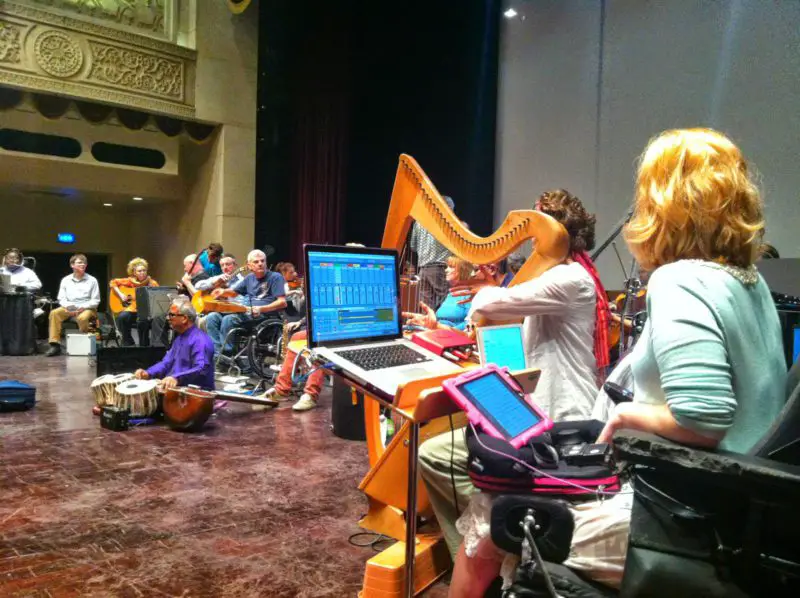
For switch-activated musical instruments or sound-making devices, the Curve Connect allows switches to be placed where the user can reach them most reliably, whether that’s with a hand, fist, elbow, or head movement. The switch can be fixed directly to the tray using hook tape, while the instrument or sound box is held in place using a Media Mount to prevent sliding when the switch is activated. For users with uncontrolled or larger movements, the Media Mount can also act as a soft boundary, helping keep the active hand or limb within the switch area and reducing accidental knocks to other equipment.
Using it with small musical instruments
The setup can also work for non-switch-activated instruments, particularly smaller or lightweight ones. Items such as mini keyboards, pad controllers, sound toys, simple percussion (including bottles used as shakers), or tablets running music apps can be positioned on the tray and stabilised using the Media Mount. This can make it easier for a player to hit, push, or grasp an instrument without it rolling away, while keeping everything within a comfortable reach zone.
Practical positioning and safety notes
The curved edge of the Curve Connect can sit close to the body for wheelchair users, helping keep switches and instruments nearer to midline and reducing reach. Using multiple smaller patches of hook tape rather than one large piece can make it easier to fine-tune positioning as access needs change. As with any mounting setup, it’s important to check weight limits — the Curve Connect is suitable for typical switches, tablets, and small instruments, but not heavy keyboards or large equipment — and to test the setup both at rest and during active use to ensure nothing shifts under repeated or forceful switch hits.