Choosing accessible school transport: What disabled students and education settings actually need
Accessible school transport is an essential for many students. it is the difference between attending school consistently or missing out altogether. When transport works, it supports learning, routine, and independence. When it does not, it creates daily barriers before the school day has even started.
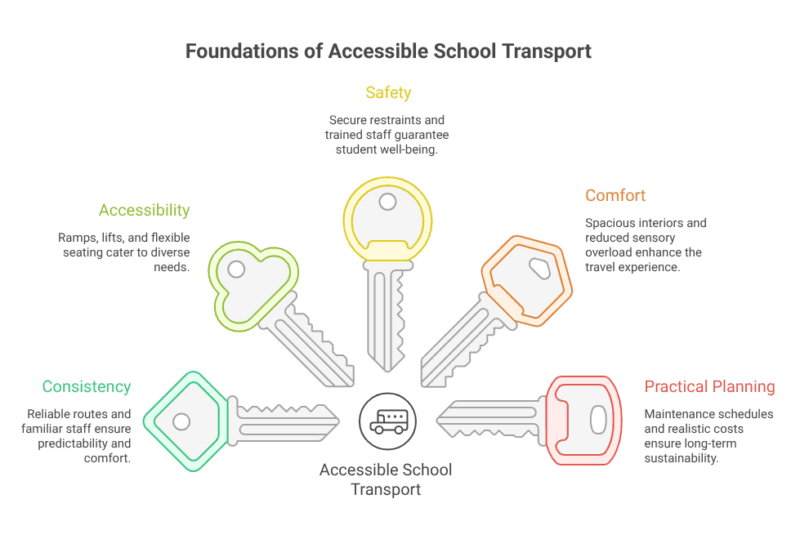
At a glance: what good accessible school transport looks like
| What matters | What to look for |
|---|---|
| Consistency | Reliable routes, familiar layouts, and predictable routines |
| Accessibility | Lifts, ramps, low-step entry, and flexible seating |
| Safety | Secure restraints, trained staff, and clear procedures |
| Comfort | Space, ventilation, and reduced sensory overload |
| Practical planning | Clear maintenance plans and realistic long-term costs |
Why accessible school transport matters
Transport is part of a student’s education, not separate from it. If a journey is stressful, unsafe, or inconsistent, it affects attendance, focus, and confidence.
Disabled students face a wide range of barriers. A wheelchair user may not be able to board safely without the right equipment. A student with sensory sensitivities may struggle with noise, lighting, or crowded seating. Others may need space for medical equipment or support during the journey.
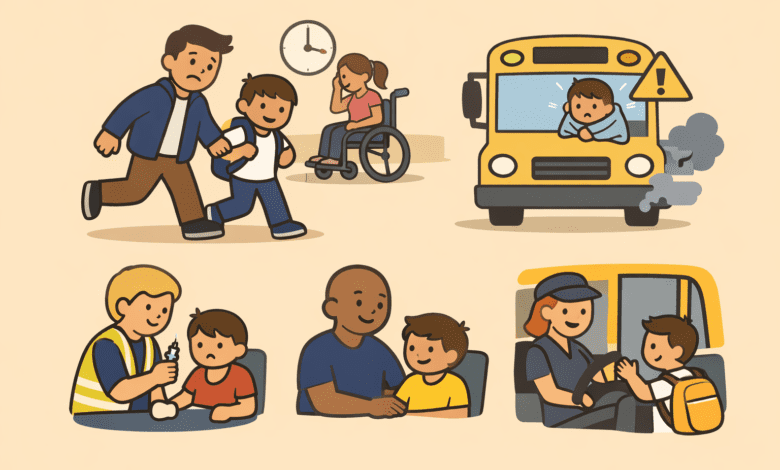
There were times the bus broke down and my son was left waiting in the cold. That kind of situation does not just delay the day — it builds anxiety before a child even gets into the classroom. When these needs are not met, students can arrive already overwhelmed, late, or unable to engage. Over time, that leads to missed days and reduced participation.
Accessible transport removes those barriers. It allows students to arrive ready to learn, not already dealing with avoidable stress.
What disabled students actually need from school transport
Physical access that works every day
Access features need to be reliable and easy to use — not just functional on paper. Lifts or ramps need enough space to manoeuvre, and layouts should not require complicated adjustments each time. A ramp that jams on the third trip of the week is not an accessibility feature. It is a daily inconvenience.
Comfort and space
Cramped or poorly ventilated vehicles can make journeys difficult, especially for students with sensory sensitivities or health conditions. Space to sit comfortably and travel without pressure from others matters more than maximum capacity.
Consistency and routine
Familiar routes, seating positions, and staff can make a noticeable difference. Small changes in routine can increase anxiety, particularly for neurodivergent students.
Support from trained staff
Drivers and escort staff need confidence using equipment such as restraints and lifts. Just as important is understanding how to support students calmly and respectfully during the journey.
I got to know the escort staff well because they needed to recognise the signs of a seizure quickly. If they were off and someone new stepped in, there was always a question in the back of my mind — would they know what to look for in time? That kind of knowledge cannot be handed over in a two-minute briefing.
Key features to look for in accessible school transport
Not all accessible vehicles offer the same level of usability. These features tend to make the biggest practical difference:
- Wheelchair lifts or ramps that operate smoothly and safely
- Secure restraint systems that staff can use confidently
- Flexible seating layouts that can be adjusted as needs change
- Low-step entry and handrails for safer boarding
- Good ventilation and temperature control
- Enough space for medical equipment where needed
These features should be tested in real conditions, not just reviewed on paper. A setup that looks suitable may still be difficult to use in practice.
Reviewing transport options that fit your setting
Once you know what your students need, the next step is matching that to the right vehicle. Schools often look at size, layout, and accessibility features together rather than treating them as separate decisions.
Taking time to explore school minibus options designed for education settings can help ensure each student travels safely and comfortably. Different configurations support different group sizes and mobility needs.
Shorter vehicles may suit smaller groups or tighter routes. Larger models carry more passengers but may need extra thought around parking and manoeuvring — worth checking before committing.
Adaptations vary too. Some vehicles include wheelchair lifts, others focus on flexible seating that can be repositioned as needs change. The key question is how often those adaptations will be used and how straightforward they are for staff to operate day to day.
Match the vehicle to real daily use, not the occasional best-case scenario.
Questions to ask before choosing a vehicle or provider
These questions should come early in the decision process, not at the end:
- How many students need transport each day, and what are their access requirements?
- What equipment is needed now, and what might be needed in the future?
- How easy is it for staff to operate lifts, restraints, and seating changes?
- What happens if the vehicle is unavailable or breaks down?
- Who is responsible for maintenance, safety checks, and compliance?
- What is the total cost over time, not just the upfront price?
- How are escort staff briefed on individual students’ medical needs?
- What is the plan if the regular escort is absent?
On paper, transport plans can look fine. In reality, small gaps — like what happens during a breakdown or who understands a child’s medical needs — make all the difference. Clear answers help avoid rushed decisions and prevent problems later.
Planning transport that supports inclusion
Accessible transport affects more than getting to school on time. It shapes whether students can take part in trips, after-school activities, and social opportunities.
When transport is suitable, students are more likely to be included in the full school experience.
When it is not, they are often excluded by default.
Guidance from GOV.UK SEND resources highlights the importance of equal access to education. Transport is part of that responsibility, not an optional extra that schools can deprioritise when budgets are tight.
It is also worth thinking about independence. Some students may benefit from gradually reduced support over time — travelling with less assistance as their confidence grows. A well-chosen vehicle and consistent routine can support that transition.
Schools that involve families, listen to disabled students, and review transport arrangements regularly tend to spot issues earlier and make better decisions.
Budget and long-term practicality
Cost is always part of the decision, but it needs to be looked at over time. A lower upfront price does not always mean better value if the vehicle is unreliable or difficult to maintain.
Ongoing costs include fuel, servicing, insurance, and repairs. Downtime also has a cost, especially if it disrupts attendance.
Some schools prefer ownership for long-term control. Others choose leasing for predictable costs and included maintenance. The right option depends on how stable your needs are and how much flexibility you require.
What matters most is reliability. If transport fails regularly, students are the ones who lose out.
Safety and compliance in plain terms
Accessible transport must meet legal safety standards, but it should also feel safe to use. That includes:
- Regular vehicle checks and servicing
- Clear safety procedures that staff actually know and follow
- Staff training on equipment and emergency situations
- Proper use of restraints and accessibility features
Because of my son’s epilepsy, he was collected last and dropped home first to keep his journey as short as possible. If he needed rescue medication, it could not safely be given on the bus — there was not the space or the right equipment. That added another layer of stress to every journey, for him and for us.
Ticking a compliance box is not the same as running safe, accessible transport. Both matter.
Why this matters in real life
If school transport is unreliable, inaccessible, or stressful, disabled students carry that impact every day. It affects attendance, confidence, and how included they feel in school life.
Get it right, and transport becomes something students can rely on without thinking about it. That is the goal: removing barriers so the focus stays on learning and participation, not the journey to get there.
Duncan Edwards is Manager of Disability Horizons Shop and has personal experience of disability services and education support as a carer.