A Guide to Dental Emergency in Singapore with a Disability
Dental emergency in Singapore?
Learn how disabled people can find accessible urgent dental care, prepare ahead, and advocate for their access needs.
You are finally out for the weekend, meeting up with friends at a new, accessible café when you feel a sharp jolt of pain through your jaw. You bite. Your tongue knows immediately: a jagged edge, a tooth has cracked, a filling has given way.
For many people, a dental emergency means pain, disruption, and an urgent search for treatment. Disabled people may also have to think about accessibility. A clinic might be nearby, but that does not guarantee step-free access, suitable equipment, or staff who understand different communication and support needs. When a tooth breaks or an infection develops, those practical questions can become just as pressing as the dental problem itself.
A dental emergency in Singapore is challenging enough, but if you have particular physical, sensory or communication needs, the landscape looks even more complicated. Knowing your options in advance can remove some of the uncertainty when urgent treatment is needed.
Why “Standard” Emergency Care Often Falls Short
When you have a dental emergency, like a throbbing abscess or a broken tooth, your first instinct is to find the nearest clinic. But “near” is not always “accessible.”
Many general dental practices, especially those in older shophouses or traditional HDB estates, may have physical barriers that you may not be aware of until you get there. These can include high steps at the entrance, narrow corridors that do not allow power wheelchairs, or small treatment rooms that do not have space for a support person or service dog.
There can also be a disconnect around sensory or communication needs. High-stress, fast-paced emergency environments can be overwhelming for neurodivergent individuals or those with communication differences. The “one-size-fits-all” approach of standard triage often leads to disabled patients feeling misunderstood or dismissed. Understanding where these barriers exist can make it easier to plan ahead and avoid unnecessary stress during an emergency.
How to Prepare Before You Need Urgent Dental Care
Don’t wait till you have a broken tooth to find out what your plan is. Planning ahead can make a dental emergency easier to manage and reduce the number of decisions you need to make under pressure.
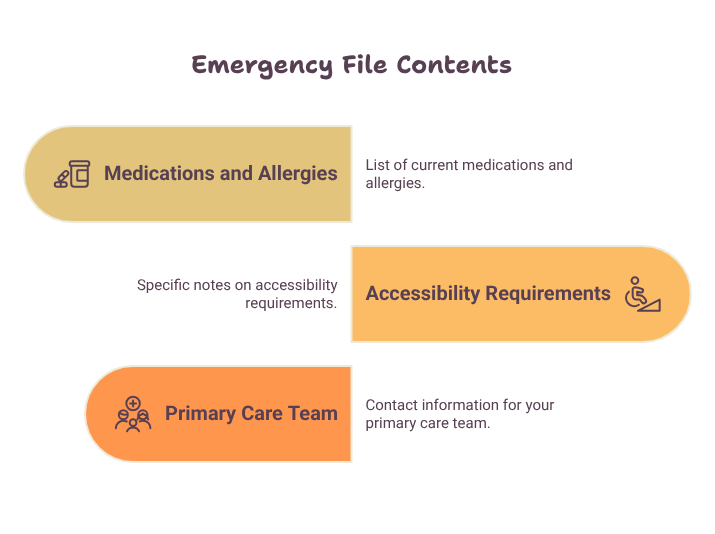
1. Create Your Personal Emergency File
Create a simple, digital document or a physical folder that you can easily access. It should include:
- A list of your current medications and allergies.
- Specific notes on your accessibility requirements (e.g., “I require a transfer-assist chair” or “I need a quiet space to process information”).
- Contact information for your primary care team.
2. How Teledentistry Can Help
Some clinics now offer virtual consultations that can help you understand whether immediate treatment is necessary. A growing number of clinics in Singapore now offer virtual consultations. A quick video call can allow a dentist to visually assess the damage and advise you if it is a true emergency that requires an immediate physical visit, or if it can be safely managed with pain relief until a morning appointment. Not every practice offers this, so it is worth confirming availability when you call.
3. Ask the Right Questions
It helps to ask direct questions about accessibility before travelling to a clinic.
Where relevant to your circumstances, ask questions such as:
- “Is your clinic entrance step-free and wheelchair-accessible?”
- “Do you have experience in adapting treatments for patients with mobility or sensory needs?”
- Can I bring a personal assistant or support worker into the treatment room with me?
Where to Find Accessible Urgent Care in Singapore
Besides the corner clinic, you have other options in Singapore. When a serious emergency strikes, especially after hours, you should consider:
- Hospital-Based Dental Departments: Large public institutions such as the National Dental Centre Singapore (NDCS) are generally well equipped with comprehensive accessibility infrastructure. They handle complex health backgrounds and are more likely to have the room and equipment to accommodate different physical needs.
- Specialized Multi-Disciplinary Networks: Several private dental groups are found in modern high-rise medical centres (e.g. Novena and Orchard). These facilities are often purpose-built to modern accessibility standards, with wide lifts, automatic doors and spacious examination rooms.
- Reporting Access Barriers Through OneService: If you face any barrier on your way to a clinic in public infrastructure, please remember that you can report it using the OneService app. It’s not an instant fix for your tooth, but it helps make the path to care clearer for the next person.
Advocacy and Your Rights: You Are the Expert
Accessibility is not something that should be negotiated in the middle of a dental emergency, but many disabled people find themselves doing exactly that.
If you need extra space, clear communication, a support person present, or another adjustment, mention it as early as possible. A clinic may be able to make arrangements immediately. Where barriers exist, whether that’s an inaccessible entrance, unsuitable equipment or a lack of staff awareness, those issues are worth raising with the practice. Individual experiences can help highlight problems that might otherwise go unnoticed.
Share your experience: disability community groups such as Disabled People’s Association Singapore actively encourage members to report accessibility gaps, and their feedback has contributed to improvements in how some providers communicate with patients with disabilities. Your comments encourage clinics to install ramps, widen doorways and train staff on disability awareness.
Some larger dental providers may offer additional flexibility during an emergency, particularly if they operate across multiple locations and extended hours. Nuffield Dental is one example. Before attending, contact the clinic directly to discuss any accessibility requirements and confirm the facilities available at your chosen location.
Preserving Your Peace of Mind
Having a plan in place can make it easier to focus on getting treatment when something goes wrong. Local disability organisations and peer networks can also be valuable sources of recommendations and practical advice. Connect with local disability support groups or peer networks in Singapore to share recommendations of clinics which have given you great, accessible care.
Knowing where to turn can help you get treatment more quickly, avoid unnecessary barriers, and maintain control over how your healthcare is delivered.
Frequently Asked Questions About Accessible Emergency Dental Care in Singapore
What should disabled people do before a dental emergency happens?
Create an emergency information file containing medications, allergies, emergency contacts, and details about any accessibility requirements. Having this information ready can reduce stress and help healthcare professionals provide appropriate support more quickly.
Are emergency dental clinics in Singapore always wheelchair-accessible?
No. Accessibility varies between clinics. Some older premises may have steps, narrow corridors, or limited treatment room space. Calling ahead to ask about access arrangements can help avoid unnecessary barriers during an emergency.
Can teledentistry help during a dental emergency?
Many clinics now offer virtual consultations. These can help determine whether a problem requires immediate treatment or whether it can safely wait until a scheduled appointment.
Can a support person attend an emergency dental appointment?
Many clinics allow support workers, carers, or family members to accompany patients, particularly when communication or physical assistance is required. It is best to confirm this when booking.
Where can disabled people find dental care for complex needs in Singapore?
Larger institutions such as the National Dental Centre Singapore often have experience supporting patients with complex physical, sensory, intellectual, or communication needs and may offer more comprehensive accessibility features.
What should I do if I encounter accessibility barriers at a dental clinic?
You can raise concerns directly with the clinic management and document any barriers encountered. Feedback from disabled people often helps improve accessibility and service provision for future patients.