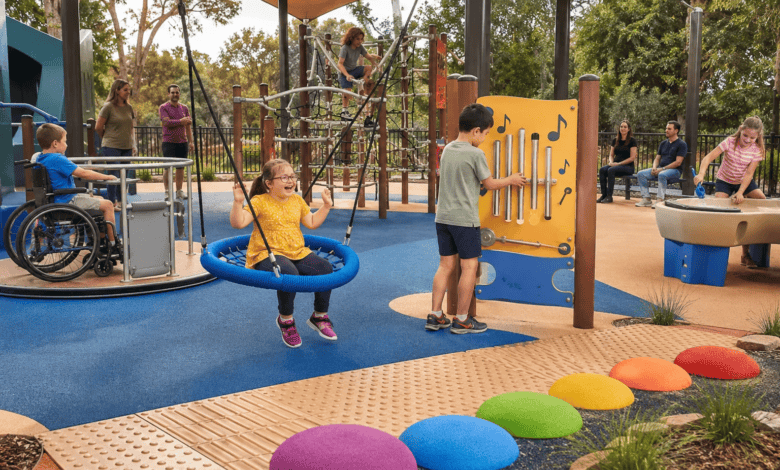
Inclusive playgrounds can provide rich sensory experiences where disabled children and children with sensory processing differences explore movement, textures and play in ways that support regulation, confidence and physical development.
These spaces combine movement, textures and varied input tailored to unique needs. Truly inclusive playgrounds create opportunities for kids with disabilities to experience sensory play at their own pace, building both confidence and physical skills through intentional design.
What Is Sensory Integration?
Sensory integration describes how your brain processes input from vestibular, proprioceptive, tactile, visual and auditory systems. When children struggle to process this information, they may feel overwhelmed, seek intense sensory experiences or avoid certain activities. Research suggests sensory integration interventions may improve participation and sensory processing for some children with autism, ADHD, cerebral palsy, and other developmental delays.
Well-chosen sensory and therapeutic playground equipment provides experiences that help children handle input more comfortably. As Adventure Solutions sees it, “Sensory integration environments are more than play spaces — they are tools for development, confidence, and growth.”
Matching Playground Equipment to Sensory Needs
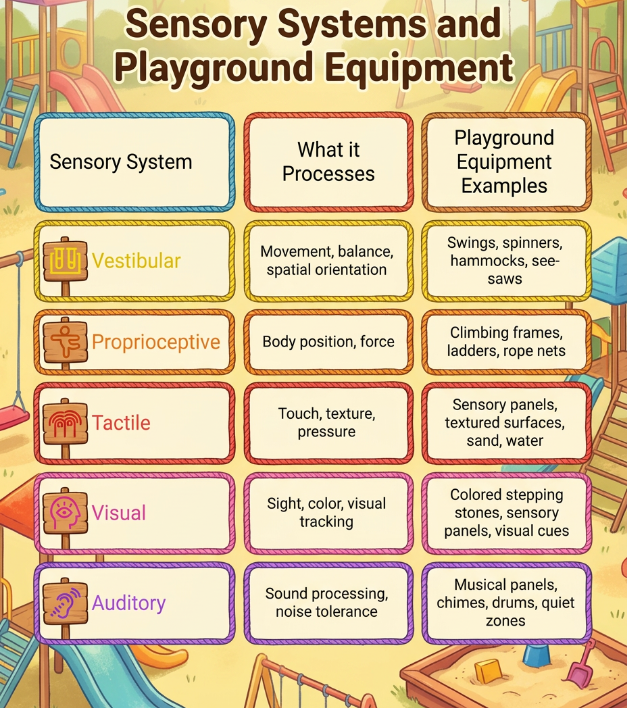
Carers can match equipment types to each child’s sensory needs. This creates targeted experiences that promote regulation and skill development. It’s worth remembering that sensory needs run in both directions: some children need less input to stay regulated, while sensory seekers need more movement, noise or pressure than a typical playground visit provides. Here are some examples of how playground equipment helps with sensory needs.
Vestibular
Swings with a basket, a platform or a parent-child design provide movement in different directions. Spinners, hammocks, see-saws and low-level zip lines offer varied speeds and planes of motion. Slow, rhythmic movement on equipment such as basket or platform swings may help some children regulate their emotions and arousal levels. Occupational therapists often incorporate vestibular activities into therapy based on a child’s individual sensory profile.
Proprioceptive
This includes climbing frames, ladders, rope nets and monkey bars. They help children understand where their bodies are in a space through movement and resistance. Pushing roundabouts, digging in sand or carrying water buckets provides pressure that supports regulation and control.
Why Occupational Therapists Choose Specific Equipment
Paediatric occupational therapists select playground equipment based on what a child’s nervous system needs to regulate, not just what’s fun. A key strategy for children with proprioceptive processing difficulties is “heavy work” — activities like carrying, pushing or climbing that provide deep pressure through the muscles and joints — because “providing opportunities for children to find the best way to provide deep touch themselves puts the children in control of their own emotions.” The same logic applies to vestibular equipment: therapists favour child-directed motion, letting a child choose the speed and intensity of a swing or spinner rather than having it imposed on them, since two children with the same diagnosis can have completely opposite sensory responses.
Tactile and Visual
Sensory panels and paths, textured surfaces, sand and water play, and colored stepping stones engage touch and sight. According to Little Tikes Commercial, you can “add new textures and experiences to your garden so everyone can find something to love.” You may want to balance interesting textures with spaces that avoid sensory overload.
Auditory
Musical play panels, chimes and drums let children create sounds at their own pace. However, you should consider background noise in busy parks, as some children may need more quiet to engage comfortably. Others are the opposite: “My 4 yr old loves loud noise, repeating words, crashing, running, physical contact,” as one parent describes their sensory-seeking child on Reddit — for these children, a busy, noisy playground can be regulating rather than overwhelming.
How to Use Playgrounds Therapeutically
Lived Experience: A Family’s Story
Our son Joe has Dravet syndrome, and unlike a lot of the advice aimed at noise-sensitive children, he’s the opposite — busy playgrounds full of shouting, running kids are exactly what he wants. He’s a sensory seeker rather than a sensory avoider, and the crash of noise and activity around him is regulating, not overwhelming, for him. It’s a useful reminder that “quiet corner” advice doesn’t apply to every child; the trick with Joe isn’t finding calm, it’s making sure there’s enough going on around him.
Many therapists and families use a regulate-challenge-regulate pattern during playground visits. Start with a calming activity, like gentle swinging. Then move to more intense sensory input, such as climbing or spinning. Finally, return to a calming activity. For sensory seekers like Joe, the “challenge” phase may need to include noise and activity rather than calm, so the pattern can flex to suit a child’s direction of need.
As NHS Sensory Integration Therapists put it, “play parks are something we highly recommend for children and families… to move and play, to regulate and have fun, and explore”. They add that hanging and climbing activities are “brilliant for developing core strength,” while swinging “provides linear vestibular sensory input” that can help children feel “calm alert”.
Start visits with familiar options the child already enjoys and watch for signs of sensory overload, such as distress, covering ears or withdrawing.
Similarly, notice underresponsiveness, such as seeking very intense movement or failing to respond to their name. Building in regular breaks and planning an “exit” activity helps children transition smoothly away from play.
Access, Safety and Inclusion for Different Disabilities
Wheelchair access, transfer platforms and side-by-side swings make playgrounds usable for kids with mobility differences. Clear routes, good surfacing, and visual or tactile cues support children with vision impairments or other mobility needs. Quiet zones give kids who need breaks from noise a place to regulate.
Strategies supporting access and safety help every child benefit from therapeutic play. After all, according to Fun Factory Sensory Gym, children with autism and sensory processing issues deserve “a safe space to explore sensory input at their own pace.”
Playgrounds give children opportunities to practise physical, cognitive and social skills in a real-world setting. Many manufacturers of inclusive playground equipment, including Little Tikes Commercial, also emphasise these developmental benefits. Therapeutic playgrounds need equipment that is “ADA-compliant, customizable and built to last.” If your local playground lacks inclusive features, consider advocating for more inclusive play spaces in your community.
Practical Takeaways for Families and Professionals
According to Playlearn, “Tools and spaces shaped by experts…help kids feel safe, regulated, and ready to engage.” With this in mind, talk to a child’s therapist or special educational needs coordinator about which options work best for them.
Every child experiences sensory input differently, so it may take a few visits to work out what helps them feel comfortable and engaged. Keeping visits flexible and focusing on what your child enjoys can make playground time more successful.
- Start with familiar equipment your child already enjoys before introducing something new.
- Follow your child’s lead. Some children seek movement and noise, while others need quieter activities and regular breaks.
- Visit at different times of day to find the environment that suits your child best. Quieter sessions may help some children, while busier playgrounds provide the level of sensory input others enjoy.
- Bring familiar sensory supports, such as ear defenders, sunglasses, favourite fidget toys or comfort items if they help your child regulate.
- Watch for signs your child needs a break, including distress, covering their ears, becoming withdrawn or seeking increasingly intense movement.
- Plan an easy transition home by giving advance warnings before leaving and ending with a familiar activity or snack.
- Keep a simple play diary to record which equipment your child enjoys, what seems calming or alerting, and any triggers that make visits more difficult. Over time, this can help you identify patterns and share useful information with therapists or school staff.
- Celebrate progress in your child’s own way. Success might mean trying a new piece of equipment, spending longer at the playground or simply feeling comfortable enough to explore.
Remember that there isn’t a “right” way to use an inclusive playground. The best visit is one that matches your child’s individual sensory needs, interests and energy levels, helping them enjoy play while building confidence at their own pace.
Creating Joyful and Therapeutic Play Experiences
Thoughtful equipment choices can transform playgrounds into therapeutic spaces where disabled children develop skills, confidence and joy. When families, professionals and communities work together to create accessible sensory-rich environments, every child gets the chance to thrive, learn and experience the wonder of play.
FAQ for Therapeutic Equipment in Play Areas
What is sensory integration?
Sensory integration is the way the brain processes information from the senses, including movement, touch, body awareness, sight and sound. Some disabled children process this information differently, affecting how they play, move and regulate their emotions.
How do inclusive playgrounds support sensory integration?
Inclusive playgrounds offer equipment that provides different types of sensory input, allowing children to explore movement, textures and sounds at a pace that suits their individual needs.
Which playground equipment helps with vestibular input?
Basket swings, platform swings, spinners, hammocks, see-saws and low-level zip lines all provide vestibular input by encouraging movement in different directions and at different speeds.
Why is proprioceptive play important?
Activities such as climbing, pushing, digging and carrying objects provide resistance through muscles and joints. This can help some children develop body awareness, coordination and self-regulation.
Can busy playgrounds help some disabled children?
Yes. Some children seek sensory input rather than avoiding it. A lively playground with movement and noise may feel calming or regulating for sensory-seeking children, while others prefer quieter spaces.
How can families use playgrounds therapeutically?
Many families use a regulate-challenge-regulate approach. This may involve beginning with calming activities, moving to more active play, then finishing with an activity that helps the child leave feeling settled. The exact approach should reflect each child’s sensory preferences.
What makes a playground inclusive?
Inclusive playgrounds include accessible routes, wheelchair-friendly equipment, transfer platforms, sensory play features, quiet areas and equipment that supports children with a wide range of access needs.

