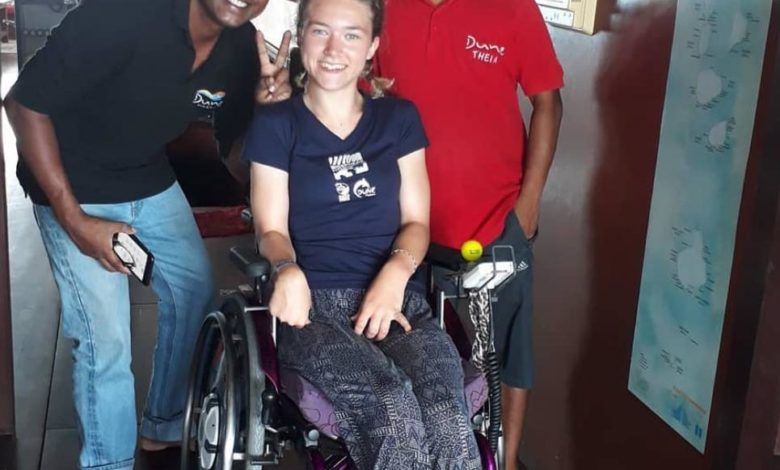
Before I turned 18, I’d visited three continents, crossed deserts, explored islands and flown thousands of miles — all from my wheelchair.
— Liesl Hammer
I’m delighted to introduce a new writer to Disability Horizons, Liesl Hammer, whose lifetime of travel has given her a unique perspective on exploring the world as a wheelchair user. Growing up in a family that refused to let disability stand in the way of adventure, she’s crossed deserts, explored islands and travelled through cities across Europe, Africa and Asia. In her first article for Disability Horizons, Liesl shares what travelling independently has really been like—the planning, the assumptions, the unexpected moments and the joy of experiencing the world on her own terms.
Growing Up Travelling as a Wheelchair User
My first flight was to Ukraine when I was just six months old. My parents run a conservation company, taking volunteers around the world on expeditions to support wildlife research and conservation. As my siblings and I grew up, we tagged along, travelling to Namibia, Oman, the Maldives, Honduras and Dubai.
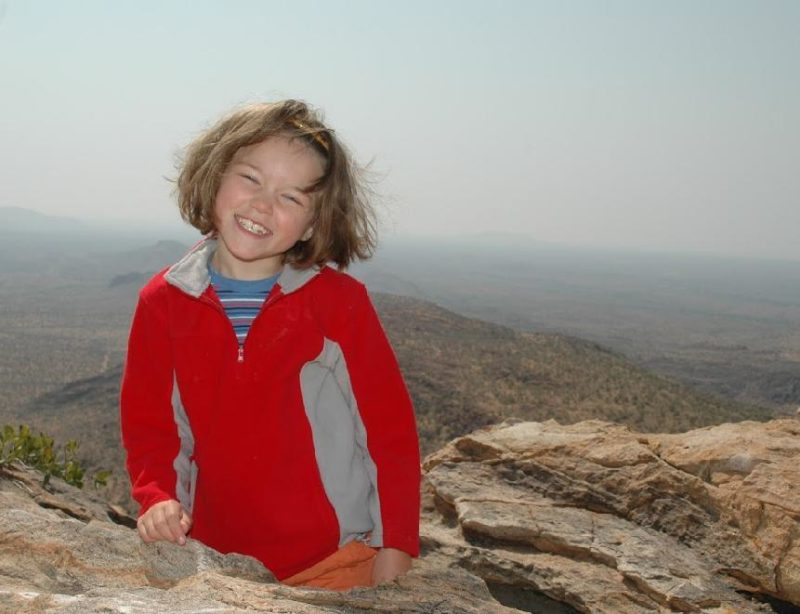
We were born to travel.
Growing up in that environment meant my wheelchair was simply another part of the journey, not something that dictated where I could and couldn’t go. I have cerebral palsy and have spent most of my life in an electric wheelchair. Like many disabilities, CP looks different for everyone. In my case, I can walk short distances with support—a steady hand, a nearby surface, or my walker—but not in any way that would get me from A to B. Those few steps, however, have always given me a surprising amount of freedom. They let me transfer independently, reach shelves and even use the treadmill at the gym.
Most importantly, I grew up in an active, adventurous family that encouraged my independence at every turn. I learned early on to focus less on my limitations and more on the possibilities in front of me.
My earliest travel memories were never overshadowed by my disability. If the terrain was inaccessible, like in the deserts or wetlands of Namibia, my parents simply carried me. It wasn’t always easy, but we adapted because the alternative – missing out – never really crossed our minds.
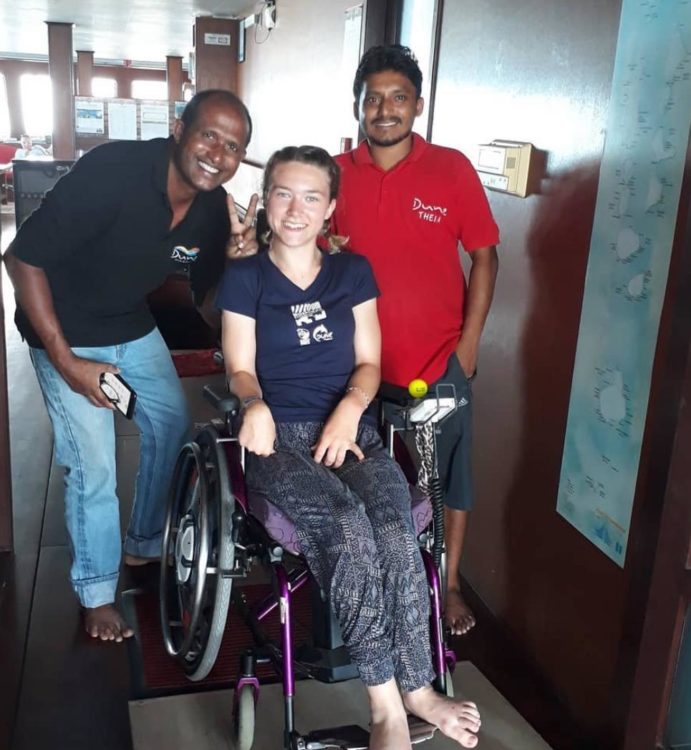
Even in 2018, when I was 16, we spent a week living aboard a boat in the Maldives. It certainly wasn’t the most accessible place I’d ever stayed, but the crew quietly built me a small ramp between the outside and inside desks. It was a simple gesture, yet it made all the difference. Travel has taught me that accessibility isn’t always about perfection; sometimes it’s about people being willing to meet you halfway.
Flying Independently as a Wheelchair User
That attitude has shaped the way I travel today. Of course, the dream would be to do everything completely independently, but that’s not always realistic. I have no issue asking for support because I’d rather spend my energy enjoying a destination than exhausting myself proving I don’t need help.
When I travel, I want to immerse myself in the culture, try the local food, wander the streets and stumble across places I’d never find on a commercial tour. If paying a little extra for an accessible hotel room means I can start each day well-rested and ready to explore, it’s money well spent.
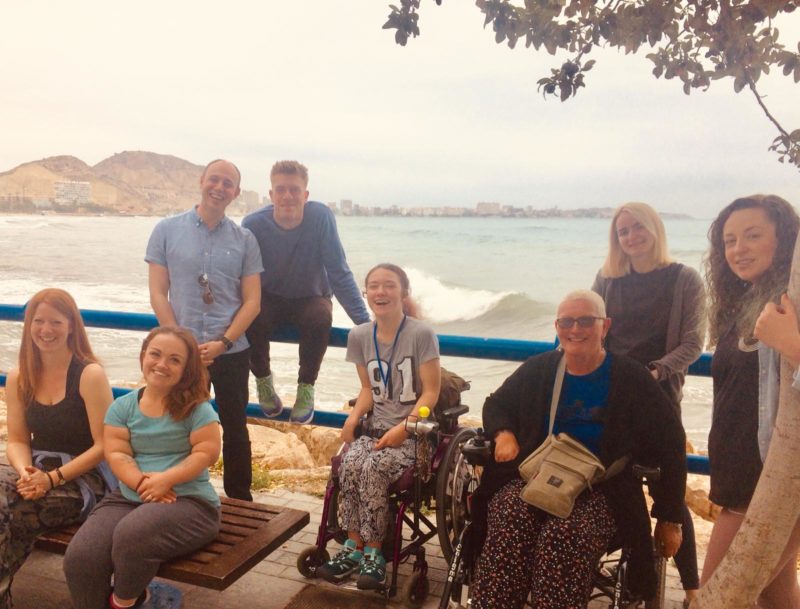
My first international trip without my parents came when I was 17, travelling to Alicante with my dance company. It was also my first time I’d flown by myself.
Strangely, I wasn’t nervous.
I’d been flying almost every six weeks to Germany to visit my father since the age of 5. I knew which documents I needed, the conversations I’d have to have to make sure my wheelchair arrived with me, and what to expect at every stage of the airport. More than anything, I was excited. I felt grown-up and independent.
Exposing Myself to Other People’s Perceptions
The concerned faces of the airport assistance team when I arrived without a carer was actually quite funny.
Unfortunately, they aren’t quite as funny anymore.
At the time, I assumed people were surprised because of my age. Now I realise that, no matter how old I get, some people simply can’t fathom that a wheelchair user can travel by themselves.
That’s probably been the hardest part to come to terms with. Not the logistics, but other people’s assumptions.
Within my bubble of friends and family, I rarely think about my disability. I was born with it. I’ve never known anything different. When my family went skiing, so did I. If my siblings climbed a tree, I’d find a way to join in.
Naturally, the first thing people notice about me is my wheelchair. I understand that. But too often, they stop there. It’s almost as though words like ‘incapable’, ‘juvenile ’ and ‘stupid’, start bouncing around the room before I’ve even had a chance to introduce myself.
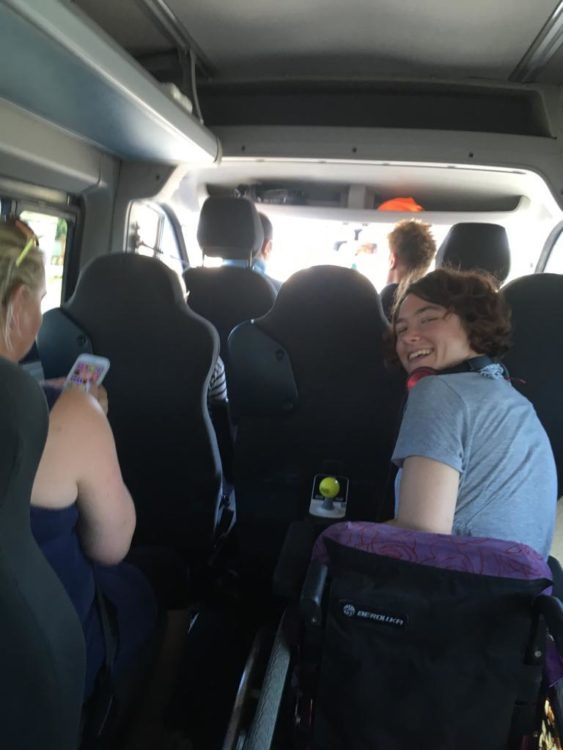
A few years ago, I landed back in England with airport assistance booked, as usual. I told the member of staff that I was going to the toilet, grab some food and then catch my train home. Simple, right?
He congratulated me for going to the toilet by myself before spending the next ten minutes debating with the railway staff whether I would cope alone.
It was a direct train.
Two hours.
In those moments, where a stranger points out my disability, it feels as though they’ve suddenly shone a spotlight on something I thought was invisible.
I’ve had similar experiences abroad, too. On trips to Spain and Germany, strangers have asked if they could pray for me. In those moments, I wish I had a witty response ready, but instead, I freeze.
I never respond with anger. Most people genuinely believe they’re being kind. Sometimes it’s cultural; sometimes it’s how they’ve been brought up. I’d love to have the confidence to smile and say, ‘No, thank you. I don’t need to be fixed.’ Maybe one day I will.
Why I Prefer Travelling with Eurostar as a Wheelchair User
In the last few years, I’ve swapped family holidays for adventures with friends.
I love travelling in my twenties.
My favourite way to travel is on the Eurostar. I can reach Paris or Amsterdam while keeping my wheelchair with me the entire journey. As I’ve become more independent, that has become increasingly important. Ironically, the more capable I’ve become, the harder I find situations where I lose that independence. On a plane, knowing I won’t even be able to go to the toilet by myself makes me anxious.
The Eurostar, on the other hand, has a wheelchair space, an accessible toilet, and, as an added bonus, those wheelchair spaces happen to be in First Class. I’ll happily accept princess treatment.
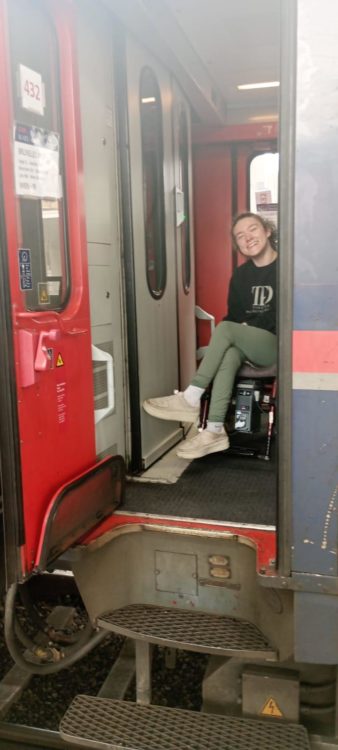
My Solo Travel Goals as a Wheelchair User
Most recently, I’ve been through the streets of Budapest, Amsterdam and Bern. I don’t particularly enjoy planning every minute of a trip. If I’m with friends, I’m happy to let them lead. If I’m on my own, I head towards somewhere that looks lively or beautiful; navigating unfamiliar streets, admiring the architecture, feeling giddy over animated people I meet along the way. Taking a moment to remind myself, ‘I’m in a whole different country.’
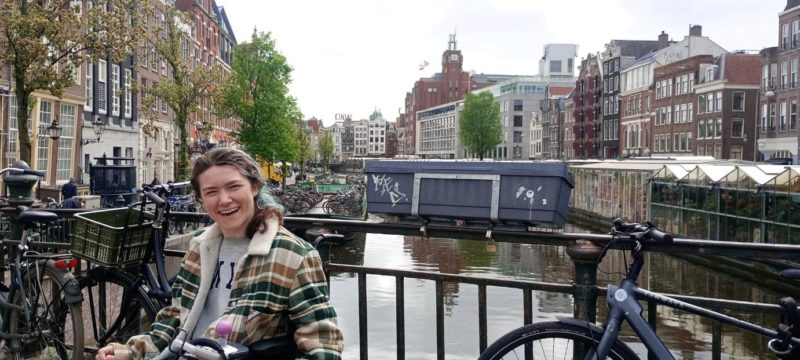
I hope I have many decades ahead of me to keep adding countries to my list. Right now, New York, Banff, Japan and Greece are calling my name.
One day, I’d love to do some solo travelling.
I’d start small. Maybe go to York. Somewhere my family could reach if everything went wrong. Then branch out across Europe, onto Asia, America, and, at some point, Australia.
Solo travel can feel overwhelming, especially as a wheelchair user. Accessibility, other people’s perceptions, forgotten medication – there are plenty of extra things to think about.
But none of them are bigger than the world waiting to be explored.
My wheelchair has already taken me further than many people ever imagined it could. I have no intention of stopping now.
My Top Travel Tips for Wheelchair Users
- Do your research before you go. Knowing what to expect means you can spend less time worrying about accessibility and more time enjoying your trip.
- Don’t let other people’s assumptions become your own. You’ll probably meet people who underestimate you. It’s frustrating, but they’re only passing through your life. Their opinions don’t get to ruin your day.
- Research disability culture as well as accessibility. Every country has a different attitude towards disability. Some places are brilliantly inclusive, while others have a long way to go. Knowing what to expect helps you prepare mentally as well as practically.
- Start packing medication and equipment early. I keep a running list in the weeks before I travel. It saves the last-minute panic of wondering whether I’ve forgotten something important.
- If it’s your first time flying, familiarise yourself with the airport beforehand. Find out where the assistance desk is, whether you can take your wheelchair to the gate, where the accessible toilets are and, most importantly, where the best snacks are.
- Always ask to see photos of the accessible hotel room. I’ve learnt that “accessible” can mean very different things depending on the hotel – or even country. Seeing the room beforehand gives me much more confidence that it’ll actually meet my needs.
About the author
Liesl Hammer is a writer and disability advocate with cerebral palsy who has travelled across Europe, Africa and Asia as a wheelchair user, from deserts and islands with her family to independent trips in her twenties. She is a university graduate, holds a driver’s licence and thus feels passionate about education and inclusion. She works with organisations on disability and inclusion, including helping to train social work students through the University of East Anglia’s lived experience team. You can find connect with her via her linkedin profile or read more on her personal blog.

