USA Disability Insurance: How to Choose Cover That Actually Works for You
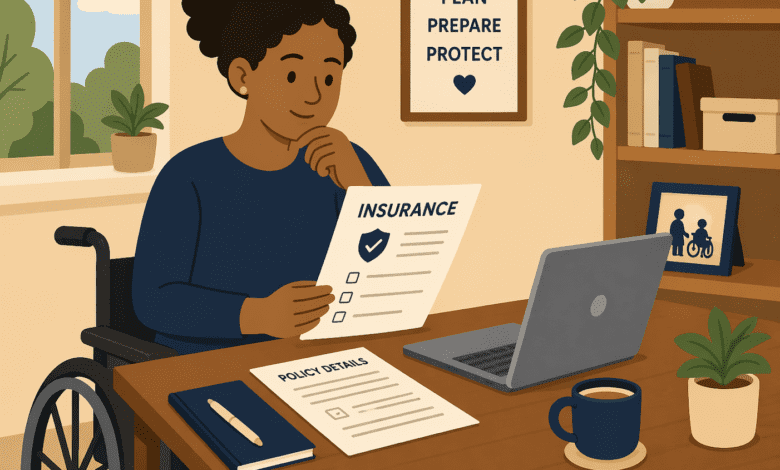
Disability insurance is typically described as a safety net that replaces your income if an injury or illness prevents you from working. For many disabled people, the question isn’t just which policy to choose, but whether the system works for them at all. In theory, it sounds simple. In practice, it can be anything but. That’s why choosing the right cover is important, especially since not all disabled people can access or benefit from disability insurance.
Key takeaways about disability insurance
| Key point | Why it matters |
|---|---|
| Disability insurance replaces part of your income | It can offer financial support if illness or injury affects your ability to work. |
| The policy definition of disability matters | This affects whether you would qualify for a payout. |
| Pre-existing conditions may be excluded | Some disabled people may find their main condition is not covered. |
| Fluctuating conditions can create barriers | Policies may not reflect the reality of inconsistent work capacity. |
| Approval and claims can be difficult | Paperwork, assessments, and income proof can create access barriers. |
How Disability Insurance Works
Disability insurance pays you a portion of your income if you’re unable to work due to an injury or illness. There are two main types of coverage. Short-term cover pays out for up to six months, while long-term cover starts if you’re off work for three to six months.
Here’s how it might work in real life. If you injure your back and need surgery, you may first use your paid time off. Once that runs out, without insurance, you would need to use your savings. With a disability policy, you could receive up to 70% of your salary each month. If you earned $50,000 a year, that’s about $35,000 annually in support, depending on your policy limits.
What Actually Matters When Choosing Coverage
You need to pay close attention to the details to ensure you’re adequately protected. Here are some of the most important factors.
Definitions of Disability
Every policy defines “disability” differently. This is the most important detail to check, as it determines whether your claim will be approved. Some of the most common definitions include:
- Specialty own-occupation: Covers you if you can’t perform your exact role
- Own-occupation: Pays you if you can’t do your job, even if you work elsewhere
- Modified own-occupation: You’re covered if you can’t do your job and are not working elsewhere, but benefits may change if you take another job
- Any occupation: Only covers you if you can’t work in any job you’re trained, educated or experienced in
The realities disabled people often face with disability insurance
Disability insurance is often described as a safety net, but access to that safety net isn’t equal.
Many policies are built around assumptions that don’t reflect how disabled people actually live and work.
Here are some of the issues that come up in practice:
- Pre-existing conditions may be excluded
If you already have a condition, it may not be covered at all. This can include long-term or fluctuating conditions like multiple sclerosis, chronic fatigue, or mental health conditions. - Definitions of “unable to work” can be strict
Some policies only pay out if you can’t do any job, not just your usual one. This can make it harder to qualify, especially if you can do some work but not consistently. - Applications can be difficult to get through
Medical assessments, paperwork, and income proof requirements can be hard to manage, particularly if your condition fluctuates or you don’t have a standard employment pattern. - Not everyone qualifies
If you’re self-employed, freelance, or have gaps in your work history, getting approved can be more complicated. - Claims aren’t always straightforward
Even with a policy in place, proving that your condition affects your ability to work can take time and effort.
For many disabled people, the biggest issue isn’t choosing the best policy—it’s whether you can access one at all.
What this can look like in real life
Imagine someone with a fluctuating condition like chronic fatigue syndrome.
They may be able to work some weeks, but not others. On paper, they’re not fully “unable to work,” but in reality, they can’t maintain consistent income.
When applying for disability insurance:
- Their condition might be classed as pre-existing and excluded
- They may struggle to meet strict definitions of disability
- Their inconsistent income could make approval harder
Even if they do get a policy, making a claim could involve proving something that doesn’t stay the same day to day.
This doesn’t mean disability insurance is never useful. But it does mean it’s important to look closely at how a policy works in situations like this—not just in ideal scenarios.
Exclusions
Exclusions can limit when your policy pays out. This can include preexisting conditions, meaning illnesses or disabilities you had before buying the policy. For example, a person who already has multiple sclerosis may not be covered for flare-ups or progression of that condition. They may only be covered for unrelated illnesses or injuries.
Affordability
A policy that seems affordable now may not remain so. Premiums are based on factors like your age, gender, benefit amount, waiting period and any add-ons.
Your occupation can also affect your premium. Jobs with a higher risk of injury will pay higher premiums than desk-bound office manager jobs.
Claims Process
The claim process can vary depending on the insurer. In most cases, you’ll need to fill out a claim form explaining your condition and job duties, provide salary and financial information, and submit a doctor’s statement.
Comparing disability insurance providers in real-life situations
Looking at providers side by side can be helpful, but the key question is how their policies hold up in real situations, not just what they offer on paper.
If you have a stable, full-time job with a consistent income
Providers like Guardian and The Standard offer higher monthly benefit limits and longer-term cover. These policies are often designed for people with predictable earnings who want income protection that could last until retirement.
However, even in this situation, it’s still important to check how “disability” is defined. A policy that only pays out if you can’t work in any job at all may not offer the level of protection you expect.
If your income is lower or more variable
Mutual of Omaha offers lower starting benefit levels and shorter-term policies, including accident-only cover. This can be a more realistic option if your income changes month to month or you don’t need long-term cover.
That said, shorter-term policies may leave gaps if your condition lasts longer than expected.
If you have a pre-existing or fluctuating condition
This is where comparing providers becomes more complicated. Across all three companies, you may find:
- exclusions for existing conditions
- higher premiums
- or difficulty getting approved at all
In this situation, the differences between providers matter less than understanding the limits of the policy itself. You’ll need to look closely at what is excluded, how claims are assessed, and whether the cover would apply to your day-to-day reality.
What to take away from these comparisons
Provider features like benefit amounts and waiting periods are important, but they don’t tell the full story. The most useful comparison is whether a policy would actually pay out in your specific circumstances.
Frequently asked questions about disability insurance
Here are some common questions about disability insurance.
What is disability insurance?
Disability insurance is a policy that pays part of your income if illness or injury affects your ability to work. The amount paid and the situations covered depend on the terms of the policy.
Can disabled people get disability insurance?
Some disabled people can, but access is not equal. Pre-existing condition exclusions, strict policy definitions, and non-standard work patterns can make approval harder or limit what is covered.
What does “own-occupation” mean in disability insurance?
Own-occupation cover usually means a policy pays out if you cannot do your usual job, even if you could work in a different role. The exact wording varies, so it is important to check each policy carefully.
Are pre-existing conditions covered by disability insurance?
Often they are excluded or only covered in limited situations. This means a condition you already have before taking out the policy may not be included in a future claim.
Is disability insurance useful for self-employed people?
It can be, but getting cover may be more complicated if your income changes from month to month or you do not have a standard employment record.
What is the biggest thing to check before buying a policy?
The definition of disability is one of the most important details. It affects whether a policy would pay out in your real situation, not just in theory.
Is disability insurance worth it?
Government support can help, but it may still leave many families with a gap. The average monthly payment of Social Security Disability Insurance in the U.S. is only around $1,500.
Final Thoughts On Making a Decision
Disability insurance won’t cover every situation, and it doesn’t work for everyone. But in some cases, it can provide a level of financial stability if your ability to work changes. Taking time to understand the details, including what’s excluded, can make a real difference in whether a policy is useful in practice.