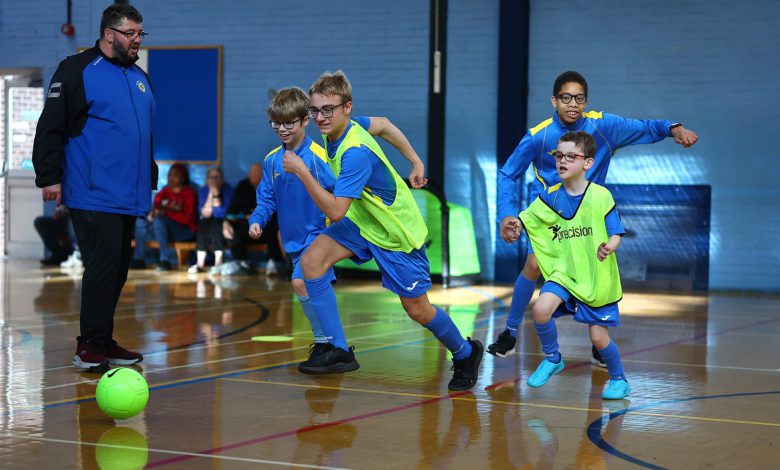
How to Volunteer in Disability Football and Support Inclusive Grassroots Sport

Disability football is one of the fastest-growing areas of grassroots sport in England – but it only works because of the people who show up to help. Coaches, session helpers, administrators, and supporters all play a role in making sure disabled people can access football in their local communities.
Disability football thrives because of volunteers. No experience needed – just show up, support others, and help make football accessible for everyone.
If you’ve ever thought about getting involved, this guide explains what roles are available, what you actually need to bring, and how to take your first step.
TL:DR – want to volunteer?
Click here to register your interest in volunteering with England Football →
Key Takeaways
| What you need to know | Why it matters |
|---|---|
| You don’t need previous experience | Many roles focus on support, organisation, and inclusion |
| Roles go beyond coaching | There are opportunities in refereeing, welfare, administration, and leadership |
| Training and safeguarding support is provided | Ensures safe, inclusive environments for disabled players |
| England Football programmes run across the UK | You can volunteer within your own community |
| Disabled people can volunteer too | The England Football actively seeks to grow disabled volunteer representation |
What Is Disability Football?
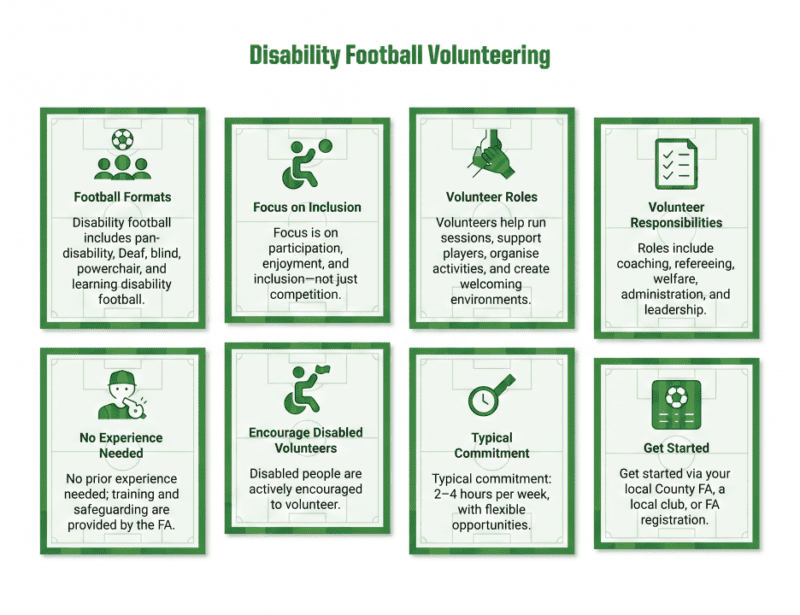
Disability football covers a wide range of formats – including pan-disability, Deaf football, blind football, powerchair football, and learning disability football. The focus is on adapting environments, rules, and support so that disabled people can take part on their own terms.
At its core, disability football is about making the game accessible. Volunteers help remove practical barriers and create environments where disabled people can take part on equal terms.
Why Volunteers Matter
Without volunteers, disability football simply wouldn’t run. They support players during sessions, prepare equipment and facilities, handle administration, and help create welcoming environments for everyone involved.
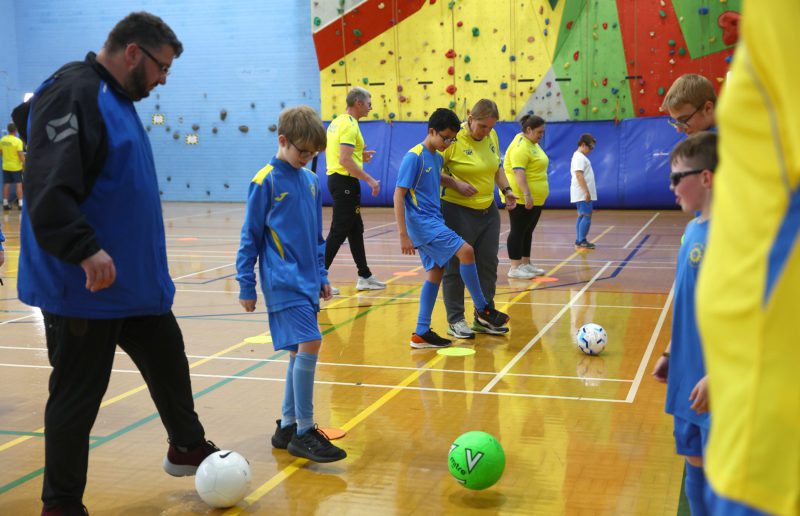
Many disabled people face practical barriers to getting involved in sport – lack of local provision, inaccessible facilities, or simply not knowing sessions exist. Volunteers help solve all of these. And because disability football focuses on participation, enjoyment, and connection rather than competition, the atmosphere tends to be welcoming and community-led rather than high-pressure.
Disability football programmes across England need more volunteers, yet many potential volunteers never get involved because they assume they lack the right experience. Most clubs provide guidance and training from the start.
What Roles Are Available?
Many people think that volunteering in disability football means coaching. But there are so many other ways to help and take part. England Football has a wide range of roles to suit different needs and abilities, both on and off the pitch:
- Coaching
- Refereeing
- Welfare
- Administration
- Leadership
Disabled people themselves are actively encouraged to get involved. England Football is specifically working to increase disabled representation across all of these roles.
What Skills Do You Need?
You don’t need to be a superfan, have an encyclopedic knowledge of the game and its rules or years of football experience to get involved!
Disability football is often as much about confidence, connection, and enjoyment as the game itself – and volunteers help create that environment.
Many disability football sessions focus on participation, enjoyment, and connection rather than competition – so what matters most is being reliable, open to learning, and enjoying seeing other people take part in sport.
England Football provides free training to get you started. The Introduction to Coaching Disabled Footballers is a free 60-minute e-learning course available through England Football Learning. Safeguarding courses are also required and are usually arranged and funded by the club. If you want to progress, there are pathways to FA Level 1 coaching qualifications and specialist courses in coaching blind, Deaf, or disabled footballers.
Disabled Volunteers Are Already Changing Grassroots Football
Jude Geoghegan, FA Disability Coach of the Year :
Jude Geoghegan, who has Spina Bifida and uses crutches, started an inclusion programme at Estudiantes in North London after struggling to find regular accessible football opportunities himself. He later won Coach of the Year (Disability Pathway) at The FA Grassroots Football Awards for his work growing inclusive football sessions and creating more opportunities for disabled players.His story highlights how disability football can create pathways into coaching, leadership, and community involvement — not only for players, but for disabled people across the wider game.
“I started coaching because I wanted to make football more inclusive at the club I was at. I found it a bit nerve-wracking at first, but in the last six or seven months I’ve gained more confidence.” – Jude speaking to The Sun
How to Get Started as a Disability Football Volunteer
Disability football needs people like you. Whether you’re disabled yourself, a carer, a family member, a sports professional, or simply someone who wants to do something worthwhile in your local community – there is a role that fits.
Register your interest below and one of The England Football’s volunteer coordinators will reach out to help you find the role that best suits you:
Register your interest in volunteering with England Football →
This article was produced in partnership with The England Football as part of their disability football volunteering campaign.
Frequently Asked Questions About Volunteering in Disability Football
Do you need football qualifications to volunteer in disability football?
No. Many volunteer roles focus on supporting players, organising sessions, or helping clubs run safely and accessibly. Training and safeguarding support are usually provided by clubs and County FAs.
Can disabled people volunteer in football?
Yes. Disabled people are actively encouraged to volunteer across coaching, refereeing, welfare, leadership, and administration roles within grassroots football.
What types of disability football exist?
Disability football includes pan-disability football, Deaf football, blind football, cerebral palsy football, learning disability football, and powerchair football, among others.
How much time does volunteering usually take?
Many grassroots clubs ask volunteers to support one regular session each week, often around two to four hours. Some clubs also welcome occasional help at tournaments and events.
Where can you apply to volunteer in disability football?
You can contact your local County FA, speak directly with local clubs, or register your interest through The England Football volunteering pathways.
