
You might reasonably wonder why a man is writing about adaptive bras. My experience comes from more than 25 years as a carer for my wife, who has a hand impairment. Over that time, I’ve had plenty of practical experience helping with bras and seeing first-hand how awkward conventional hooks, straps and fastenings can be when you have limited use of one hand.
My work with the Disability Horizons Shop has given me another perspective. As shop manager, I’ve attended disability exhibitions and trade shows, met inventors and product designers, and watched adaptive clothing develop considerably over the years. We’ve also sold a range of bra fastening aids and adaptive bra products, which has given me the chance to see different approaches to making a bra easier to put on, fasten and take off.
I’m not writing from the experience of wearing a bra myself, and I certainly wouldn’t claim to speak for disabled women. What I can bring is many years of practical experience helping someone with a hand impairment, working with adaptive products and seeing which design ideas can remove everyday dressing barriers. That is the perspective I’ve brought to this guide.
Getting dressed can be hard when bras have stiff fasteners, narrow straps or little give. Disabled women may face extra barriers. Reduced dexterity, limited reach, fatigue or dressing while seated can all change what feels manageable. An adaptive nursing bra can help, and some mainstream nursing bras may offer equally useful features. Comfort, control and how well a bra fits your own routine are the main things to consider.
If you need one-handed strategies for getting dressed more broadly, our one-handed dressing tips and tricks guide covers techniques that apply well beyond bras.
What Is an Adaptive Nursing Bra?
An adaptive nursing bra is generally understood as a nursing bra designed to make dressing, adjustment or breast access easier for someone with specific access needs. Features such as easier nursing access, flexible fabrics or simpler fastenings can also appear in mainstream nursing ranges. Those mainstream products may work well for disabled users too.
That might involve:
- Easier-to-reach fastenings
- One-handed clips
- Front-opening designs
- Stretch fabrics
- Adjustable straps
- Pull-aside cups
- Simple nursing access
- Fewer fiddly components
- Designs that are easier to handle while seated
There is no single design standard for an adaptive bra. It is worth testing the individual features and thinking about whether they suit your reach, dexterity, strength and usual dressing routine.
Adaptive Nursing Bra Features That Can Make Dressing Easier
1. Easier Bra Fastenings for Reduced Dexterity
The fastening is often the first feature worth testing.
A back closure might suit one person and cause problems for another. Front closures bring the fastening into view and can make it easier to reach. The type of fastening still matters, as some front closures are stiff or fiddly.
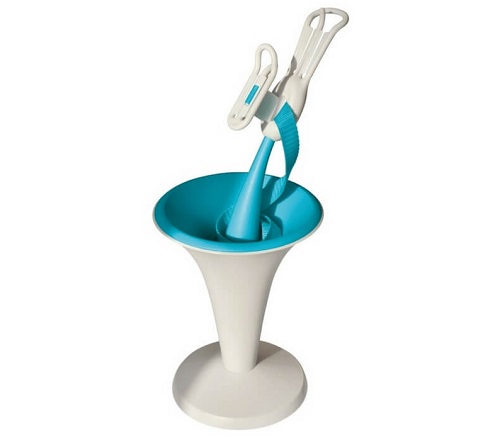
If you already use adaptive fastenings on other clothing, you might prefer a similar approach for bras. Products such as the BraBuddy bra fastening aid let you keep wearing a conventional bra you already own, while a tool like the Buckingham Bra Angel helps with the reaching and twisting motion that back fastenings usually demand. Both are worth considering if a nursing bra’s built-in fastening still causes problems.
How to Test a Bra Fastening
Imagine putting the bra on without help. Can you:
- Hold the garment securely?
- Reach the fastening?
- Align the closure?
- Secure it without excessive force?
- Release it easily when needed?
If one of those steps causes difficulty, look for a different design or a fastening aid.
2. One-Handed Bra Fastenings and Nursing Clips
A small clip may look simple until you try it with one hand.
A fiddly two-step clip can take real concentration for someone with reduced dexterity. A larger mechanism with an easy release may work better. For example, someone recovering from a stroke or living with arthritis in one hand may find a magnetic or velcro fastening easier to manage than a small metal hook, since it needs less grip strength and less precise alignment.
Test the nursing clip before buying wherever possible. Open and close it several times. Try it slowly, then think about whether you could manage the same movement when tired or distracted.
3. Adaptive Bras for Dressing While Seated
Many bras are designed and photographed on standing models.
Some people dress sitting on a bed, in a wheelchair or on another stable surface. The experience can be very different. A band may roll differently. Straps may sit awkwardly. A back fastening that was already difficult standing up can become much harder to reach while seated.
Before buying, think about how you usually get dressed. If you normally dress seated, test the bra seated too.
Adaptive Nursing Bra Access for Breastfeeding and Pumping
4. Easier Nursing Access for Disabled Parents
Breastfeeding parents often rank easy access as one of the main reasons for choosing a nursing bra. Some bras use cups that clip down to reveal the breast. Others use flexible fabric that moves aside.
A clip-down design may work well for someone who can press a release mechanism with one hand. A pull-aside style may suit someone who finds clips difficult, such as a parent managing a flare of joint pain during a night feed. If you are pumping as well as breastfeeding, your requirements may differ again, since some nursing bras are built for pumping compatibility and others are not.
Adaptive Nursing Bras for Sensory Comfort
5. Bra Fabrics, Seams and Straps for Sensory Needs
Accessibility can include sensory comfort as well as mobility and dexterity.
If you are sensitive to fabric or fastenings, look for:
- Smooth seams
- Soft fabrics
- Minimal rubbing
- Flexible construction
- Non-irritating labels
- Comfortable straps
- A band that does not dig in
You may also prefer a bra without underwire. For some people, a wired cup pressing against sensitive skin or a healing scar can be a major barrier to wearing a bra comfortably.
Adaptive Nursing Bra Fit During Pregnancy and Breastfeeding
6. Flexible Bra Sizing for Body Changes
During pregnancy and breastfeeding, breast size and shape can change quickly.
A useful fit checklist:
| Check | What to Look For |
|---|---|
| Band | Secure but not painfully tight |
| Cups | No uncomfortable squeezing or major gaps |
| Straps | Supportive without digging in |
| Nursing access | Easy to open and close |
| Fabric | Comfortable against your skin |
| Movement | Doesn’t shift excessively |
| Fastening | Manageable with your available dexterity |
If your size is changing quickly, check the retailer’s return policy before you order. A nursing bra fit guide can help with measuring and sizing. Your own reach, dexterity, sensory needs and usual dressing position should also guide which fastening works for you.
Accessible Nursing Bras for Different Feeding Choices
7. Nursing Bras for Breastfeeding, Pumping and Combination Feeding
Accessible clothing should support the feeding method a person has chosen.
Some disabled parents breastfeed directly. Others express milk, combination-feed or use formula. Different feeding methods create different practical requirements for a bra.
The NHS advises that expressed milk can be given by manual or electric pump, whichever is comfortable and practical for the person expressing it. If you pump, your bra may need to accommodate pump equipment. If you breastfeed directly, quick access is usually the priority.
Adaptive Nursing Bras for Fatigue and Pain
8. Easier Bra Fastenings on Difficult Days
You do not need significantly reduced movement to benefit from easier fastenings. Fatigue and pain both matter.
Picture getting dressed after a broken night with a newborn. You may be able to operate a small clip, but doing it repeatedly with low energy can take real effort. A simpler fastening can reduce the amount of grip, concentration and repeated movement needed. The same applies on days when pain or stiffness makes movement harder.
A useful test is to ask whether you could use the bra on a difficult day. You might find that a simple pull-on nursing bra suits you better than an expensive specialist product.
Can Mainstream Nursing Bras Work for Disabled Women?
9. Comparing Mainstream and Adaptive Nursing Bras
Disabled people do not always need specialist products.
A mainstream front-fastening nursing bra may give one person everything they need. Someone else might find a plain nursing bralette easiest of all. Our roundup of adaptive clothing brands, including Elba’s front-fastening bras, and The Able Label’s adaptive underwear range are both worth comparing against mainstream nursing ranges, so you can judge what suits your access needs.
Ask yourself:
- Can I put it on myself?
- Can I remove it myself?
- Can I operate the nursing access?
- Does it work while seated?
- Is the fabric comfortable?
- Can I afford it?
- Can I return it if it doesn’t work?
If a £25 mainstream bra solves the problem and a £70 specialist bra does not, the mainstream product may be the more accessible choice.
How to Choose an Accessible Nursing Bra
Choosing an accessible nursing bra means looking closely at the barriers you face during dressing and feeding. Consider comfort, dexterity, reach, feeding style and cost.
A specialist product may work well for one person, while someone else may prefer a mainstream bra or a separate fastening aid. The most useful choice is the one that reduces the barriers you face in your own routine.
Adaptive Nursing Bra FAQs
How can a nursing bra be adaptive?
An adaptive nursing bra may have features that make dressing or nursing easier, such as accessible fasteners, nursing clips or fabric that needs less dexterity to manage. There is no single adaptive design. What works depends on your own access needs.
Can a disabled woman use a regular nursing bra?
Yes. A mainstream nursing bra can be an easy and affordable choice if the fastening, fit and nursing access work for you. Some mainstream bras already include features that can reduce dressing barriers.
Are front-fastening bras always better?
No. Front fastenings often help people who cannot reach behind their back, but the specific fastening still matters. A stiff or fiddly front closure can be harder to use than a simple pull-on design.
Adaptive Nursing Bra FAQs
How can a nursing bra be adaptive?
An adaptive nursing bra may have features that make dressing or nursing easier, such as accessible fasteners, nursing clips or fabric that needs less dexterity to manage. There is no single adaptive design. What works depends on your own access needs.
Can a disabled woman use a regular nursing bra?
Yes. A mainstream nursing bra can be an easy and affordable choice if the fastening, fit and nursing access work for you. Some mainstream bras already include features that can reduce dressing barriers.
Are front-fastening bras always better?
No. Front fastenings often help people who cannot reach behind their back, but the specific fastening still matters. A stiff or fiddly front closure can be harder to use than a simple pull-on design.
What type of bra is easiest to put on with one hand?
This depends on your dexterity, reach and grip strength. Front-fastening bras, pull-on bras and designs with larger or simpler fasteners may be easier to use with one hand. A bra fastening aid can also make some conventional bras easier to manage.
What should I look for in an accessible nursing bra?
Look at the fastening, nursing access, grip required, reach, fabric, seams, straps and how the bra feels while sitting or standing. Try the movements you will need to make regularly rather than judging accessibility from the product description alone.

