“I want shoes I like, not just ones that fit”: Amelia’s struggle to find footwear for AFO splints

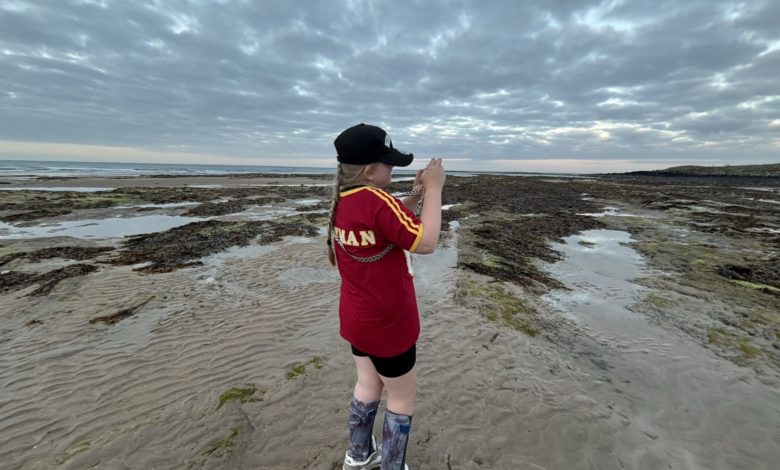
Eleven-year-old Amelia Jakeman loves trainers. But finding shoes that fit over her leg splints can mean trying pair after pair, often leaving shops empty-handed. Amelia has cerebral palsy, a lifelong neurological condition that affects movement and co-ordination, and has worn hinged leg splints since she was two years old.
As she prepared to start secondary school, Amelia wanted the same choice of fashionable footwear as her friends. Instead, she faced limited options, repeated shopping trips and the difficulty of finding shoes that met school uniform requirements.
After Amelia wrote to footwear companies asking them to make their shoes more accessible, Converse has now spoken directly with her family about her needs. Although no changes have been promised, the family hopes the conversation could lead to more suitable footwear.
Key Facts About Amelia’s Campaign for Accessible Trainers
| Key point | What readers need to know |
|---|---|
| The accessibility barrier | Amelia struggles to find fashionable trainers that fit over her hinged AFO splints. |
| Shopping difficulties | Her family sometimes tries at least 15 pairs of shoes when she gets new splints. |
| Adaptive footwear | Available ranges can have limited styles, colours and in-store stock. |
| School uniform | Finding black shoes that fit her splints creates another barrier. |
| Converse’s response | Converse has spoken with Amelia’s family, but no footwear changes have been confirmed. |
| Amelia’s aim | She wants disabled children to have shoes they like, rather than only shoes that fit. |
Why finding shoes that fit over AFO splints is so difficult
Amelia has worn full-hinged leg splints since she was two years old and needs to wear them for “as long as possible,” particularly while she is growing.
While other children may consider style when buying school shoes, she first has to consider something her peers don’t think twice about – whether they will fit.
Because of her splints, Amelia can’t wear traditional school shoes, so she wears trainers instead.
Finding the right pair can mean trying pair after pair.
“When Amelia gets a new pair of splints, we can go through at least 15 pairs of trainer-type shoes,” say Amber and Clive Jakeman, Amelia’s parents.
“That often means trips to multiple shops to find a suitable pair, and more often than not, we leave empty-handed.”
Amelia feels the frustration, even though she “loves” getting new shoes.
“It can sometimes feel a bit exciting, as I love getting new shoes, but sometimes it can be the opposite.”
“We will get loads of pairs of shoes off the shelf and will have about 7 or 8, and even with loads of pairs off the shelf, they still won’t fit.”
For Amelia, the repeated disappointment can take the excitement out of shoe shopping.
“[It’s] annoying that I walk out of the shop without buying anything. I get a little disappointed. It makes me sad, and I cry because I really like a shoe; we’ve found the size that we have in other shoes, but even then, it doesn’t fit.”
“Sometimes, if I am going shopping with friends or family and I see that they have picked a shoe and they can buy it, it’s disappointing and upsetting that it’s so much harder for people like me.”
Amber and Clive say they are keen to explain how this affects them as a family.
“It’s mentally exhausting/draining at times for Amelia, but for us as her parents too. You wouldn’t believe the range of emotions you can experience when shoe shopping.
“Sometimes Amelia has to have the pair of shoes that fits, not necessarily ones that she wants, and this can also cause upset,” they say.
Quick Guide: What Are AFO Splints?
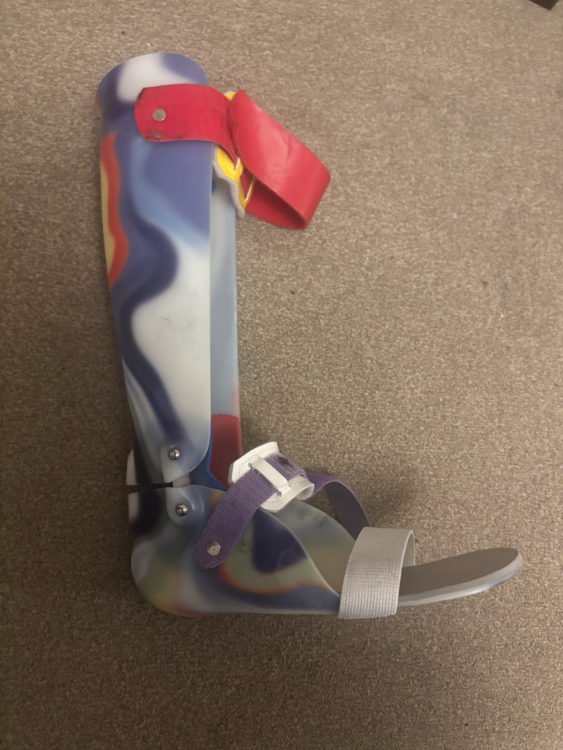
An ankle-foot orthosis (AFO) is a brace worn around the foot and ankle to provide support, help with positioning and, in some cases, improve stability when standing or walking. AFOs may be prescribed for children with cerebral palsy, dystonia and other conditions that affect movement or muscle control.
Why can AFO splints make finding shoes difficult?
- Extra width and depth: AFOs take up more room inside shoes, particularly around the heel and ankle.
- Hinges and straps: Some splints have ankle joints and fastening straps that make it harder to fit them inside ordinary trainers.
- Getting shoes on and off: Shoes often need wider openings so they can fit over the splint without excessive force.
- Comfort: AFOs can become hot and sweaty, and some children find them uncomfortable or difficult to wear for long periods.
- Limited choice: Children may need specially fitted footwear or particular shoe designs, leaving them with fewer colours, styles and brands to choose from.
A Parent’s Perspective – Duncan Edwards – Editor
My own son wore AFO splints because of dystonia, to help with the positioning of his feet and ankles. I remember how difficult they could be to put on and take off, and how hot and sweaty they became. He didn’t particularly like wearing them.
We were prescribed specially fitted shoes to accommodate his splints. The choice was extremely limited, with none of the fashionable brands that other children were wearing.
That experience has stayed with me. When a child already finds wearing splints uncomfortable, being able to choose shoes they genuinely like is a huge benefit to their well-being. It gives them some say over what they’re wearing, and helps remove stigma and feelings of difference.
Why adaptive footwear doesn’t always meet teenagers’ needs
Some mainstream sports brands do cater to people who need adaptive footwear. Nike’s EasyOn is designed to make putting on and taking off trainers easier and was developed with input from parents, children and the disability community. But even adaptable shoes aren’t always suitable for different types of ankle-foot orthoses (AFOs).
“We have tried adaptive shoes in the past, including Nike FlyEase, which were our ‘go-to’ trainers for a while. They had a zip around the back. The last pair we had didn’t seem as sturdy, and the zip broke after a short time.”
The family say adaptive ranges have limited in-store stock, so they’re often only available online, which isn’t much easier for them.
“We have to order several pairs online and send back any that don’t fit. It is quite time-consuming and costly, while we wait for refunds on multiple pairs of shoes.”
The adaptive ranges also come in limited colours and don’t resemble the original trainers, according to the family. Amelia, for example, had a pair of Jordans in the adaptive range and said she could “only get them in one colour” and that they “weren’t like the originals.”
“I would love a pair of high-top Jordans or Doc Martens or normal boots, but I know I will never be able to have them because I have hinged splints,” Amelia says.
Amber and Clive say she keeps trying on pairs of Jordans, hoping one day they will fit.
It hasn’t always been such a struggle. Amber and Clive say it was much easier to find shoes when Amelia was younger, as adaptive ranges often catered to younger children, offering colours such as pink or rainbow and sparkly styles, which Amelia liked.
As Amelia gets older, her style does too.
“I’ve noticed that when I go shoe shopping or look online, the shoes that are adaptive are mainly for younger children because of the style or size, which puts me off having them as I’m now older.”
How limited shoe choices affect disabled children
“I need more variety and more options to help me feel the same as my friends, and I don’t feel embarrassed,” says Amelia.
“The more choices I have, the more possible it will be to get a shoe that I feel comfortable in, and I feel like my peers.”
She continues: “I am getting older and starting secondary school, and I want them to be more my age rather than just what fits.”
Amelia’s experience reflects a wider problem with adaptive clothing and footwear. A report by Leonard Cheshire, in partnership with Disability Horizons, found that only 11% of survey participants had bought from adaptive ranges or brands. Participants described these ranges as “too expensive,” “old-fashioned” and “aimed at older people or young children.”
For Amelia, having the same choice as her peers matters.
“We once had a non-uniform day, and I had a pair of Adidas Campus trainers on which fit, and when I saw someone with those Campus trainers on in the same colour I felt really happy to know that someone else had them too.”
Finding school shoes that fit AFO splints
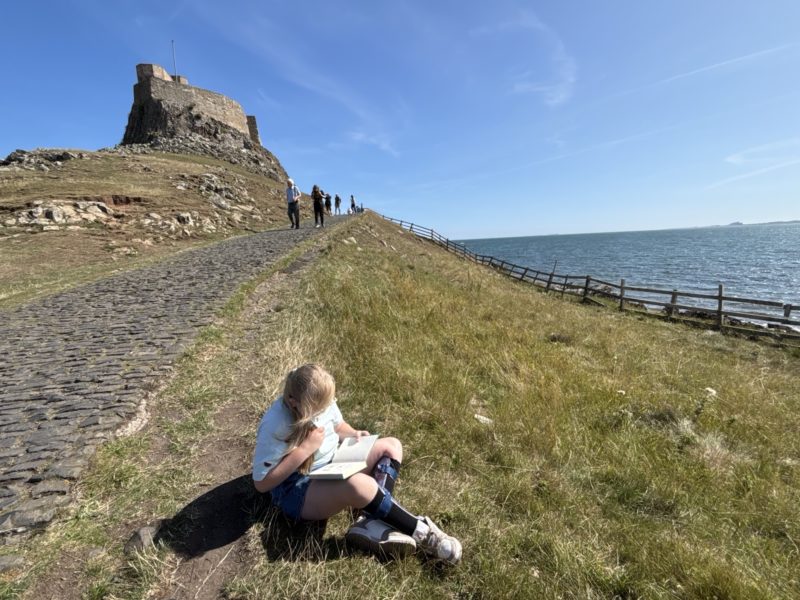
Amelia has had some success. Ahead of starting secondary school, Amelia and her parents found a pair of black PUMA trainers when they “popped” into JD Sports to get Amelia’s school bag.
They say it is easier when they can remove the insert (the removable insole) as Amelia is trying them on, as it adds more depth to the shoe.
“I finally found a brand and trainer that fit, and they were the original shoe, not an adaptation…I finally knew that I could rely on this brand for other shoes,” Amelia says.
Even the PUMA shoes have a downside. Amelia’s new shoes aren’t waterproof and are made of thin material, so unless the family can find a more suitable alternative, she will have to wear them through autumn and winter, leaving the search for a better fit unresolved.
Starting secondary school also brought another concern. Because of her splints, Amelia couldn’t wear the classic black shoes that normally comply with school uniform standards, like brogues or Mary Janes. Instead, she needed to wear trainers, which are usually prohibited under school uniform policies.
“Because I’m joining secondary school in September, we’ve had to warn the school that there may be times I will have a different colour trainer on while waiting to find a black pair,” she says.
“It makes me feel different, and I have this thing where I don’t want to break a rule, and sometimes it makes me feel like I’m breaking a rule and makes me feel anxious even though I know I’m allowed to.”
Amelia’s campaign for accessible footwear gets a response from Converse
In 2025, Amelia tried to take matters into her own hands. With her parents’ help, she wrote to brands, shops and supermarkets to explain her frustrations and urge them to make changes.
In her letter, Amelia shared her struggle to find school shoes. She also said she was “happy to discuss” any changes they could make to their shoes, and that she knew she wasn’t alone in this struggle.
The letter was sent to 12 shoe brands and retailers, including Clarks, Adidas, Converse, PUMA, Vans and Nike. However, the family say that Vans and Converse did not respond, and the rest were returned to sender, raising wider questions about accessibility for disabled customers who want to raise concerns.
In a statement, Converse said:
“We recognise that consumers have different footwear needs and value hearing directly about their experiences. Those insights help deepen our understanding of the diverse needs of our consumers and inform our ongoing efforts to evolve our products and experiences.”
Following the family’s efforts to contact footwear companies, Converse has now spoken directly with Amelia and her parents about her difficulty finding suitable shoes.
The family spoke with Andrew Allison, manager of Converse’s Global Customer Service Team, about Amelia’s experiences.
According to Amber, Allison “really listened” to Amelia’s concerns and showed interest in developing shoes specifically for her.
Although no plans have been confirmed, the family have sent over Amelia’s shoe measurements and several styles, and they are “waiting (to see) if the team can make it work.”
Vans was also contacted about Amelia’s letter, but they did not respond.
She also sent the letter to supermarkets. M&S, TU and Tesco all replied and were “lovely” and “very supportive, made recommendations and took on board Amelia’s comments,” but nothing came of it.
“Amelia is so passionate about this, and if we can support her to share her story and raise awareness,” Amber and Clive say.
“[If] it led to a company or someone from the footwear industry willing to meet Amelia to talk about her story or make changes, that would be amazing.”
Amelia’s message to footwear companies is clear.
“I’m saying this on behalf of everyone who is like me, everyone who is struggling to get a pair of shoes,” Amelia starts.
“When [companies] are making the shoe, make sure you know about the story of how it can affect people, so you know what shoe to make and what shoe to sell.”
“I want to be a happy customer walking out of the shop holding a (pair) of shoes that I like, not just that fit.”
“I love shoes, I love trainers, and sometimes it really makes me sad, angry and annoyed that I can’t buy the shoes I love.”
Frequently Asked Questions About Shoes for AFO Splints
Why is it difficult to find shoes that fit AFO splints?
AFO splints can require more room inside a shoe than standard footwear provides. The shape, depth and opening of a trainer can affect whether it fits. Amelia’s family sometimes tries at least 15 pairs before finding suitable footwear.
Can children wear normal trainers with AFO splints?
Some children can wear mainstream trainers with their AFO splints, depending on the splints and shoe design. Amelia found black PUMA trainers that fitted her hinged splints, although the shoes were not waterproof.
Are adaptive trainers suitable for teenagers with cerebral palsy?
Adaptive trainers can work for some teenagers, but suitability depends on the individual and their splints. Amelia says many available styles are aimed at younger children or offer fewer colours and designs than mainstream ranges.
What should parents look for when buying shoes for AFO splints?
Amelia’s family has found that removing a shoe’s insole can sometimes provide more depth. Families may also need to consider the opening, fit, durability and school uniform rules. Any changes should be checked against the child’s orthotic guidance.
Has Converse agreed to make accessible trainers for Amelia?
Converse has spoken directly with Amelia and her parents about her footwear needs. The family has shared measurements and preferred styles, but no new product or design change has been confirmed.
Why does fashionable adaptive footwear matter to disabled children?
Having a choice of footwear allows disabled children to express their personal style and wear similar designs to their friends. Amelia wants to choose trainers because she likes them, rather than having to accept the only pair that fits.
Author Bio – Ellie Pacey
