Music has a way of getting us through the hard days and making the good ones feel even better. It can say things we can’t always find the words for ourselves, and sometimes it’s the only thing that keeps us moving when everything else feels stuck.
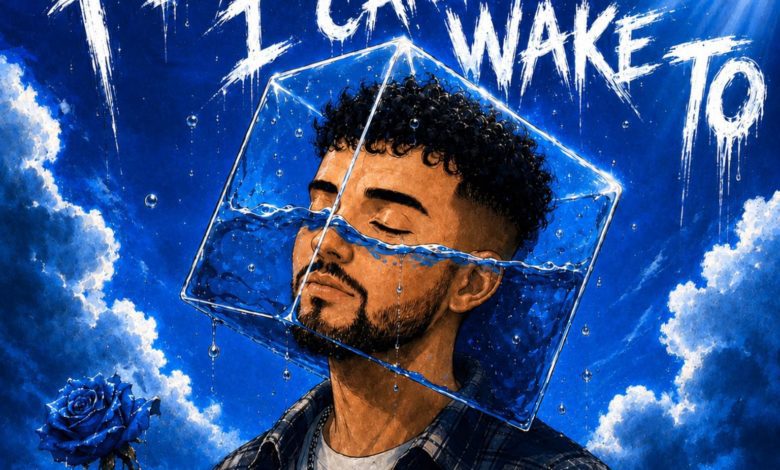
That’s exactly why I was so pleased to hear from JOHKES, a rapper and songwriter based not far from me in Lincoln, about his new album, Peace I Can’t Wake To, due for release on 24 September 2026. I’m now a fan his track “Lost Boy“, so I was genuinely excited to learn more about the story behind this new record.
UK rapper and wheelchair user JOHKES wrote much of his music from a hospital bed after his 2023 road traffic accident and coma. Ahead of the album’s release, he talks here about the dream that gave the record its title, returning to songwriting, changing ideas about independence, inaccessible recording studios, family, forgiveness and the humour he found in ICU. – Duncan, Editor
Key Takeaways: JOHKES on Disability, Recovery, and Making Music
- Album Title Inspiration: Peace I Can’t Wake To was named after a coma dream involving his late gran and his son, marking the contrast between unconscious peace and the reality of recovery
- Writing in Hospital: JOHKES resumed songwriting five weeks after waking from his coma, drafting much of his project Bridge to Youth directly from a hospital bed
- Recording Studio Access: Inaccessible vocal booths, gravel paths, and steps create practical barriers that limit independence for disabled musicians
- Addressing Family & Trauma: Track releases like “I’m Still Your Brother” and “I Forgive You” deal directly with real-life family dynamics, personal guilt, and processing forgiveness
- Humour as a Coping Tool: Text-to-speech app pranks and dark ICU humour provided a vital emotional outlet and directly inspired the track “What A Day”
- The Limits of Creativity: While music offers routine and emotional processing, JOHKES emphasises that art cannot replace physical loss or erase what was lost
Why JOHKES Called His Album Peace I Can’t Wake To
I think I started making sense of the contrast between the peace of unconsciousness and the life I returned to through the last dream I remember having before I woke up.
I was in the dark, looking through my own eyes. It sounds cliché when I say it out loud, but it’s genuinely what I remember.
I heard my gran laughing. She died in 2019, and I knew her laughs well enough to know what different ones meant. Then, shortly afterwards, I heard my son call, “Daddy”.
Before the accident, my son had given his mum a tiny red toy car to give to me while I was in the coma. I obviously didn’t know that at the time, but in the dream he was holding that same little red car.
The strange thing is, whichever way I felt I could go, it still felt peaceful. But I never felt like my gran’s laugh was calling me towards her. It felt playful, almost like she was laughing with my son.
The way I interpreted it was: “I know this is going to be an easy choice. I love you. I’ll see you again one day.”
That’s probably where the title of the album really comes from for me. The coma felt peaceful. The difficult part came when I woke up and had to face what had happened, who I’d been before it happened, and who I was going to be afterwards.
How Becoming Disabled Transformed My Approach to Songwriting
Before the accident, I was definitely more of an outside person. I loved seeing my mates, going out, just being around people.
Now I worry a lot more about whether I fit in anywhere. I’m also scared to go out on my own because of autonomic dysreflexia, so even something simple like leaving the house can come with a lot more anxiety than it used to.
As an artist, I think I’d still be making the same kind of music, but the way I write and record has changed a lot. I can put more emotion into songs now because I’m writing from a very different place.
I can’t stand up to record like I used to, so I’ve had to adapt the way I perform and find different ways to get the emotion out properly on a track.
I noticed my identity shifting in smaller moments rather than through one big dramatic realisation.
One day I was struggling to get my pillows right so I could get comfortable. My dad could see I was struggling, but he didn’t want to jump in straight away because he was worried about taking away my independence.
I could see that he looked sad watching me struggle. Instead of getting upset, I got angry and threw the pillow.
Another moment came when I moved into my new home. Before the accident, setting up my studio would have been something I just did myself. This time I needed help with it. That hit me because music had always been something that felt completely mine and completely independent.
Those moments made me realise it wasn’t only my circumstances that had changed. My relationship with independence had changed too.
Returning to Rap: Writing Bridge to Youth in a Hospital Bed
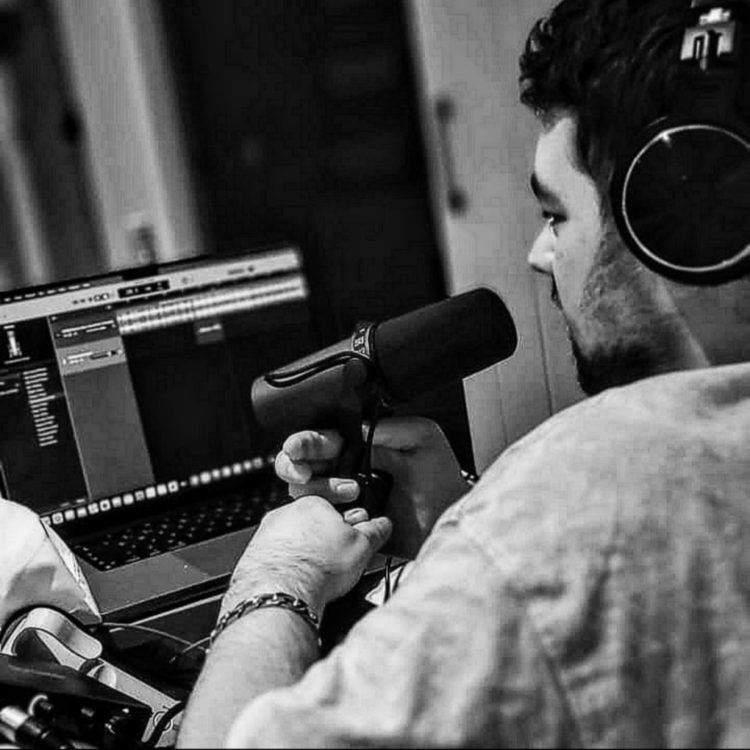
The first time I wrote again was about five weeks after waking up from the coma.
I actually didn’t want my phone when I first woke up. I was terrified that my old life was going to come rushing back through the screen — people messaging, asking how I was, everything suddenly becoming real all at once.
About five weeks later I finally got my phone back, and then my headphones. When I put the headphones on and heard music properly again, for a little while I almost forgot what had happened to me.
When I started writing, the tears came straight away. But weirdly, the writing itself felt more natural than it had before.
I wrote most of my album Bridge to Youth from a hospital bed. At that point I was writing a lot about the accident and the pain I was feeling, both physically and emotionally. As time has gone on, I’ve realised that the pain in my writing has started to shift. It’s still there, but more of it is moving towards forgiveness now.
How Let You Down changed meaning after my accident
One song that really changed meaning for me was Let You Down.
It was actually the last song I recorded before my accident. I wrote it about my mum’s partner, who died from cancer. There’s a section where I talk about wanting to remember him before seeing him scared in bed, with tubes around him, and about all the things that were still left unsaid before having to say goodbye.
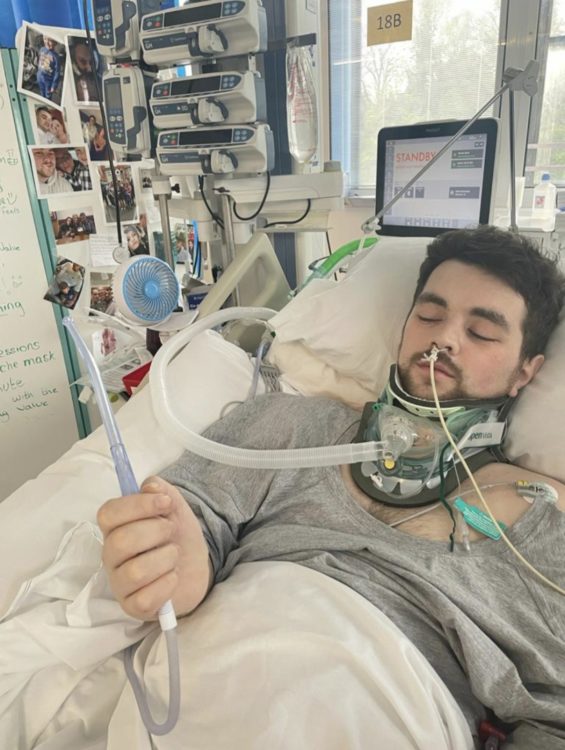
After my accident, those lyrics hit me completely differently. It wasn’t long after writing and recording them that I ended up in a hospital bed myself, with tubes in and out of me, while my family were faced with the possibility that I might not make it.
It was strange hearing words I’d written about somebody else and suddenly realising my family could have been saying almost those exact same things about me.
I think that was one of the first times I realised songs don’t necessarily stay meaning what they meant when you wrote them. Life can happen afterwards and completely change the way you hear your own lyrics.
Writing Karma In The Coma
Karma In The Coma came from looking back at who I was before the accident.
I wasn’t always proud of that person. I drank too much, used cocaine, made bad decisions and hurt people I cared about. So after something this massive happened to me, there was a part of my brain that kept asking, “Is this karma? Did I somehow deserve this?”
I don’t think becoming disabled is a punishment, and I definitely don’t believe disabled people have done something to deserve their disability. The song is about my own guilt, not that idea. It was my brain trying to find a reason for something that didn’t really have one.
The strange part was that the coma itself didn’t feel like punishment. From what I remember, it was peaceful.
Writing it down meant admitting thoughts that aren’t particularly comfortable to admit. But that’s why I wanted it on the album. I didn’t want to rewrite my recovery afterwards and pretend I’d handled everything perfectly. Sometimes I blamed myself.
Sometimes I wondered whether this was karma.
Eventually that started turning into something else — accepting that I can’t change the person I was or what happened, but I can decide what I do with the person I am now.
How songwriting gave me somewhere to put what I couldn’t say
Music definitely gave me a routine because it broke the days up.
In ICU I had this relaxing picture at the foot of my bed — I think it was Bora Bora or somewhere like that, with a hut and bright blue sea. There was a clock next to it, and day after day I’d watch the time and wait for 2pm when visitors came. Later I’d wait for 8pm because that was when my sister Susan would come in.
Without music, those days would have dragged even more than they already did.
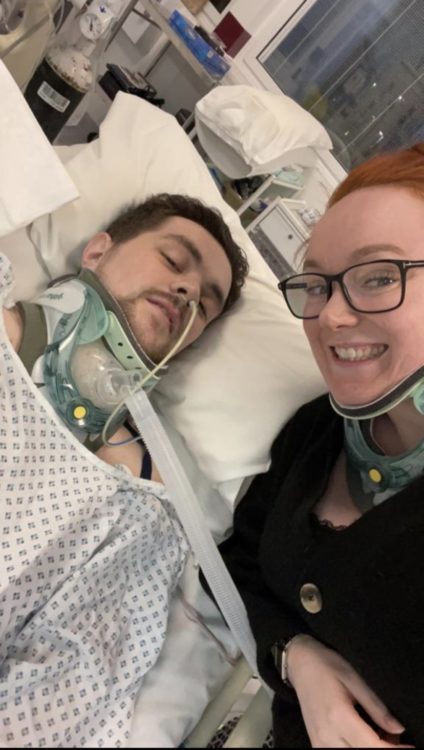
Writing also gave me somewhere to put things I couldn’t say face to face to my family. I needed them around me, and I wanted them to see that I was still me. I still had my sense of humour. I even told them I didn’t want to see tears. So on the outside we were laughing and joking.
But the notes app on my phone, where I wrote lyrics, showed a completely different side of me. That was where the fear, anger and pain went — the stuff I didn’t want them to see at the time.
I remember my sister Susan asking me, “How is this not absolutely breaking you? How are you lying there laughing?” I told her, “When I can finally record music again, you’ll know that isn’t the case.”
The Practical Barriers for Wheelchair Users in Recording Studios
Getting into studios has definitely changed.
I go to a place in Lincoln called Noise Academy, and even getting into the vocal booth is a problem because there’s a big step.
Usually my PAs help me get in, but more recently one of my PAs became pregnant, so she obviously couldn’t lift me anymore. That meant I had to ask the producer there if he could help me instead.
I find that really embarrassing, because before the accident I’d never have had to think twice about simply walking into a booth. Now even getting into the space where I’m meant to work can depend on whether someone is there to physically help me.
Once I’m in there and the music starts, I forget about it, but the access problem is still there every time I need to get in or out.
Even travelling to work on music is more complicated now. I use a wheelchair-accessible vehicle, so when we get somewhere we have to make sure there’s enough space for me to get out safely. The place I go to record also has gravel outside, which is awkward in a wheelchair. One time it actually punctured one of my wheelchair tyres.
Better accessibility would mainly give me more independence. Something as simple as a step-free recording booth would mean I could just go in and record without having to ask somebody to physically help me get inside.
I don’t want somebody else to have to solve everything for me. A lot of the time, if the environment was accessible in the first place, I could just get on with being an artist.
What accessible music venues would mean for me as a disabled artist
I’ve actually never toured or performed live.
Before my accident I really wanted to, and I still do, but now I’m much more anxious about it. My brain immediately goes to things like: what if I have autonomic dysreflexia while I’m there? What if I need to empty my leg bag? What if people laugh or stare? Those are things I never would have had to think about before.
But I know myself well enough to know that fear won’t stop me forever. I’ll find a way to do it. I definitely still want to perform live.
If I perform live, I’d want to know beforehand that I can actually get onto the stage, that there’s an accessible toilet and somewhere I can deal with things like my leg bag privately if I need to. Even outside the building matters. Having proper accessible parking with enough room to get out of my vehicle and a surface my wheelchair can actually travel over would make a difference.
Those things determine how independently I can actually take part.
The extra costs of making music as a disabled artist
Becoming disabled has definitely added costs to making music that I wouldn’t have had before.
I now need a wheelchair-accessible vehicle to travel to places like Noise Academy. I also have PAs supporting me, and obviously their time isn’t free. The sessions I go to at Noise Academy run beyond my PAs’ normal finishing time, so that extra support has to be accounted for as well.
They’re costs people probably wouldn’t immediately associate with making music. It isn’t necessarily the recording itself that costs me more — it’s everything that has to happen around it so I can actually get there and take part.
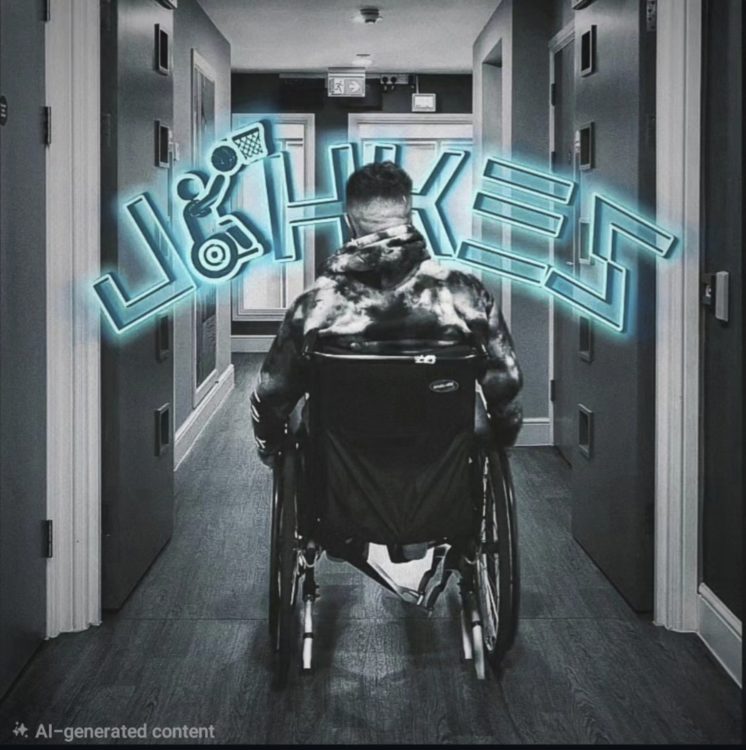
How disability access can be built into music studios from the start
For me, I’ve actually had a positive experience with the people I’ve met in music since becoming disabled. I haven’t really had people tell me I can’t do something because I’m a wheelchair user.
I didn’t go to Noise Academy before my accident, and since becoming disabled I’ve met some brilliant people through music who have just treated me like an artist. Nobody has said, “You can’t do that because of your situation.”
One of my friends has even set up a studio in Lincoln and kept me in mind when building it, including putting in a ramp so I can access it. That kind of thing means a lot because it shows accessibility can be thought about from the start instead of added as an afterthought.
I hope that’s the experience other disabled artists have too.
If somebody ever did tell me I couldn’t do something because of my situation, my reaction would be to find as many ways as possible to prove I could. I’d want people to come away thinking, “Oh, I didn’t know you could do it like that.”
Writing About Guilt, Family, and Forgiveness After a Crash
One of the songs on Peace I Can’t Wake To is I’m Still Your Brother. It’s about my sister Emma. I’ve got two favourite sisters — Emma and Susan — before Susan starts complaining.
Emma had always seen her brother as strong, like nothing could really affect me. When I was in hospital, she was already dealing with depression herself, and I became worried that seeing me like that would break that image she had of me and make things even harder for her.
So I made the difficult decision to tell her not to come back. The way I did it probably wasn’t the right way. I didn’t know how to simply say, “I’m worried about what seeing me like this is doing to you.” Instead, I gave her a reason to be angry with me. At the time, I think anger felt easier. If she was angry at me, she had a reason not to come back that wasn’t guilt or sadness.
Later, I knew she carried guilt because she hadn’t seen me much while I was in hospital. I wrote the song partly because I wanted her to know she didn’t need to carry that. I understood completely. I was the one who told her not to come back.
It also became about something bigger than just me and Emma. An accident like mine doesn’t only happen to the person who gets injured. It ripples through your family, your friends, even the people you work with. Everybody ends up carrying a different part of it.
‘Why I’m Still Your Brother’ ends with a joke about a lolly
At the end of the song I say, “that was my lolly, by the way.”
That goes all the way back to when me and Emma were about six or seven. We fought over whose lolly it was, I got bitten by the dog and had to let go — and I’ve still got the scar. We’ve argued about whose lolly it was ever since.
After a whole song about hospital, guilt and everything we’d been through, I wanted to end it with something that was just me being her brother again. And for the record, I still maintain it was my lolly.
How I wrote about forgiveness after the accident
Forgiveness in ‘I Forgive You’ came gradually over about three years.
We were friends before the crash and we used to make music together, so I never wanted what happened to destroy two lives. Mine isn’t ruined — it’s just much more difficult now — and I didn’t want her life to be defined by the accident either.
We didn’t speak for around two years afterwards. In the end, I was the one who reached out.
Before that, I’d been speaking with my psychologist. She didn’t talk me into forgiving anyone, but she helped me realise that forgetting and forgiving are two completely different things.
I know I’ll never forget what happened, but I can choose not to keep carrying the same pain forever.
Writing I Forgive You helped me move forward a little more as well. It gave me somewhere to put all of that emotion instead of just holding onto it. She hasn’t heard the song yet. I’m keeping it until release day.
Finding Humour in ICU: The Story Behind “What A Day”
I think I noticed the humour really early on, because ICU can be incredibly serious and incredibly ridiculous at the same time.
At one point I wasn’t allowed to swallow, so I had a suction tube. I’d put water in my mouth and then use the tube to suck it back out. I definitely wasn’t always using it in the most sensible way.
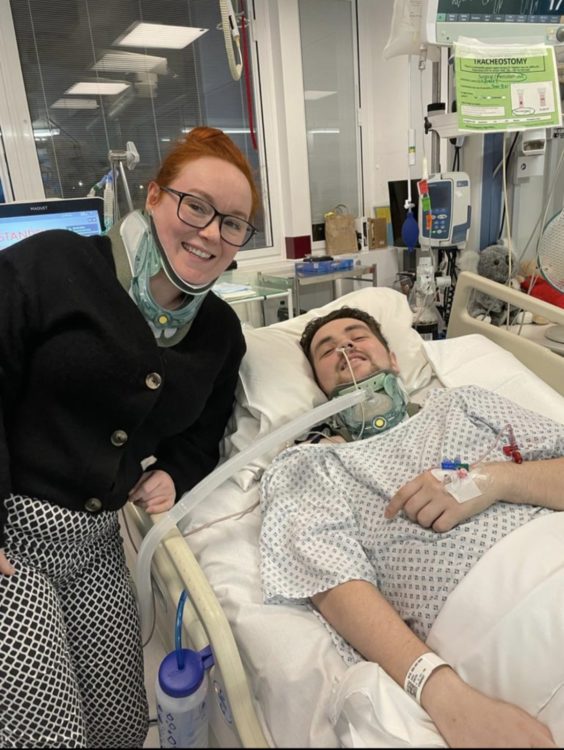
My sister Susan used to put ridiculous Snapchat filters on me too. One nurse even told us that staff used to argue over who was going to do my one-to-one care that day. That actually meant a lot to me, because I realised that if I could make what would normally be a really difficult, quite morbid job a bit more fun for the people looking after me, then that was something positive I could still contribute.
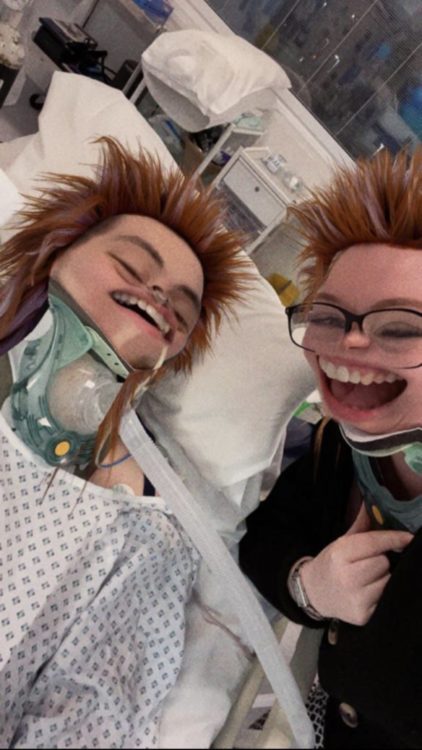
When I had my tracheostomy in, I couldn’t speak, so I used a text-to-speech app. I discovered that if I typed loads of “m” sounds into it, it sounded like the voice was moaning. I also made it swear and say inappropriate things to the nurses.
That became the inspiration for part of the first verse of What A Day. The joke in the song about staff telling me to stop making the text-to-speech flirt, groan and shout things while they were checking me is exaggerated slightly for the song, but the situation behind it genuinely happened.
Later, when I could finally speak again, I started saying, “Ugh, what a day,” which used to get a few laughs. That eventually became the opening of the song.
Humour gave everybody in the room permission to have moments where hospital life wasn’t only frightening. It didn’t make what was happening less serious, but for a few minutes it made it feel less heavy.
Why I didn’t want every song about hospital to be serious
Humour also lets me say things that a purely serious song couldn’t.
If I only wrote serious songs about ICU, people would probably come away thinking every second of it was dark, frightening and miserable. A lot of it was, but that isn’t the whole truth.
There were genuinely funny moments too. I was still me. I was still trying to make my sister laugh, messing around with the nurses and finding stupid things funny even when I couldn’t speak.
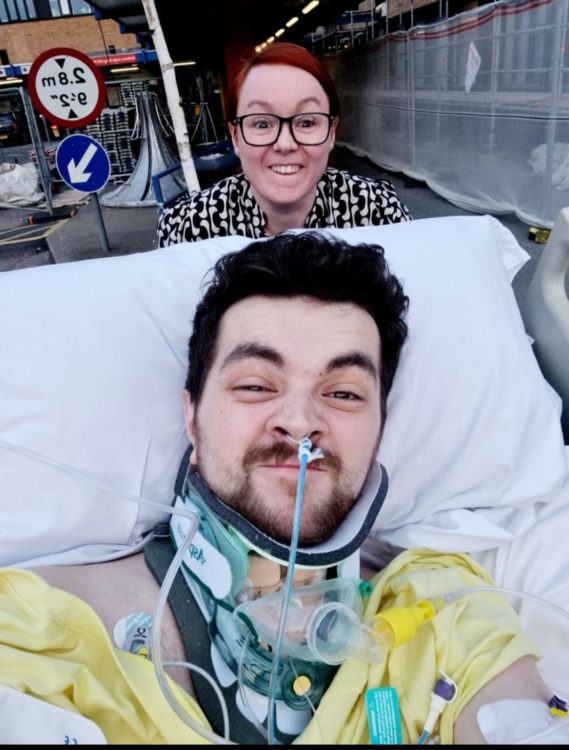
What A Day probably shows my personality in ICU better than a completely serious song could. The serious songs tell you what was going on inside my head. What A Day shows you what it might actually have been like to be in the room with me.
What Music Can – and Cannot – Fix After a Spinal Cord Injury
Music gave me an outlet. There are things I’ve said in songs that I genuinely couldn’t even say to my psychologist, even though that’s literally what they’re there for. Writing lets me get those thoughts out without having to look someone in the eye and explain them.
It also gave me an escape, a way to express things I didn’t always know how to say normally, and laughs too. Not every song has to be about the worst thing that’s ever happened to me.
Music also gave me a reason to socialise again. Going to Noise Academy gives me somewhere to go, people to see and something that still feels connected to who I am as an artist.
But music can’t give me my spinal cord back. It can’t give me back the way I used to socialise with friends, or the physical abilities I had before. It also can’t replace the things I want to do with my son and daughter, like lying on a beach with them or going to trampoline parks. Music helps me process the life I have now, but it doesn’t erase the things I’ve lost.
I do think creativity can help rescue you in a way, because it gives your mind somewhere else to go. When I’m writing or making music, I’m focused on creating something instead of constantly thinking about everything that changed.
If I didn’t have music or something creative to put my energy into, I think I’d feel much more stuck in the same routine every day. I’m not saying I’d automatically be depressed without music, but I think I’d feel more like I was just going through the motions — the same days repeating and me feeling a bit like a robot.
Creativity doesn’t fix what happened, but it gives me movement. It gives me something to build, something to look forward to and something that still feels like mine.
Why accessible spaces give disabled artists greater independence
I still want to perform live. I still want to make music. I still want to go into a studio and be treated as an artist.
The people I’ve met through music since my accident have shown me that this is possible. But people’s attitudes are only one part of access.
A studio can have welcoming people and still have a step I can’t get over independently. A venue can want me on stage and still lack an accessible toilet. A recording session can cost the same as anyone else’s while getting to it requires a wheelchair-accessible vehicle and additional PA hours.
Those practical details matter. Something as simple as designing a recording booth without a step can change whether I need somebody to physically lift me into the place where I’m supposed to work.
That’s what better accessibility would give me more of: independence. I don’t need somebody else to solve everything for me. If the environment is accessible in the first place, I can get on with being an artist.
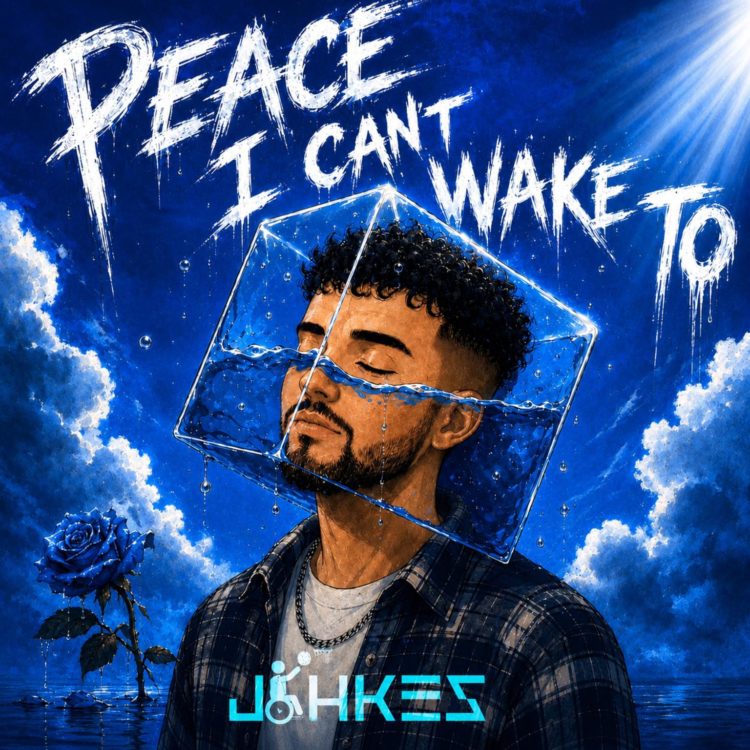
JOHKES is an independent UK rapper and songwriter based in Lincoln, with roots in Leicester, making raw, story-driven hip-hop that moves between emotional rap, melodic hooks and dark humour. He has previously received BBC local radio airplay. His upcoming 14-track album, Peace I Can’t Wake To, is released independently on 24 September 2026 through The JOHKER Records. Listen on Spotify or follow JOHKES on Instagram (@johkes247) and TikTok (@thejohker).

