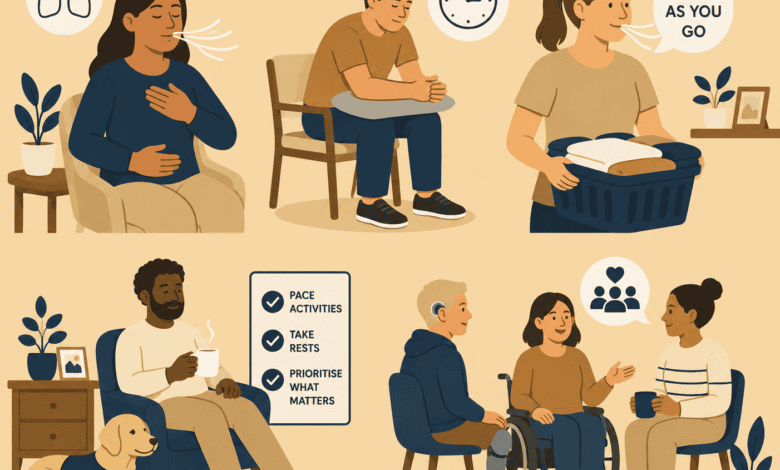
Managing Fatigue and Breathlessness at Home: Everyday Tips for People Living With Lung Conditions

Breathlessness and fatigue can make everyday tasks feel much harder, whether you live with COPD, pulmonary fibrosis, lung cancer, mesothelioma, long COVID or another long-term lung condition. This guide focuses on practical, real-world strategies to help you manage daily life at home, combining clinical advice with lived experience and a strong emphasis on accessibility, independence and support.
Who is this guide for?
This guide is for anyone living with ongoing breathlessness and fatigue, whether it is caused by COPD, pulmonary fibrosis, lung cancer, mesothelioma, long COVID or another respiratory condition.
While every condition is different, many of the everyday challenges – and the practical solutions – are shared. The aim here is not to replace medical advice, but to give you usable ideas for managing breathlessness and fatigue during the things you do every day: getting washed, dressed, moving around your home, going out, working and spending time with people you care about.
Key takeaways for managing fatigue and breathlessness
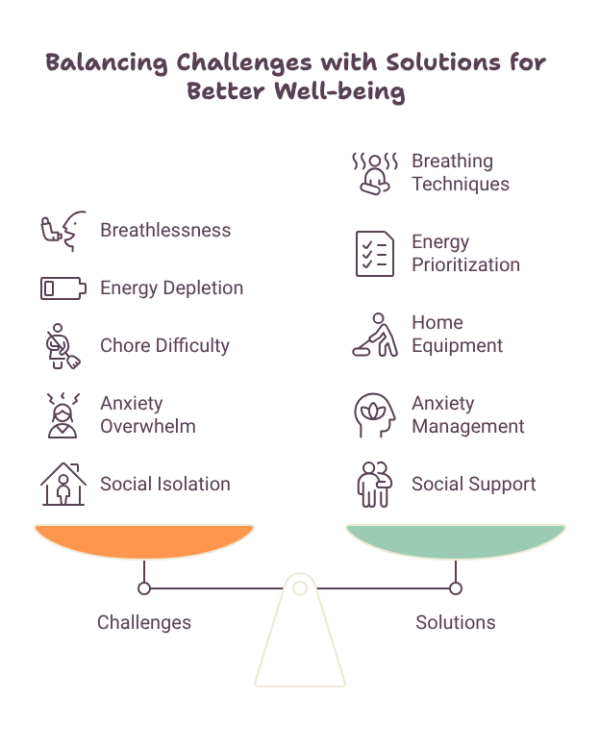
- Feeling breathless during everyday activities: Slow your pace, plan short rests and practise breathing techniques regularly instead of waiting for a crisis.
- Running out of energy: Think of energy as a limited budget; prioritise essential tasks and spread them across the day.
- Finding everyday chores difficult: Adapt your home and use equipment that reduces unnecessary effort.
- Anxiety caused by breathlessness: Learning breathing exercises, planning ahead and having support can make episodes feel less overwhelming.
- Feeling isolated: Peer support groups, family, healthcare professionals and disability organisations can all provide practical help and reassurance.
Why breathlessness affects more than your lungs
Living with a long-term lung condition changes more than your breathing. It can affect your work, social life, travel, shopping and the way you take part in everyday life. Some people mainly notice breathlessness when they walk quickly or climb stairs. Others find that simple tasks like showering, getting dressed or preparing a meal leave them needing to stop and recover.
On top of this, many disabled people face barriers created by the world around them. Long hospital corridors with nowhere to sit, train stations with broken lifts, supermarkets that remove seating and shops with heavy doors or cramped layouts all demand extra physical effort.
These are accessibility issues, not personal failings. Managing breathlessness is not just about the physical condition of your lungs. If you can you need to think about how you can reduce the demands that your daily environment places on your body.
Managing fatigue without feeling guilty
Fatigue often arrives alongside breathlessness. It is not simply feeling tired after a busy day. Many people describe it as “running out of energy” long before they have finished what they planned to do, or as a fog that makes everything feel heavier and slower.
Occupational therapists often talk about the idea of an “energy budget”. You only have so much energy each day, and every activity uses some of it. Spending that energy wisely can mean you get more of the important things done overall.
In practice, that might mean:
- Doing one household job before taking a planned break, instead of doing several and crashing afterwards.
- Preparing vegetables while sitting at the kitchen table rather than standing at the worktop.
- Ordering heavier shopping online, or asking someone to help with carrying.
- Planning appointments for the time of day when you usually feel strongest.
- Accepting help with physically demanding tasks instead of keeping them as a test of “coping”.
Resting before exhaustion is not giving up. It is a way of protecting your energy so you can continue doing the things that matter most to you.
Planning ahead can reduce breathlessness
Planning ahead is one of the simplest ways to reduce unnecessary breathlessness and fatigue. It is about removing barriers and avoiding avoidable effort, rather than endlessly pushing through.
- Plan where you can sit: When you go out, think about where benches, cafés or resting places are. In hospitals or large shops, do not be afraid to ask staff where you can sit down.
- Allow extra time: Give yourself longer than you think you need for journeys and appointments so you can walk at a gentler pace and pause when necessary.
- Avoid carrying everything at once: Use trolleys, wheeled bags or backpacks with good straps. Make more trips with lighter loads rather than one trip that wipes you out.
- Use delivery services: Set up online prescriptions and delivery, use grocery deliveries services so you are not using precious energy on queues or heavy bags.
- Ask for help early: If you know a day will be demanding, ask family, friends or carers in advance rather than waiting until you are already exhausted.
Planning ahead is a core part of independent living. You still do everything that you want to, but you do things differently so you can still live the life you want.
Patient tips for managing breathlessness at home
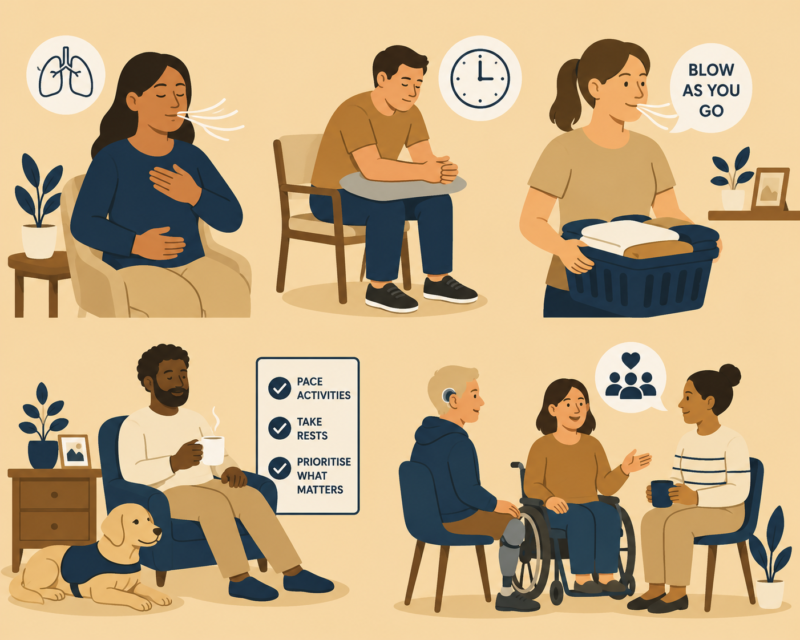
Alongside professional advice, people living with lung conditions regularly share simple tips that help them through difficult moments. Use these tips in addition to guidance from your respiratory team There maybe ideas here you might not have tried.
- Many people find that taking short, planned rests works better than waiting until they are completely out of breath and then stopping.
- Several people describe “saving up” energy before going shopping because they know they will need enough left to get home and put things away.
- Others now sit down to brush their teeth or prepare vegetables – not because they cannot stand, but because it saves energy for the rest of the day.
- People often say that practising breathing techniques every day makes them more effective when breathlessness hits suddenly.
- Some find that leaning on a worktop, resting forearms on their thighs, or sitting forward slightly helps their breathing feel less effortful.
These lived-experience tips can be woven into your routine alongside clinical advice, helping you manage everyday tasks in a way that feels more sustainable.
Breathing techniques that may help
Your respiratory team may recommend breathing exercises to help manage breathlessness. Two techniques are widely used, and another simple idea can be particularly helpful during effort.
Pursed-lip breathing
Pursed-lip breathing involves breathing in gently through your nose and then breathing out slowly through lightly pursed lips, as if you are cooling hot soup.
Making your out-breath longer than your in-breath can help slow your breathing and reduce feelings of panic during breathless episodes. Organisations such as Asthma + Lung UK and the European Lung Foundation have clear guides and videos explaining this technique.
Diaphragmatic (belly) breathing
Diaphragmatic breathing encourages your diaphragm – a large muscle under your lungs – to do more of the work instead of relying on the muscles in your shoulders and chest.
Many people find it helpful to learn this with a respiratory physiotherapist or in a pulmonary rehabilitation programme before practising at home. Once you are familiar with it, it can become part of your daily routine or something you use when you feel breathless.
“Blow as you go”
“Blow as you go” is a simple breathing strategy often recommended by respiratory teams. The idea is to breathe out during the part of an activity that takes the most effort, such as standing up from a chair, lifting a shopping bag or stepping up onto a kerb.
Instead of holding your breath while you exert yourself, gently breathe out through pursed lips as you move. Many people find this helps them feel more in control of their breathing and makes everyday activities easier to repeat without becoming as breathless.
Some people are also advised to use Positive Expiratory Pressure (PEP) therapy as part of their respiratory care. Unlike “blow as you go”, which is used during everyday movement, Bubble PEP therapy is a separate technique designed to help keep the airways open and move mucus towards the larger airways, where it can be cleared more easily. It should only be used if it has been recommended by your respiratory team or physiotherapist.
One example is the HydroBubble PEP Treatment Bottle from Hydrant for Health. Developed in collaboration with NHS respiratory teams, it provides Bubble PEP therapy in a reusable, portable device that is easier to clean than traditional bottle-and-tubing systems. It has been designed for children and adults who have been prescribed Bubble PEP therapy for conditions that involve mucus clearance, including cystic fibrosis, bronchiectasis and some other chronic respiratory conditions. Your healthcare professional can advise whether this type of therapy is suitable for your individual needs.
Making everyday tasks easier
Small adjustments around your home can save energy over the course of a day. This is about being practical and kind to yourself, not about turning your home into a hospital.
- Store frequently used items between waist and shoulder height so you are not constantly bending or stretching.
- Use a chair or stool while preparing meals, getting dressed or doing tasks that take more than a couple of minutes. Medically known as a “perching stools” you can often find suitable stools of a similar height and function in second hand or charity shops.
- Choose lightweight kitchen equipment where possible – lighter pans, smaller kettles, utensils with good grips.
- Keep essential items such as medication, drinks and your phone within easy reach of your favourite resting places.
- Use wheeled bags or trolleys rather than carrying heavy shopping.
- Break cooking into stages instead of preparing everything at once: chop vegetables earlier in the day, then cook later.
Saving even small amounts of energy at each stage can make a noticeable difference to how you feel by evening.
Assistive equipment can support independence
Assistive equipment is often associated with mobility impairments, but it can also make life easier for people living with respiratory conditions. The aim is to reduce unnecessary physical effort so you can conserve energy for the activities you value.
Depending on your circumstances, helpful equipment might include:
- Shower stools or bath benches that reduce the effort of standing while washing.
- Rollators or walking frames with built-in seats for resting during walks.
- Lightweight reachers and grabbers for picking up objects from the floor or high shelves.
- Voice-controlled smart speakers for reminders, alarms and hands-free phone calls.
- Medication organisers and reminder apps to reduce the mental load of keeping track.
A good starting point is to ask your occupational therapist or respiratory nurse about equipment and adaptations that could help. The right solution will be different for everyone, but reducing the effort needed for basic tasks can free up energy for work, hobbies and relationships.
Why accessibility makes a difference
For someone living with breathlessness, accessibility is about much more than step-free access or wheelchair ramps. It is closely linked to the Social Model of Disability, which says that people are disabled by barriers in society, not just by their bodies.
Common examples include:
- Hospitals with long corridors and nowhere to sit while you wait for appointments.
- Train stations with broken lifts or stairs as the only route to platforms.
- Supermarket queues without seating, making it hard to stand for long periods.
- Inaccessible toilets, particularly when you need extra space or time.
- Heavy manual doors that are difficult to open when you are short of breath.
- Long walks from “accessible” parking spaces to entrances.
For many people, these barriers are what make everyday life exhausting, not their diagnosis alone. Highlighting accessibility needs – for example, by asking for seating, using priority passes or requesting adjustments – is a valid and important part of managing breathlessness. Our guest article about “Quiet Disability Pride” explores this further.
Talking to friends, family and employers
Managing breathlessness and fatigue is easier when the people around you understand what is going on. That does not mean sharing every detail of your condition, but it can help to talk about fluctuating symptoms and what you find difficult.
- Explaining fluctuating symptoms: Breathlessness and fatigue are often unpredictable. Letting people know that you may have good and bad days can reduce misunderstandings.
- Asking for reasonable adjustments: At work, you may be entitled to changes such as flexible hours, home working, extra breaks or tasks that involve less physical effort. Reasonable adjustments are a legal right, not a favour.
- Telling people when you need a break: Saying “I need to sit down for a few minutes” is often easier if you have agreed in advance that this might happen.
- Saying no without guilt: It is OK to decline invitations or tasks that will leave you dangerously exhausted. Protecting your health is not selfish.
Clear, honest conversations can help your relationships stay strong while you adapt to new limits and ways of living.
Looking after your mental wellbeing
Living with breathlessness can be emotionally exhausting. Many people worry about symptoms becoming worse while they are out, feel frustrated by changes to their independence or become anxious about activities that once seemed routine.
Support might include:
- Talking openly with friends and family instead of bottling up fear or frustration.
- Speaking to your GP about anxiety or low mood; they may suggest talking therapies or medication.
- Joining peer support groups run by organisations such as Asthma + Lung UK, condition-specific charities or local groups organised at your hospital.
- Exploring counselling, mindfulness or relaxation techniques that feel right for you.
You do not have to “stay positive” all the time. It is enough to notice when you are struggling and reach out for support.
Financial support you may be entitled to
Long-term lung conditions can affect employment, income and the extra costs associated with disability. In the UK, depending on your circumstances, you may be eligible for support such as:
- Personal Independence Payment (PIP).
- Attendance Allowance.
- Employment and Support Allowance (ESA).
- Blue Badge parking.
- Council Tax Reduction.
- Help with travel to hospital appointments, sometimes available through hospital transport schemes or charitable grants.
Organisations such as Macmillan Cancer Support, Asthma + Lung UK and local welfare rights services can also provide guidance on benefits and practical support.
Understanding your rights after asbestos exposure
Some lung conditions, including mesothelioma and certain asbestos-related lung diseases, are linked to exposures that happened years or even decades earlier, often in workplaces where people were not adequately protected.
Most people reading this article will not need legal advice. However, if you have been diagnosed with mesothelioma or another asbestos-related condition, understanding your rights can be another form of practical support. Alongside medical treatment and financial benefits, some families choose to seek specialist advice about compensation following workplace asbestos exposure.
Charities such as Mesothelioma UK and organisations like the Health and Safety Executive (HSE) provide information on asbestos-related disease and sources of legal and financial support. The important thing is having clear information so you can make decisions in your own time.
If you live in the USA and are considering whether compensation may be available following asbestos exposure, speaking with a mesothelioma attorney Alabama can help you understand your legal options while you continue to focus on your health and day-to-day life.
When to seek medical advice
Even if you have lived with a lung condition for years, new or changing symptoms should never be ignored. Seek urgent medical attention if:
- Your breathlessness suddenly becomes much worse.
- You experience chest pain, tightness or pressure.
- Your lips or fingertips turn blue or grey.
- You feel confused, very drowsy or unable to speak in sentences.
For non-emergency changes – such as gradually worsening breathlessness, new levels of fatigue or difficulty coping with daily tasks – contact your GP or respiratory team.
Living well with a lung condition
There is no single solution for managing fatigue and breathlessness. Good days and more difficult days are part of life for many people living with respiratory conditions.
What often makes the biggest difference is combining good medical care with practical everyday strategies, accessible environments and support from people who understand your experiences. Small changes – practising breathing exercises, planning rest breaks, adapting your home, asking for help or applying for benefits – can make daily life feel more manageable.
You do not have to tackle every challenge at once. Start with one change that feels achievable, build confidence gradually and remember that preserving your energy is just as important as how you choose to spend it.
FAQ: common questions about breathlessness and fatigue
Why do I become breathless so quickly?
Breathlessness can be affected by lung function, heart health, muscle strength, anxiety and how active you have been recently. It is possible for breathlessness to feel severe even when tests do not look “too bad”. Your respiratory team can help you understand the specific reasons in your case.
Should I keep exercising if I have a lung condition?
In most cases, staying gently active is helpful, because it maintains strength and confidence. Programmes like pulmonary rehabilitation are designed to be safe and tailored to your abilities. Always check with your healthcare team before starting or changing an exercise routine.
What equipment helps with breathlessness?
Useful equipment might include rollators with seats, shower stools, grab rails, reachers, perching stools and mobility aids recommended by an occupational therapist. Some people also find that a small handheld fan directed at the face can reduce the sensation of breathlessness.
Can fatigue get worse even if my breathing stays the same?
Yes. Fatigue can be affected by sleep quality, medications, mood, infection, other health conditions and how much you are trying to do each day. If your fatigue changes, it is worth discussing this with your GP or specialist, even if your breathing feels unchanged.
When should I call a doctor?
Call your GP or respiratory team if breathlessness or fatigue stop you from doing things you could manage before, or if you notice new symptoms such as ankle swelling, chest pain or unexplained weight loss. Call emergency services if you have severe breathlessness, chest pain, blue lips or confusion.
Are there benefits available for people with lung conditions?
Many people with lung conditions are entitled to financial support, such as PIP, ESA or Attendance Allowance, as well as practical help like Blue Badges and Council Tax reduction. Charities and welfare rights services can help you understand what you might be eligible for and how to apply.
