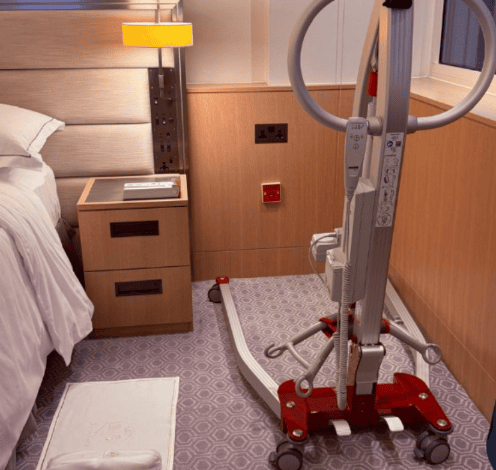
Accessible Hotels in London: Royal Lancaster’s Hoist Booking Service Could Start a Bigger Change

Most people book a hotel and assume they’ll be able to get into bed when they arrive. People who rely on a mobile hoist don’t have that luxury.
Before we can think about the location or whether breakfast is included, we need to know whether safe transfers will even be possible.
While many hotels provide step-free access and accessible bathrooms, few offer the equipment or room layouts needed for safe transfers with a hoist.
Royal Lancaster London is aiming to change that. Working with disabled traveller and accessibility campaigner Martyn Sibley, the hotel now allows guests staying in accessible rooms to book a Molift Smart 150 mobile hoist at no extra cost, subject to availability. The move could encourage more hotels to include hoists as part of their standard accessibility offering.
Accessible Hotels and Mobile Hoists: Key Takeaways
| KEY POINT | WHY IT MATTERS |
|---|---|
| Royal Lancaster London now offers a bookable mobile hoist | Guests can request a Molift Smart 150 hoist when booking an accessible room at no additional cost, subject to availability. |
| Martyn Sibley hopes this is the start of a wider campaign | After working with the hotel to develop the service, Martyn wants to encourage more hotels to make hoists a standard part of accessible accommodation. |
| Accessible rooms need more than ramps and grab rails | Bed height, under-bed clearance, room layout and bathroom space all affect whether a mobile hoist can be used safely. |
| Travelling with your own hoist is rarely a practical solution | Portable hoists are heavy, bulky and require suitable transport, while hotel beds and bathrooms may still make safe transfers impossible. |
| Lived experience shaped this article | Our family regularly faces these challenges when travelling with our son, who relies on a hoist, and my wife, who is a wheelchair user. |
| Small changes could make a big difference | Publishing room measurements, offering bed raisers and making hoists easy to book would give disabled people far greater choice over where they stay. |
| Better accessibility benefits everyone | Hoist users travel for work, healthcare, family life and holidays. Hotels that meet these needs can welcome more guests while removing barriers to participation. |
Why We Stopped Expecting Hotels to Meet Our Access Needs
Our son has Dravet syndrome and extremely fragile bones, so every transfer has to be done with a hoist. When he travels, having access to suitable hoisting equipment isn’t optional. My wife has a spinal injury and is a wheelchair user, and although we would much rather use a hoist for transfers, just as we do at home, I’m still able to lift her. That means we often compromise rather than limiting ourselves to the tiny proportion of hotels and holiday accommodation that can support hoist users.
That’s why Royal Lancaster London’s new hoist booking service immediately caught my attention. Working with disabled traveller and accessibility campaigner Martyn Sibley, the hotel has introduced a bookable mobile hoist for guests staying in its accessible rooms.
Why More Hotels Need Mobile Hoists for Disabled Guests
Martyn Sibley, a disabled traveller and accessibility campaigner who uses a hoist himself, has spent several months working with Royal Lancaster London to develop a straightforward way for guests to book a hoist as part of their stay. Guests can request a Molift Smart 150 mobile hoist when booking an accessible room through Royal Lancaster London’s accessible stays service, allowing hoist users to confirm an important access requirement before they arrive.
Guests do need to bring their own sling, as these are not supplied. Slings are individually prescribed and correctly fitted, making personal slings safer than hotels supplying universal ones.
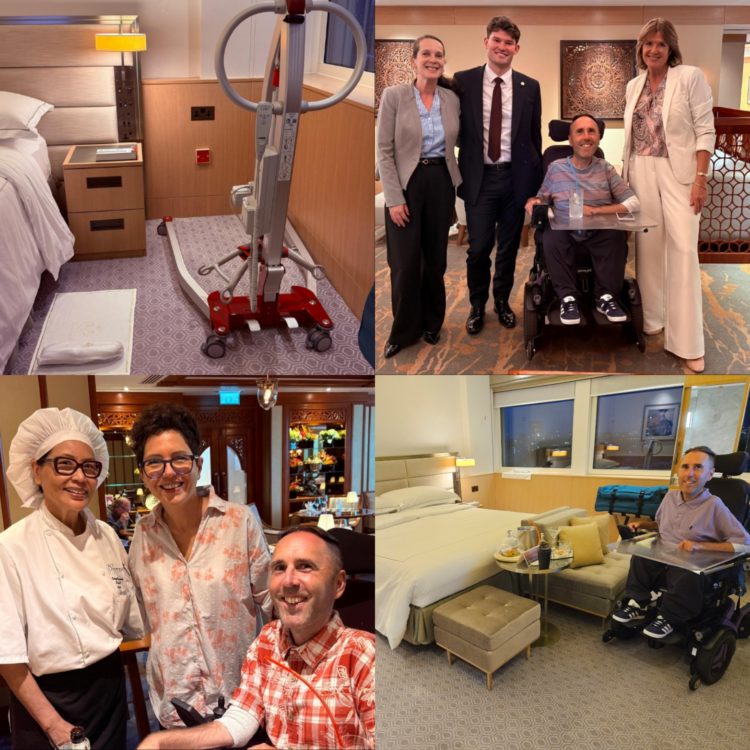
This project is also the first visible step in a much broader ambition. In a recent update about his Purple Collective, Martyn explained that he is narrowing his focus to one practical goal: encouraging more hotels to provide hoists. He estimates around 250,000 people in the UK rely on hoists, yet finding accommodation that supports them remains unnecessarily difficult.
Many hotels advertise accessible rooms, and those rooms often include features such as step-free access, wider doorways, grab rails and wet rooms. Those improvements make a real difference for many disabled guests, but they don’t address the needs of people who rely on hoisting equipment for every transfer. As a result, many hoist users still face hours of research, phone calls and uncertainty before they can decide whether an overnight stay is even possible.
Royal Lancaster has shown one way forward. By making a hoist part of the booking process and publishing practical information before guests arrive, the hotel has removed one of the biggest unknowns. If other hotels adopt the same approach, disabled people who use hoists could have far more choice over where they stay, rather than having to search for the small number of places that already meet their needs.
Why Accessible Hotels Still Exclude Many Hoist Users
Living with hoists every day means we look at travel very differently from most people. Before we can think about attractions, restaurants or even the cost of a hotel, we have to work out whether we can manage the practicalities of getting everyone safely in and out of bed, onto the toilet and into the shower.
When our son travels, a suitable hoist is essential. Without one, staying overnight simply isn’t an option.
For my wife and I, the situation is a little different. We would much rather use a hoist, just as we do at home, but because I’m still able to lift her, we often compromise rather than limiting ourselves to the small number of hotels that can accommodate hoist users.
When our son travels with us, we look for adapted holiday lets or specialist accommodation where we know hoisting will be possible. When it’s just my wife and me, I still lift her so we have a wider choice of hotels….despite the risks.
It’s a compromise we’ve had to accept, but having more hotels offer hoists would give families like ours far more choice.
Why Bringing Your Own Mobile Hoist Isn’t a Practical Solution
For many readers, the obvious question might be: why not just take your own hoist?
The answer is that some families do, but it’s far more complicated than packing an extra suitcase. Even so-called portable hoists are designed for occasional transport rather than easy travel.
Some of the challenges include:
- Weight: Many portable mobile hoists weigh around 18kg, before you add a sling or any accessories.
- Space: A hoist has to travel alongside wheelchairs, luggage, medical equipment and everything else a family needs for their trip.
- Transport: Taking a hoist usually means travelling by car. Public transport and taxis often don’t have enough room for all the equipment.
- Flying: Airlines have different policies for mobility equipment, adding extra planning and the worry of equipment being delayed or damaged.
- Manual handling: Loading and unloading an 18kg hoist several times during a journey can become another lifting task in itself.
Even if you successfully bring a hoist with you, there is no guarantee it will work in the hotel room.
A short note on ceiling track hoists:
Some readers may wonder why hotels don’t simply install ceiling-track hoists instead. Ceiling-track systems can provide excellent support, but they require structural installation, regular inspection and maintenance, and are fixed to a specific room layout. They also need careful planning to ensure the track reaches the bed, toilet and shower safely. For most existing hotels, retrofitting ceiling hoists throughout accessible rooms would be a major investment.
A mobile hoist is a much more practical first step. It can be moved between suitable accessible rooms, costs significantly less to install, and allows hotels to begin supporting hoist users without major building work. As Royal Lancaster has shown, providing a bookable mobile hoist can remove one of the biggest barriers to accessible travel while encouraging wider improvements over time.
Many mobile hoists need their legs to slide underneath the bed before a safe transfer can take place. Hotel beds often have enclosed divan bases, decorative frames or very low clearance, making that impossible. Bathrooms can be just as difficult. A room may be labelled accessible, but there may not be enough space to manoeuvre a mobile hoist safely around the bed, toilet or shower.
This is why simply telling families to “bring your own hoist” isn’t a realistic answer for many people. Accessible travel depends just as much on room design as it does on the equipment itself.
What Makes an Accessible Hotel Room Suitable for Hoist Users
Hotels looking to follow this example should also think about how the room works in practice. A hoist is only one part of the solution. Other factors can determine whether a safe transfer is possible, including:
- Bed height, which affects whether someone can be transferred safely.
- Under-bed clearance, so the hoist legs can slide underneath.
- Space around the bed, allowing the hoist to be positioned and manoeuvred safely.
- Bathroom layout, with enough room to turn and use a mobile hoist.
- Shower and bath access, as grab rails and a wet room alone may not provide enough space for hoisting.
Publishing practical information such as bed height, under-bed clearance, room dimensions and photographs would answer many of the questions disabled guests currently have to ask before booking. Floor plans and short videos can also give people much more confidence that a room will work for them.
A simple idea that could help even more – “bed raisers”
One relatively inexpensive addition would be to keep a set of bed raisers (sometimes called elephant legs) available for guests who need them.
These typically cost around £30 to £40, but they can make the difference between a mobile hoist fitting under a bed or not. They are bulky to pack and take up valuable luggage space, so being able to borrow them from the hotel would remove one more thing that families have to bring with them.
Fitting bed raisers can also be awkward and requires lifting the bed safely. If a porter or concierge could install them before the guest arrives, the room would be ready to use from the moment they check in. It’s a small adjustment that could make a significant difference for guests who rely on hoists.
How Poor Hotel Accessibility Increases Manual Lifting Risks
When a hotel doesn’t provide a hoist, families and disabled people often end up finding another way.
In our case, that usually means I become the lifting equipment.
At 55, I’m still physically able to do it, but lifting another adult safely is never something to take lightly, especially in unfamiliar hotel rooms where space is tight and furniture isn’t designed with transfers in mind.
Every manual lift carries some risk. One awkward movement or a bed that’s the wrong height can lead to an injury for the person being lifted or for the person doing the lifting. It’s something I think about every time we travel because if I injured my back, it wouldn’t just spoil the holiday. It could affect our independence long after we returned home.
By not providing suitable hoisting equipment, they may be leaving families, carers and personal assistants to carry out manual transfers that would normally be avoided at home. Most people wouldn’t choose to lift someone by hand if a hoist were available; they do it because they feel they have no realistic alternative.
At home, we use equipment because it’s the safest way to transfer someone. Travelling often means leaving those safer routines behind.
How Royal Lancaster London Is Improving Accessible Hotel Stays
Royal Lancaster London has become one of the first mainstream hotels in the UK to make a mobile hoist available as part of an accessible stay.
Guests booking an accessible room can request a Molift Smart 150 hoist during the reservation process at no additional cost, subject to availability. The hotel also publishes the hoist’s maximum safe working load of 150kg and explains that guests should bring their own sling.
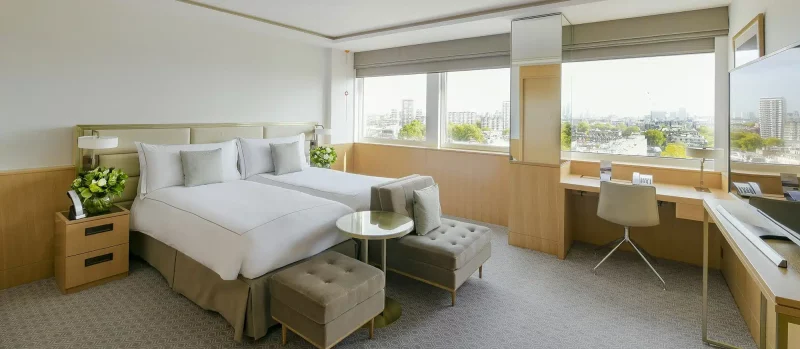
Royal Lancaster links to an AccessAble guide with room measurements and accessibility information, helping guests decide whether the room is likely to meet their needs before they arrive. That kind of detail can save hours of emails and phone calls.
Martyn Sibley worked with the hotel over several months to develop the booking process as part of his wider ambition to see more hotels provide hoists. Martyn’s involvement and wider “Purple” work, including the Purple Collective, mean the service has been shaped through lived experience rather than assumptions. This is exactly the kind of co-design many disabled travellers have been calling for: listening to people who use hoists every day and building services around their real-world needs.
My hope is that other hotels take inspiration from this approach and begin offering the same level of information and support.
Why Hotels Should Offer Bookable Mobile Hoists
Royal Lancaster London has shown that making hotels more accessible for hoist users is achievable. The equipment is available to book, practical information is published before guests arrive, and the service has been developed with input from someone who uses a hoist every day. It provides a practical model that other hotels can adapt to suit their own buildings and guests.
The benefits extend well beyond leisure travel. Accessible hotels make it easier for disabled people to attend:
- Business meetings and conferences.
- Hospital appointments and specialist treatment.
- Training courses and education.
- Weddings, family celebrations and social events.
- Short breaks and holidays.
London is the UK’s centre for business, government, trade and commerce. It hosts thousands of conferences, exhibitions, networking events and business meetings every year, alongside many of the country’s specialist hospitals and cultural attractions.
For disabled people who rely on hoists, finding suitable accommodation can be the deciding factor in whether they are able to take part at all.
That matters for the wider economy too. The Purple Pound represents the spending power of disabled households, estimated to be worth hundreds of billions of pounds to the UK economy each year.
Disabled entrepreneurs also make up around 25% of the UK’s 5.7 million small businesses, contributing to innovation, employment and economic growth. Many travel to meet clients, attend exhibitions, speak at conferences and build professional networks. Better access to mainstream hotels makes those opportunities easier to reach.
Hotels that provide reliable accessibility information and practical facilities are likely to attract loyal guests who return because they know their access needs will be met.
How Hotels Can Improve Accessibility for Hoist Users – A Checklist
Royal Lancaster London has shown what can be achieved. Here are a few practical ideas that other hotels could introduce without major building work.
Make hoists available to book
Allow guests to request a mobile hoist during the booking process, just as they can request a cot or an accessible parking space.
Train staff to support accessible bookings
Providing a hoist is only part of the solution. Staff should know where it is stored, how guests can request it, and who is responsible for making sure it is ready before arrival. Although guests, carers and personal assistants will usually carry out transfers themselves, a basic understanding of manual handling principles and the importance of keeping access routes clear can help staff provide a safer, more confident service.
Publish practical information
Include details such as:
- Hoist make and model.
- Maximum safe working load.
- Whether guests need to bring their own sling.
- Bed height.
- Under-bed clearance.
- Room dimensions and turning space.
Show the accessible room
Photos, floor plans and short videos help guests decide whether a room will work for their individual needs before they book.
Keep bed raisers available
A set of bed raisers (sometimes called elephant legs) costs around £30–40 and can make the difference between a mobile hoist fitting under a bed or not. Having them available at reception—and fitted before arrival by a porter or maintenance team—would remove another barrier for many guests.
Design with disabled people
Royal Lancaster’s partnership with Martyn Sibley shows the value of involving disabled people throughout the planning process. Lived experience often identifies practical issues that are easily overlooked.
Listen and improve
Ask guests for feedback after every accessible stay. Small changes based on real experiences often have the biggest impact.
I hope Royal Lancaster is remembered as the hotel that started something bigger. Families like mine shouldn’t have to choose where we stay based on whether we can transfer safely from a wheelchair to a bed. If more hotels adopt ideas like these, thousands of disabled people will have greater freedom to travel for work, healthcare, family life and holidays.
Frequently Asked Questions About Accessible Hotels and Mobile Hoists
Can you book a mobile hoist at Royal Lancaster London?
Yes. Guests staying in an accessible room can request a Molift Smart 150 mobile hoist when booking, subject to availability. Guests need to bring their own sling.
Why do accessible hotel rooms often not work for hoist users?
Many accessible rooms include step-free access and grab rails but lack enough space around the bed, suitable under-bed clearance or bathrooms large enough for safe hoist transfers.
Why can’t disabled travellers simply bring their own hoist?
Portable hoists are heavy, bulky and difficult to transport. Even when guests bring one, hotel beds and room layouts may prevent it from being used safely.
What information should hotels publish for hoist users?
Hotels should publish bed height, under-bed clearance, room dimensions, bathroom layouts, turning space, hoist compatibility and photographs so guests can judge whether the room meets their needs.
Why is Royal Lancaster London’s approach significant?
It shows that mainstream hotels can provide practical hoist access as part of their standard accessibility offer rather than treating it as an exceptional request.
