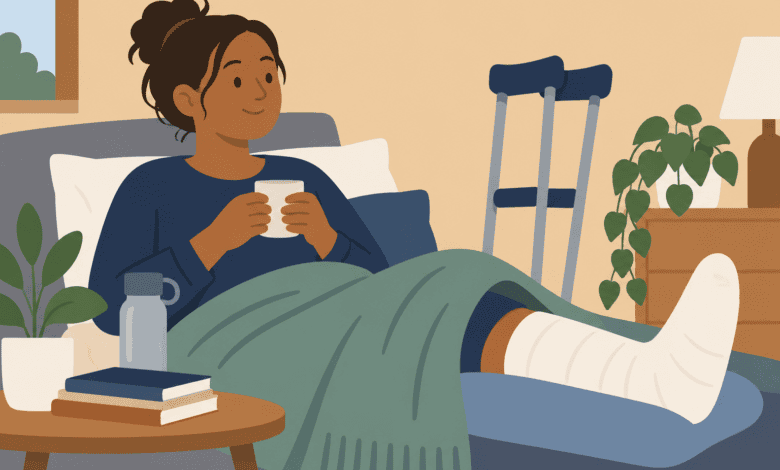
Recovering from surgery at home can raise plenty of questions, particularly if you are disabled, have a long-term condition or already use equipment or support. From how much you should move to whether existing adaptations will still work, these ten common myths explain what home recovery can really involve.
Nowadays more people than ever are recovering from surgery in their own home rather than on a hospital ward. Modern NHS enhanced recovery pathways are designed to get patients up, moving and discharged quickly, sometimes within a day or two of an operation, and for a growing number of procedures on the same day.
For many people, recovering at home means a lower risk of hospital-acquired infection and a quicker return to familiar routines. But a short hospital stay leaves many people unsure about what home recovery actually involves, and that uncertainty is where the myths creep in.
For disabled people and anyone managing a long-term condition, an operation also has to fit around existing routines, equipment and support arrangements. Temporary post-operative restrictions can change what is accessible or manageable, even when you normally have a setup that works well.
Some of these myths cause needless worry, and a few can slow healing or raise the risk of complications. With the right preparation and support, recovering at home is safe for many people. Where clinical help is needed, homecare services such as Cavendish Homecare provide nurse-led post-operative care at home. Cavendish was founded by Registered Nurse Mairead Liston and is rated Good overall, and Outstanding for Caring, by the Care Quality Commission.
What should you know about recovering from surgery at home?
| Common assumption | What to know |
|---|---|
| Recovery means staying in bed | Planned movement is often an important part of recovery and should match your own mobility and clinical advice. |
| You should recover within a set number of weeks | Recovery varies by operation, health, access needs and your usual level of activity. |
| Your normal support will automatically be enough | You may temporarily need different equipment, more assistance or clinical support. |
| Needing help reduces independence | Short-term support can remove barriers and make it easier to return to your usual routines. |
| Emotional changes are just tiredness | Low mood and anxiety after surgery deserve attention too, particularly when they persist. |
Myth 1: You are safer recovering in hospital than at home
The reality: for many routine operations, going home relatively quickly is now a planned part of treatment. NHS enhanced recovery programmes encourage people to get moving and return home as soon as it is clinically appropriate.
Being discharged does not mean your recovery is finished. It means your medical team considers you well enough to continue it outside hospital. What matters is whether you have the medication, information, equipment and support you need once you get through the front door.
Myth 2: Recovery just means resting until you feel better
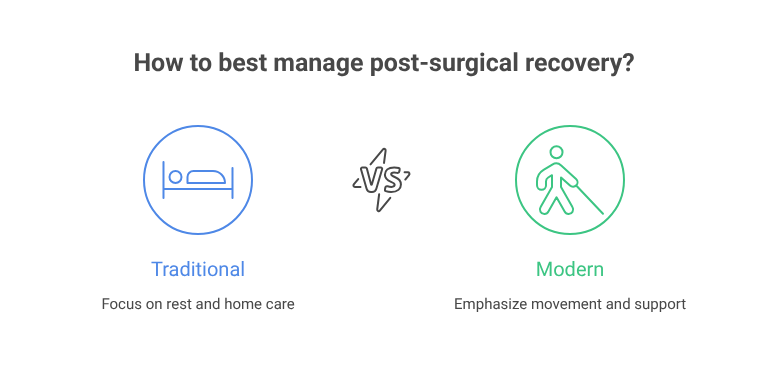
The reality: rest matters, but so does gentle, planned movement. Under Enhanced Recovery After Surgery protocols, patients are often encouraged to get out of bed and start moving relatively soon after an operation where it is safe to do so.
Early movement helps circulation, reduces the risk of blood clots and can prevent stiffness. That does not mean everybody should be walking around a ward or house. Movement looks different for different people.
If you have limited mobility or use a wheelchair, your physiotherapy plan should take your usual mobility into account. Transfers, upper-body movements, repositioning or exercises completed from a chair or bed may form part of that plan. Ask for advice that reflects your own starting point rather than assuming standard instructions will work for you.
A wheelchair user’s experience of planning movement after surgery
One manual wheelchair user with Ehlers-Danlos Syndrome shared a practical problem she was facing before shoulder surgery. She normally uses a power-assist attachment on her wheelchair, but fitting it requires both arms and its throttle is on the same side as the shoulder being operated on. Following standard advice to “keep moving” would not solve that problem because the surgery could temporarily change how she uses her wheelchair. Other wheelchair users suggested looking at a lightweight rental power chair and speaking to an occupational therapist before surgery. It is a useful real-world example of why post-operative movement needs to start with how someone already gets around, the equipment they use and the barriers surgery may temporarily create. Read the discussion on Reddit.
Myth 3: You will be back to normal within a week or two
The reality: recovery times vary enormously. Minor operations such as cataract surgery may settle within days or weeks, while abdominal surgery, joint replacements and other major procedures can take considerably longer.
NHS guidance indicates that many people return to light activities around six weeks after hip or knee replacement, but full recovery can take much longer.
Your own timeline may also look different from the average printed on a hospital leaflet. A long-term condition, fatigue, pain, access barriers or changes to your usual support can all affect what you can comfortably do during recovery.
A slower recovery does not automatically mean something has gone wrong. It is more useful to know what progress should look like for you and which changes your medical team wants you to report.
Myth 4: Pain after surgery means something has gone wrong
The reality: some pain and discomfort are expected after many operations, and prescribed pain relief can make it easier to sleep, move and complete rehabilitation exercises.
What matters is the type of pain and whether it is changing. Severe or sudden pain, pain that is steadily getting worse, or pain accompanied by symptoms such as fever, spreading redness or swelling should be checked.
Follow the instructions given by your surgical team and contact your GP, hospital team or NHS 111 if you are concerned about symptoms during recovery.
Myth 5: If you live alone, you just have to cope
The reality: the first days and weeks after an operation are often when practical help matters most. Needing temporary assistance is not the same as losing independence.
Depending on the operation, hospitals may want to know what support you have in place before you are discharged. You may need help with meals, washing, medication, shopping or getting around your home while certain movements are restricted.
If you already use a personal assistant or have a care package, talk to your provider before the operation if you can. Your existing support may need to change temporarily. There can also be a difference between everyday assistance and clinical tasks such as wound care, injections or managing new medication.
Planning this before surgery can prevent you arriving home only to find that an ordinary part of your routine has suddenly become difficult to manage.
A wheelchair user’s experience of planning support after surgery
One wheelchair user who lives alone described how even minor hand surgery needed careful planning because she relies heavily on one working limb. Before the operation, she arranged help for the first few days, put medication into containers with easy-to-open lids and worked out where she would need extra assistance with transfers, dressing and intimate care. She also asked around 150 wheelchair users about their experiences of the same procedure and reported that many had problems with their stitches during transfers or self-propulsion. That informal feedback is not clinical evidence, but it shows how an operation considered relatively minor can create very different practical barriers when your arms are also central to mobility and everyday tasks. Read the full post on Reddit.
Myth 6: Wound care is simple and you do not need professional advice
The reality: most surgical wounds heal without major problems, but surgical site infections are a recognised complication.
Your discharge instructions should explain how to look after the wound, whether the dressing needs changing and when it will be checked. Keeping the area clean and following the advice you have been given are important parts of recovery.
Increasing pain, spreading redness, swelling, discharge or a raised temperature can be signs that the wound needs medical attention. If something changes or you are unsure whether the wound is healing as expected, ask a healthcare professional rather than trying to judge it from a generic description online.
Myth 7: Blood clots only happen in hospital
The reality: the risk of a blood clot can continue after you leave hospital. This is why some people are prescribed blood-thinning medication, compression stockings or both after an operation.
Movement and hydration may also form part of your post-operative advice. If your mobility is limited, ask what blood-clot prevention should look like for you rather than assuming advice based around walking is the only option.
Take prescribed medication as directed and follow the instructions your surgical team gives you about stockings, movement and other precautions.
Myth 8: Home care after surgery means giving up your independence
The reality: the right support can make independent living more practical during recovery.
Visiting or live-in post-operative care is different from moving into a residential setting. Support comes into your home and can be reduced as your needs change.
Many disabled people already know that independence does not mean doing every task without assistance. Accessible environments, personal assistance, equipment and appropriate support can remove barriers that would otherwise restrict what somebody can do.
The same principle applies after an operation. You might need help with showering, preparing food or changing a dressing for a few weeks while still making your own decisions and following your normal routine wherever possible. Temporary support can protect the independence you already have.
Myth 9: Your existing equipment and adaptations will cover everything after surgery
The reality: an accessible home is not necessarily ready for the temporary restrictions that can follow an operation.
Surgery can change how you transfer, wash, use the toilet, get upstairs or move around for a while, even if you normally manage these things independently.
You might usually transfer without assistance, for example, but need extra support for a short period after surgery. A bathroom that works well for you every day might also become difficult to use if your surgical team has told you not to bend beyond a certain point or put weight through one leg.
Temporary equipment can sometimes solve these problems. Depending on your assessed needs and local provision, occupational therapists and community equipment services may be able to arrange items such as a commode, raised toilet equipment or transfer equipment.
Tell the occupational therapy or discharge team what equipment you already have, how you normally transfer and move around your home, and what help you usually receive. Do not assume that an existing adapted home means there is nothing else to plan.
The important question is whether your usual setup will work with your temporary post-operative restrictions. If it will not, identifying the problem before discharge gives you a better chance of having the right equipment or support ready at home.
One power wheelchair user shared how abdominal surgery temporarily changed the way she could transfer. A strict weight-bearing limit meant she could not use her usual wheelchair, commode or a standard toilet, despite having managed her transfers independently before surgery. The problem wasn’t her existing equipment. The new restriction had changed what she needed, and that hadn’t been planned for before she went home. It’s a good example of why existing equipment and adaptations should be discussed as part of discharge planning. Read the discussion on Reddit.
Myth 10: Feeling low after surgery is just tiredness and will pass
The reality: surgery and recovery can affect mental wellbeing as well as physical health. research into anxiety and depression among surgical patients shows that mental health is an important part of care around an operation and can be associated with recovery outcomes.
Pain, poor sleep, medication, disrupted routines and uncertainty about recovery can all add pressure. There can be additional demands if you are already managing a long-term condition or dealing with inaccessible services and support systems.
For some disabled people, one of the hardest parts can be suddenly needing assistance with something they normally do independently. A wheelchair user who usually transfers without help, for example, may temporarily need another person or a piece of equipment to make that transfer possible.
That does not mean their independence has disappeared. Their access requirements have changed for a period of time, and the support around them may need to change too.
Low mood should not automatically be written off as an unavoidable part of recovery. If you are persistently feeling low or hopeless, have lost interest in things you usually enjoy, or changes to your mood are worrying you, speak to your GP or another healthcare professional. You do not need to wait until your physical recovery is complete before asking for mental health support.
People recovering from joint replacement surgery have also described how changes in their mental health can appear even when the physical recovery seems to be going well. In a Mayo Clinic Connect discussion, one person describes anxiety and depression following hip replacement despite having no previous experience of either. In a separate r/Kneereplacement discussion, a person reports experiencing serious depression months after knee replacement, with other contributors talking about the effects of pain, poor sleep and a long recovery. These are individual experiences rather than medical evidence, but they show why changes in mental wellbeing after surgery should not automatically be dismissed as tiredness or assumed to affect only people with a previous mental health condition. Read the Mayo Clinic Connect discussion and the r/Kneereplacement discussion.
Post-operative recovery at home: quick FAQ
How soon after surgery can I go home?
It depends on the operation, your health and what support you need. Many routine procedures, including some hip and knee replacements, can now involve a short hospital stay. Some are carried out as day cases. Your surgical team should only discharge you once the relevant clinical criteria have been met.
Do I need a nurse or is a carer enough?
It depends on what you need help with. A carer or personal assistant can support everyday tasks such as meals, washing and getting around, while a nurse can provide clinical care such as wound management and other tasks that require nursing skills. Some people need both for a period of time.
I already have a carer or personal assistant. What changes after surgery?
Tell your discharge team about your existing support so that your recovery plan takes it into account. Everyday assistance may carry on much as before, but you could temporarily need more hours, different tasks or clinical support that is not part of your usual arrangements.
Will I need different disability equipment while recovering from surgery?
Possibly. Post-operative instructions can temporarily change the way you transfer, sit, wash or move around your home. Ask for an occupational therapy assessment if you are concerned that your usual equipment or adaptations will not work with these restrictions.
How long should I wear compression stockings after surgery?
Follow the advice from your surgical team because the answer varies according to the operation and your personal risk. They should tell you whether stockings are needed, how long to wear them and whether blood-thinning medication is also required.
Is it normal to feel low after surgery?
Changes in mood can happen during recovery, but persistent low mood should not simply be ignored. Speak to your GP or another healthcare professional if you are worried about how you are feeling or your mood is affecting day-to-day life.
When should I call a doctor while recovering at home?
Contact your GP, hospital team or NHS 111 if you have severe or worsening pain, signs of a wound infection or other symptoms your discharge team has told you to watch for. Breathing difficulties, chest pain and swelling or tenderness in a leg can need urgent medical attention. If you think you are having a medical emergency, call 999.
Planning for recovery after surgery at home
Recovering at home is now part of the normal pathway for many operations, but going home quickly does not mean you are expected to manage everything by yourself.
A useful recovery plan starts with your real life rather than an idealised version of it. Think about how you get in and out of bed, use the bathroom, prepare food, take medication, care for children or pets, work, transfer and move around your home.
For disabled people, that also means checking whether existing equipment, personal assistance and adaptations will continue to work with any temporary restrictions caused by surgery.
Knowing what may change, arranging extra support where it is needed and understanding which symptoms require medical advice can make the first few weeks at home much easier to manage.

