How to Buy a Walk-In Bath in the UK: Supplier Guide, Red Flags and What Nobody Tells You

Buying a Walk-In Bath in the UK: Costs, Suppliers, Red Flags and Key Considerations
Walk-in baths can make daily routines safer and more comfortable for disabled people. Slips and strains often become a concern with standard tubs, especially when mobility changes over time. A well-chosen bath supports independence and reduces reliance on others.
Cost and supplier claims can feel unclear at first. Prices vary, features differ, and installation needs careful planning. Good information helps you avoid overspending and reduces the chance of regret later. Clear guidance makes the process more manageable and gives you confidence when speaking to suppliers.
What Affects the Price of a Walk-In Bath?
Price depends on several factors, and each one can shift the total more than expected. A quick glance at brochures rarely tells the full story. Looking deeper into specifications and installation details gives a more realistic picture.
Many buyers ask, how much is a walk-in bath before they understand what drives the price. A detailed breakdown helps set expectations early.
Key factors include:
- Type of bath – Compact soaker baths cost less than full-length options with powered seating.
- Installation work – Plumbing upgrades, pipe relocation, or floor reinforcement can add to the total.
- Bathroom layout – Tight spaces or awkward layouts may require extra labour.
- Extra features – Hydrotherapy jets, fast-drain systems, and heated surfaces increase the price.
A supplier should explain each element clearly. If details feel vague, ask for a written breakdown.
Typical Price Ranges in the UK
Prices can vary widely, which often leads to confusion. Entry-level models are more accessible, yet they may lack comfort features that improve long-term use.
A clear overview helps compare options:
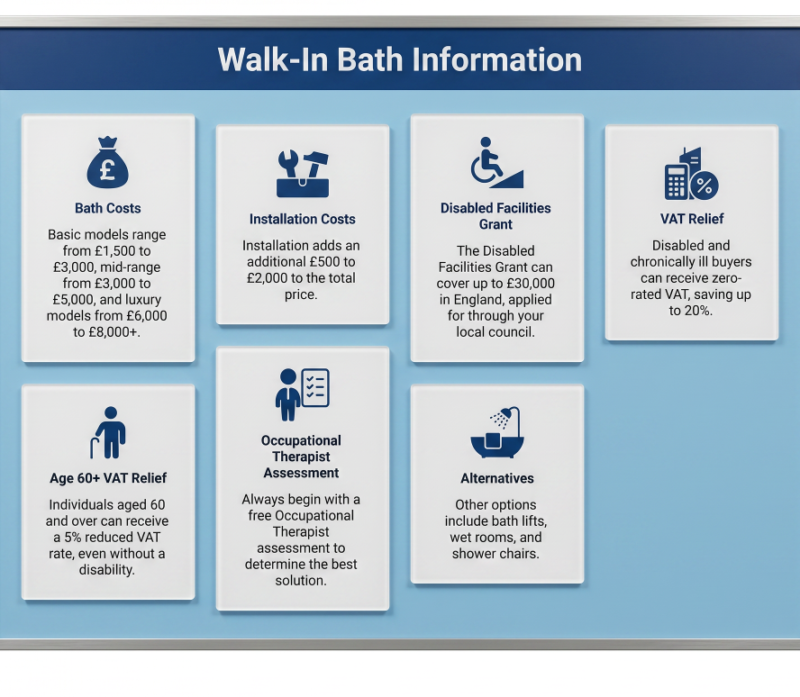
| Type of Walk-In Bath | Estimated Cost (UK) | Notes |
| Basic soaker bath | £2,000–£4,000 | Simple design, fewer features |
| Mid-range models | £4,000–£7,000 | Better comfort and usability |
| Premium models | £7,000–£10,000+ | Advanced features and custom fit |
| Installation | £1,500–£5,000 | Depends on property and work required |
Figures vary depending on location and property type. Older homes often need more preparation work, which can raise the final bill.
Costs are indicative and vary by supplier, property and installation needs. Figures sourced from UK supplier data, May 2026.
Hidden Costs Many Buyers Miss
Initial quotes can appear reasonable, yet extra charges may appear later. Careful review of every line helps avoid surprises.
Common hidden costs include:
- Electrical upgrades – Powered seats and pumps may need new wiring.
- Structural adjustments – Floors or walls might need reinforcement.
- Removal of existing fittings – Old baths and tiles must be taken out and disposed of.
- Ongoing maintenance – Pumps and seals may require servicing over time.
Ask suppliers to include these items upfront. Written confirmation reduces the risk of unexpected additions. Before comparing quotes, it can help to read a neutral price breakdown on understanding walk-in bath costs then ask each supplier to confirm which features, installation work and aftercare are included in writing.
Before You Book a Sales Visit – a checklist
Ask your council or GP about an OT assessment
Check DFG eligibility with your local council
Ask for fully itemised pricing (supply + installation separate)
Compare bath lifts and level-access showers as alternatives
Never sign on the day – take time to compare quotes
Comparing Suppliers: What to Look For
Choosing the right supplier matters as much as choosing the bath itself. A low quote does not always reflect quality or service.
Look for these signs of a reliable provider:
- Transparent pricing – Every cost should be listed clearly, without vague estimates.
- Clear warranty terms – Long warranties often reflect confidence in the product.
- In-house installation – Consistent teams usually deliver better results than outsourced labour.
- Aftercare support – Access to repairs and servicing adds long-term value.
Reading reviews can help, though patterns matter more than single comments. Consistent feedback about service quality is a stronger indicator than isolated praise.
What buyers and carers say about Walk in Baths
The Alzheimer’s Society support forum captures the kind of honest, unfiltered experience you won’t find in a brochure. One carer described her husband “shaking – not sure if he was scared or cold” when trying to use a standard bath seat, and wondered whether a walk-in bath might remove that fear entirely. Several forum members who’d been through the same decision shared what they found.
The fill-and-drain wait came up repeatedly. As one forum member put it plainly: “You need to be in the bath while it fills and empties.” For some, that was a minor inconvenience – one carer said her husband “absolutely loved it and would have stayed there all day”. For others it was a dealbreaker: one family installed one at around £5,000 and later removed it because “mum didn’t like waiting until the water had gone and dad didn’t like that it didn’t go up to his neck.” They put a standard bath back in when they sold the house.
Cost came up sharply too. One carer, who had contacted multiple companies, was blunt: “I call it a rip off aimed at elderly and disabled people… each company quoted around £5,000.” She questioned whether buying the bath independently and using a local plumber might be a better route – and it’s a fair question worth exploring.
A physio contributing to the thread offered a useful reality check: “I have had a lot of clients use walk-in baths and there are pros and cons… if you can live with that though, most people are very happy with them. Having a bath feels much nicer for folks than a shower. Just checking – have you had an OT review through your GP to see if there are cheaper options still open?”
That last point matters. A bath lift on loan from a Community Health Team – free, serviced, and removable – solved the problem for at least two families in the same thread without any major building work.
Red Flags to Watch Out For
Some suppliers rely on pressure rather than clear information. Spotting warning signs early can save money and stress.
Watch out for:
- High-pressure sales visits – Discounts that expire on the same day often push quick decisions.
- Unclear quotes – Phrases like “from £X” without detail can hide additional costs.
- Missing guarantees – Lack of written warranties raises concerns about reliability.
- Limited online presence – Few reviews or vague company details may signal risk.
Trust your judgement. If something feels rushed or unclear, it is worth stepping back.
Financial Support and Grants in the UK
Support is available for disabled people who need home adaptations, and it’s worth understanding the options before approaching suppliers – knowing your funding position gives you more control in any conversation.
Disabled Facilities Grant (DFG)
The DFG is available through your local council and can cover adaptation costs. The grant is means-tested (income and savings over £6,000 are considered), but disabled children under 18 are assessed without parental income being factored in. Landlords with disabled tenants can also apply. You will usually need an occupational therapist assessment before approval.
- England: up to £30,000 per applicant
- Wales: up to £36,000
- Northern Ireland: up to £25,000
- Scotland: DFGs don’t apply – separate local schemes operate
Full details and eligibility criteria are on GOV.UK.
One honest note: the process can be slow. Real applicants navigating the system have reported long waits and advise starting the application as early as possible — some have needed to escalate to their local MP to move things forward. If you’re considering a walk-in bath, begin the DFG inquiry before you approach any supplier.
VAT Zero-Rating
If you are disabled or have a chronic health condition, you may qualify for VAT relief on both the product and installation. Ask your supplier for the relevant declaration form – this can save you 20% on the total cost.
Other Sources of Help
Local authority discretionary funds (varies by council)
Charities including Scope (0808 800 3333) and the Turn2us grants search tool can help identify additional funding based on your specific circumstances.
Some housing associations offer adaptation grants for tenants
Applications take time, so early research helps. An occupational therapist assessment is often required before approval – and that assessment is also worth having independently of the grant, as an OT can tell you whether a walk-in bath is genuinely the right solution for your specific needs.
Real Considerations Before You Buy
Features and price matter, though daily use should guide your final choice. A bath that looks impressive may not suit your routine.
Points worth thinking about:
- Fill and drain time – Some models take several minutes, which may affect comfort.
- Ease of access – Door height and seat design should match your mobility needs.
- Space limitations – Smaller bathrooms may limit your options.
- Future needs – Mobility can change, so flexibility matters.
- Renters and housing association tenants will need written permission from their landlord or housing association before any adaptation work begins. Some housing associations have their own adaptation processes – contact your housing officer before approaching any supplier.
Trying a model in a showroom can give a better sense of comfort and usability. Ask practical questions during visits rather than focusing only on appearance.
For a fuller breakdown of safety features, suitability by condition, and how walk-in baths compare to other adaptations, see our detailed safety comparison guide.
About the Author
Duncan Edwards has worked in disability services and welfare benefits advice for over 15 years. He manages Disability Horizons Shop, which focuses on practical products shaped by lived experience – including solutions designed by disabled people themselves. His wife Clare, who co-founded Trabasack uses a wheelchair following a spinal injury, and uses accessibility adaptations daily. That combination of professional knowledge and personal experience shapes everything published here.
FAQs for Walk in Baths
What is the average walk-in bath cost in the UK?
Prices often range between £3,500 and £10,000, including installation. Features and property layout influence the final amount.
Are walk-in baths covered by the NHS or local councils?
NHS funding is rare for this type of equipment. Local councils may provide help through the Disabled Facilities Grant.
How long does installation take?
Most installations take between one and three days. Complex projects may take longer if structural work is needed.
Do walk-in baths increase home value?
Impact on value varies. Some buyers see them as beneficial, while others may prefer a standard bathroom layout.
Are they suitable for all disabilities?
Suitability depends on mobility level and personal needs. An occupational therapist can help assess what works best.
Before You Decide
Do not pay a deposit until funding, VAT relief and installation requirements are confirmed in writing.
A walk-in bath can improve safety and comfort at home, though careful planning makes a big difference. Clear pricing, reliable suppliers, and realistic expectations all play a part.
Take time to compare options, ask detailed questions, and review every quote. A well-informed decision supports independence and avoids unnecessary costs later.
