Why Are Hearing Aids So Expensive? What UK Buyers Are Actually Paying For

Why Are Hearing Aids So Expensive in the UK? Costs, Repairs and NHS Options
Hearing aids can cost hundreds or thousands of pounds in the UK, but the price often includes much more than the device. We explain hearing aid costs, what manufacturers and retailers charge for, how repairs affect long-term costs, and whether cheaper or NHS hearing aids could be a better option.
A hearing aid advertised for £150 might seem like a bargain compared with one costing £1,500. Both are small electronic devices designed to help people hear, so why is there such a difference in price?
Part of the answer is the technology inside. The rest comes down to how hearing aids are sold, fitted and maintained.
Some prices include professional assessments, adjustments and several years of support. Others cover little more than the device itself.
For deaf and hard-of-hearing people, these differences matter. A hearing aid that works well but is expensive to repair, difficult to adjust or poorly supported can create problems long after the original purchase.
Hearing Aid Costs in the UK: At a Glance
| Question | What you need to know |
|---|---|
| Why are hearing aids expensive? | Prices can include technology, development, professional fitting, retailer costs and ongoing support. |
| How much do private hearing aids cost? | The NHS gives an indicative range of £500 to £3,500 or more for a single hearing aid. |
| Are cheaper hearing aids worth buying? | They can be, provided they are suitable for your hearing needs and come with adequate support. |
| Are repairs included? | This depends on the provider, warranty and service package. |
| Can you get free NHS hearing aids? | Yes. NHS hearing aids, routine repairs and aftercare are generally provided free of charge. |
Why Do Hearing Aids Cost So Much?
Private hearing aids in the UK can cost several thousand pounds, but prices vary considerably between providers.
The electronics are only part of what buyers pay for. The price can also cover research, product development, hearing assessments, fitting appointments, warranties and ongoing adjustments.
Modern hearing aids contain microphones, processors and software that can be programmed for different hearing needs. Some connect to smartphones or offer features designed to help with speech in noisy environments.
A CNBC report on hearing aid manufacturing examined production at Starkey’s US factory. It described hearing aids containing more than 300 components and testing designed to check how devices withstand dust, moisture and everyday use.
Manufacturing costs matter, but they do not explain the entire retail price.
Why Can Similar Hearing Aids Have Different Prices?
One of the most revealing findings in the Which? investigation is that equivalent high-end hearing aids were being offered at substantially different prices.
Which? identified examples of comparable devices costing £2,800 at one provider and £5,600 at another.
That £2,800 difference raises an obvious question: what is the buyer receiving for the extra money?
Some providers include several years of appointments, adjustments, cleaning and repairs. Others charge separately for certain services.
There may also be differences in warranty terms, replacement policies and access to professional support.
These services have value, particularly for someone who needs regular adjustments or cannot easily manage hearing aid settings independently. But buyers should be able to understand what they are paying for.
Ask for an itemised quote that separates the cost of the hearing aids from fitting, aftercare and any additional services.
Does Competition Affect Hearing Aid Prices?
The hearing aid industry has historically been dominated by a small number of large manufacturers.
A 2020 ATscale report on hearing aids estimated that the five largest manufacturers controlled more than 90% of the global market at that time.
The report also identified sales and marketing as major costs within the industry and described how hearing aids and professional services are frequently sold together in higher-income countries.
Market concentration raises questions about competition and consumer choice. However, the historical figure does not establish the current market share or prove that every hearing aid is overpriced.
For buyers, the more immediate concern is whether they can compare prices and understand what different providers offer.
How to Judge Hearing Aid Costs Over Time
Hearing aids are generally intended to last several years, so it can be helpful to consider their cost over their expected working life.
Hearing aids are generally intended to last several years, so you may consider spreading the cost over their expected working life. For example, a £2,000 pair used for five years works out at approximately £1.10 a day, before any additional expenses.
That calculation does not make £2,000 affordable for everyone. The upfront cost may be out of reach, particularly for disabled people already facing additional living expenses.
It also assumes the hearing aids remain suitable, repairable and supported for five years.
A cheaper pair with expensive repairs or limited aftercare could cost more over time than a more expensive pair with a comprehensive support package.
A good clinic should match the level of technology to your hearing loss and the situations where you need support, rather than automatically recommending the most expensive model.
Before buying privately, ask how long the warranty lasts, what repairs cost, whether replacement parts are available and what happens if your hearing needs change.
The important question is what the price includes and whether that represents good long-term value for your circumstances.
Who Actually Makes Hearing Aids?
The brand name on a hearing aid doesn’t always tell you who made it. Some well-known brands manufacture their own devices, while others work with specialist manufacturers that produce hearing aids or components for several companies.
This is known as original equipment manufacturing, or OEM. An OEM may produce a complete hearing aid that another company sells under its own brand, or supply components used in different products.
For anyone comparing the top OTC hearing aids, it’s worth understanding how these manufacturing arrangements work. Chinese hearing aid manufacturers, for example, supply devices and components to companies selling hearing technology in different markets.
However, hearing aids made in the same factory are not necessarily identical. Two brands may use similar hardware but offer different sound-processing software, features, quality controls and levels of aftercare.
The retailer also plays an important role. Some hearing aid providers offer assessments, fitting, adjustments and repairs, while others primarily sell the devices.
This can make it difficult to compare prices. A cheaper hearing aid may share components with a more expensive model, but that doesn’t mean it will perform in the same way or come with the same support.
Before buying, it’s worth asking who is responsible for the device after purchase. Who provides the warranty? Where will it be repaired? Can another provider service it? Will replacement parts still be available in three or four years?
These questions are particularly important when buying from overseas manufacturers or unfamiliar online brands. A low purchase price offers little reassurance if repairs are difficult to arrange or the seller cannot provide replacement parts.
Knowing who makes a hearing aid is useful, but knowing who will support it over the next few years may be even more important.
Are Cheaper Hearing Aids Worth Buying?
Affordable hearing aids can be a sensible choice, but price alone tells you very little about whether a device will work well for you.
One important distinction is between hearing aids and personal sound amplification products.
Hearing aids are designed for people with hearing loss. Personal sound amplification products, sometimes called PSAPs, are intended to make sounds louder in particular situations for people without hearing loss.
A simple amplifier may increase all sounds, including unwanted background noise. A suitable hearing aid can provide amplification based on particular hearing needs.
That does not mean every expensive hearing aid will work better than a cheaper one.
Consider how easy the controls are to use, whether the device is comfortable, how it performs in everyday settings and whether help is available if something goes wrong.
Are OTC Hearing Aids Available in the UK?
You may have seen American websites advertising over-the-counter, or OTC, hearing aids.
In the United States, the FDA allows certain OTC hearing aids to be sold directly to adults aged 18 and over with perceived mild to moderate hearing loss, without a prescription or professional fitting.
These are US rules. They should not be treated as evidence that a particular American OTC device meets UK regulatory requirements.
UK buyers should check the product’s intended use, applicable UK medical-device requirements, seller information and aftercare arrangements.
Self-fitting may suit some adults who are comfortable using apps and adjusting settings. Others may prefer professional support.
People with more complex hearing needs, sudden changes in hearing, ear pain or other concerning symptoms should seek appropriate clinical advice rather than relying on an online purchase.
A hearing assessment can also help people understand which devices are likely to be suitable before spending money.
What Happens When a Hearing Aid Needs Repairing?
Hearing aid repairs are easy to overlook when comparing prices.
A device may work well for years, but everyday use can lead to blocked ear fittings, damaged components, battery problems or charging faults.
Some problems are simple to fix. Others require specialist repairs or replacement parts.
Before buying, check whether the warranty covers accidental damage, whether repairs are carried out locally and how long you might be without your hearing aid.
Ask what happens if the retailer stops stocking that model. Can another provider repair it? Are replacement chargers, ear fittings and other parts still available?
Accessibility matters here too.
Someone with limited hand dexterity may find tiny batteries or cleaning tools difficult to manage. A person who cannot easily travel to appointments may need postal repairs, remote adjustments or home visits.
A cheaper hearing aid is not necessarily affordable if maintaining it involves repeated journeys and extra charges.
UK consumer law also provides protection when products are faulty. The Consumer Rights Act 2015 sets out rights concerning faulty goods, repairs and replacements. A manufacturer’s warranty does not replace those statutory rights.
Can You Get Free Hearing Aids Through the NHS?
Yes. Hearing aids are available free through the NHS for people who are assessed as needing them.
NHS hearing aids are normally provided on long-term loan. Routine batteries, repairs, follow-up appointments and aftercare are also free, although charges may apply for lost or damaged devices that need replacing.
Your GP can usually refer you for an NHS hearing assessment, although referral arrangements and waiting times vary.
NHS hearing aids are not automatically inferior to privately purchased models. They can provide high-quality amplification and professional support without the substantial upfront cost.
Private providers may offer a wider choice of styles, additional features or different appointment arrangements.
For some people, the main issue is not the technology but access to appointments, communication support or services that fit around work and caring responsibilities.
You can find further advice from RNID’s guide to getting hearing aids, including information about NHS and private options.
Choosing private hearing aids should never be presented as a requirement for good hearing support.
What Does a Hearing Aid Price Actually Include?
Two hearing aid providers can charge very different prices, even when they offer similar technology. The difference may come down to the hearing aids themselves, the appointments included and what happens when something needs repairing.
A 2026 Which? investigation into hearing aid prices gives a useful picture of what UK customers are paying.
Which? surveyed 3,609 people in 2025 and found considerable differences in the average price paid for a pair of private hearing aids.
How Much Do Hearing Aids Cost at Different UK Providers?
| Hearing aid provider | Average price for a pair |
|---|---|
| Scrivens | £2,143 |
| Specsavers | £2,143 |
| Amplifon | £2,850 |
| Boots Hearingcare | £2,914 |
| Bayfields | £3,353 |
| Hidden Hearing | £3,720 |
Source: Which?, May 2026, based on its 2025 customer survey. These are average amounts paid by customers, not prices for identical hearing aids.
The difference between the lowest and highest averages is £1,577.
That doesn’t mean Hidden Hearing charges £1,577 more for the same product. Customers may have bought different models or service packages. However, it shows why getting more than one quote can be worthwhile.
What Services Are Included in the Price?
According to Which?, all the major hearing aid providers it contacted included an initial consultation, hearing test and fitting.
The differences become more apparent when looking at ongoing maintenance and support.
For example:
- Specsavers includes disposable hearing aid batteries for up to four years.
- Amplifon includes batteries for up to three years on selected models.
- Scrivens offers an Essential Care plan, free for the first two years, covering batteries and other maintenance items.
These examples show why the lowest purchase price isn’t necessarily the lowest long-term cost.
Which? also reports that major high-street providers generally include follow-up appointments, although warranty terms and other services vary.
Ask whether adjustments, repairs and replacement parts are covered, and for how long.
What Extra Hearing Aid Costs Should You Budget For?
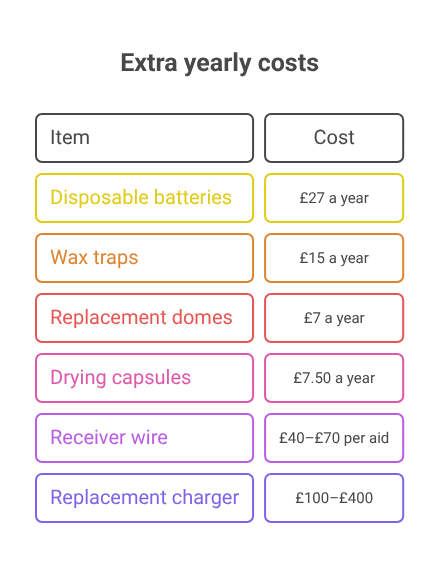
Even when hearing aids come with aftercare, some parts and accessories may eventually need replacing.
Which? identified several possible additional costs:
| Item | Indicative cost |
|---|---|
| Disposable batteries | £27 per year |
| Wax traps | £15 per year |
| Replacement domes | £7 per year |
| Drying capsules | £7.50 per year |
| Replacement receiver wire | £40–£70 per hearing aid |
| Replacement charging unit | £100–£400 |
Source: Which? hearing aid pricing guide. Accessory prices last checked December 2025. Actual costs depend on the device, frequency of replacement and what the provider includes.
Not everyone will need all these items. Rechargeable hearing aids do not need disposable batteries, for example, and different hearing aid styles require different accessories.
The replacement charger is worth asking about. If your hearing aids depend on a particular charging case, losing or damaging it could create a significant unexpected expense.
For someone with limited hand dexterity, maintenance also has an accessibility cost. Changing small components may be difficult, and professional help could mean additional appointments or travel.
How to Compare Hearing Aid Quotes Fairly
Rather than comparing headline prices alone, ask each provider for the same information in writing.
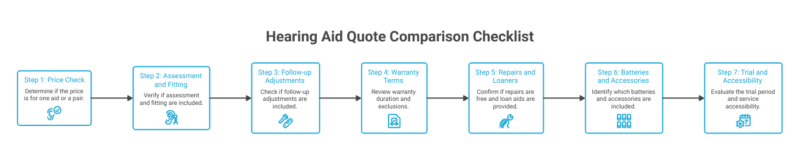
| What to compare | Questions to ask |
|---|---|
| Hearing aids | Is the price for one hearing aid or a pair? |
| Assessment and fitting | Are both included in the quoted price? |
| Follow-up appointments | Are adjustments included for the life of the devices? |
| Warranty | How many years are covered, and what is excluded? |
| Repairs | Are repairs free, and is a temporary replacement available? |
| Batteries and accessories | Which supplies are included, and for how long? |
| Charging equipment | What does a replacement charger cost? |
| Trial period | Can you return the aids, and are there cancellation charges? |
| Accessibility | Are remote appointments, accessible communication or home visits available? |
Which? found that equivalent high-end hearing aids could be priced at £2,800 by one retailer and £5,600 by another.
That makes it worth asking providers to explain what accounts for the difference, particularly when their quotes include similar technology.
The best-value hearing aid isn’t necessarily the cheapest. It is the one that meets your hearing and accessibility needs, with support you can rely on at a price you can afford.
Seven Questions to Ask Before Buying Hearing Aids
A little preparation can prevent unexpected costs later. These seven questions are worth asking before paying for private hearing aids.
- What is the total price, including follow-up appointments? Ask for the full cost of the hearing aid, fitting and any ongoing services. If two hearing aids are recommended, confirm whether the quote covers one or both.
- Is this hearing aid suitable for my type of hearing loss? Ask how the device will meet your particular hearing needs and which listening situations it is designed to support.
- Who fits and adjusts the hearing aid? Find out whether you will have access to an audiologist, remote adjustments or self-fitting software.
- Who repairs the hearing aid, and what does it cost? Check whether repairs are included, where the device must be sent and whether a temporary replacement is available.
- Will replacement parts remain available? Ask about chargers, batteries, ear fittings and other components you may need over time.
- What does the warranty cover? Check how long it lasts, who provides it and whether accidental damage is excluded.
- What are the trial and return terms, and is the service accessible? Ask whether you can try the hearing aids in everyday situations, what happens if they are unsuitable, and whether appointments and support are available in a format you can use.
Frequently Asked Questions About Hearing Aid Costs in the UK
Why are hearing aids so expensive in the UK?
Private hearing aid prices can include the technology inside the device, research and development, hearing assessments, professional fitting, warranties and ongoing aftercare. Retailers also charge different amounts for similar technology, so it is worth comparing what each price includes.
How much does a pair of hearing aids cost in the UK?
According to a May 2026 Which? investigation, customers paid around £2,850 on average for a pair of private hearing aids. Average prices varied between retailers, from £2,143 to £3,720. These figures reflect different products and service packages rather than identical devices.
Can you get hearing aids free on the NHS?
Yes. People assessed as needing hearing aids can receive them through the NHS without paying for the devices. Routine repairs, batteries and aftercare are generally free. Charges may apply if hearing aids are lost or damaged and need replacing.
Are cheaper hearing aids as good as expensive ones?
A cheaper hearing aid may meet someone’s hearing needs without the features found in a more expensive model. Suitability depends on the person’s hearing, everyday listening situations, comfort and access to adjustments and repairs. A higher price does not automatically mean better results.
How long do hearing aids last?
Hearing aids are generally intended to work for several years. Their useful life depends on the device, maintenance, repair options and whether they continue to meet the person’s hearing needs. Ask about warranties and replacement parts before buying.
Are hearing aid repairs included in the price?
Some private hearing aid packages include repairs and maintenance, while others charge separately. Warranty conditions vary between providers. Check whether repairs, replacement parts and temporary hearing aids are covered before agreeing to buy.
Why do hearing aid prices vary between retailers?
Retailers may sell different models or include different levels of fitting, follow-up appointments, repairs and support. Even comparable hearing aids can have substantially different prices. Request an itemised quote so you can compare the devices and services separately.
A hearing aid should be judged by how well it meets someone’s needs over time, not simply by its price or the number of features advertised.
For UK buyers, that means looking at the device, the support behind it and the cost of keeping it working. Free NHS provision should be part of that comparison, particularly when private prices are difficult to afford.
Good access to hearing support depends on clear pricing, reliable repairs and services that respect different communication and accessibility needs.
