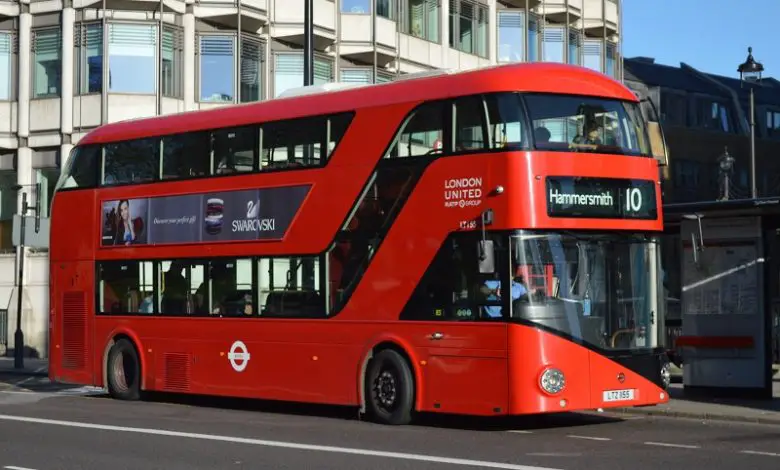
TfL Admitted It Never Assessed the Accessibility Impact of Removing London’s Most Wheelchair-Friendly Bus
"If I Can't Get on the Bus, I'm Getting Under It" - Are Wheelchair Users Still Being Left Behind by London's Transport Network?

“If I can’t get on the bus, I’m getting under it.” These words were coined by a London disability rights activist in the 1980s, at a time when wheelchair users were routinely excluded from public transport and had to fight simply to board a bus.
The New Routemaster was not perfect, but for many wheelchair users its three-door layout offered something increasingly rare on public transport: space, predictable boarding, and a practical way to reach the wheelchair area without battling through crowds.
So why is Transport for London removing these buses without carrying out an Equality Impact Assessment, without consulting its own disability advisory panel, and while evidence already exists that the fleet could potentially be converted to electric?
That question sits at the centre of growing concern from disabled passengers, accessibility campaigners, and transport observers. TfL says the replacement buses still meet accessibility standards. But accessibility is not just about whether a ramp exists. Door layouts, passenger flow, congestion, and how easily wheelchair users can actually move through a vehicle all shape whether public transport feels usable or exclusionary in everyday life.
The concern is not nostalgia for a particular bus design. It is whether disabled people are once again being treated as an afterthought in major transport decisions that directly affect their independence.
| Key Insight | Why It Matters |
| The NRM’s three-door layout gives wheelchair users dedicated middle-door access – two-door replacements cannot replicate this | Passenger flow directly affects whether wheelchair users can reach the accessible space without congestion |
| TfL confirmed via FOI that it holds no Equality Impact Assessment for NRM withdrawals – and justified this by deciding the outcome before assessing it | Under the Public Sector Equality Duty, disabled passengers’ needs must be assessed before major transport changes, not assumed away after the fact |
| TfL’s own Independent Disability Advisory Group was never consulted | The panel of disability experts TfL employs to advise on exactly these decisions was sidelined entirely |
| A working electric NRM was already trialled on London streets with TfL’s involvement – then TfL told the public conversion was “not possible” | TfL’s own statements to the public cannot be reconciled with its own actions |
| Two companies have live commercial capability to retrofit NRMs to electric | The barrier to electrification is political will, not technical feasibility |
| Three-door electric double-deckers are already in service in Berlin and Switzerland – built by TfL’s own supplier, Alexander Dennis | TfL is buying from the right manufacturer but specifying the wrong product |
| This compounds a 37% decline in accessible black cabs since 2011 | Disabled Londoners are losing accessible transport options on multiple fronts simultaneously |
How Accessible Are London Buses for Wheelchair Users?
Most London buses include a wheelchair space, a boarding ramp, and a priority seating area. But accessibility is not only about whether a ramp exists. It also depends on vehicle layout, clear aisles, door placement, and how easily a wheelchair user can reach and leave the accessible space once inside the bus. These design details shape whether a journey is straightforward or stressful – and they matter every single day for millions of disabled Londoners.
Background: London Buses and Wheelchair Access
In January 2020, Disability Horizons reported on a change specifically intended to make boarding easier on New Routemaster buses, with the middle doors reserved exclusively for wheelchair users and pushchair users under a front-door-only boarding policy. That earlier coverage is here: Boarding London buses made easier for wheelchair users.
That arrangement was only possible because the New Routemaster had a dedicated middle door. The conventional two-door replacements currently being introduced do not offer the same option. A feature specifically designed to improve accessibility for wheelchair users is being removed – without, as we will show, any formal assessment of the impact.
Why Bus Design Matters for Wheelchair Access
Accessibility on public transport is not simply about whether a ramp exists. The internal layout of the vehicle matters enormously. Wheelchair users rely on a clear, unobstructed path from the entrance to the wheelchair space. When all passengers board through a single door, that route can become crowded very quickly, making it significantly harder for a wheelchair user to board, navigate to the priority area, or exit the bus without delay or difficulty.
The New Routemaster’s three-door, two-staircase layout spreads passengers more evenly across the vehicle. That can make it easier for wheelchair users – and neurodivergent passengers who benefit from predictable, less crowded environments – to travel with greater confidence. Some passengers have also cited the vehicle’s colour contrast, calming lighting, and curved bodywork as features that make their journeys feel more manageable. Academic research consistently supports the finding that multiple boarding doors reduce dwell times at stops and improve overall passenger flow – benefits that translate directly into better accessibility outcomes. See the NACTO Better Buses Boarding guide and Journal of Public Transportation research on multi-door boarding for further reading.
“It Will Disproportionately Impact Me” – A Wheelchair User’s Experience
Sam, a wheelchair user who asked to be identified by first name only, told Disability Horizons how the New Routemaster’s layout makes a practical difference to her daily journeys.
“I find the New Routemaster buses beneficial because I can board by the middle doors to enter and exit, while able-bodied passengers use the front doors to board and are able to exit by using the second staircase and the third door at the rear. With the New Routemasters, wheelchair users are able to exit by the third door at the rear.”
Sam says she specifically dislikes two-door and single-door buses. “It is hard for me to wheel into the bus, and it causes delays as able-bodied passengers have to wait for the wheelchair ramp to deploy.”
Her experience illustrates precisely what FOI data and legal arguments cannot capture in numbers: the daily friction, the dependence on other passengers’ patience, and the quiet loss of independence that comes from a design change that was never formally assessed for its impact on disabled people.
The Political Background
The withdrawal of the New Routemaster is not a recent or sudden decision. In February 2016, then mayoral candidate Sadiq Khan pledged to freeze NRM purchases and said he would want London to be “buying electric hydrogen or truly hybrid buses” by the end of 2020 as part of his air quality platform. That means TfL has had nearly a decade to plan this transition – and, crucially, to assess its accessibility implications. As the evidence below shows, that assessment was never carried out.
Mayor Khan appeared to leave the door open on retrofitting as recently as May 2024, telling ITV London News that “some [New Routemasters] may need to be retrofitted.” That statement sits in direct contradiction with what his own organisation has since told the public in formal consultation documents – and with the reality of what TfL has been doing behind the scenes.
The Mayor’s Own Strategy Promised Better Bus Accessibility – Not Less
While the political decision to phase out the New Routemaster dates to 2016, the Mayor’s Transport Strategy 2018 – the definitive document governing transport policy in London – contains a direct commitment that makes the current situation even harder to justify.
The strategy explicitly acknowledges that “on-board crowding, competition for the designated wheelchair space and the internal layout of the vehicle can negatively impact the experience of using buses” and states there is “a real need to further improve bus accessibility through future bus design.”
Under Proposal 54, the Mayor committed to improving bus accessibility by:
- “Reviewing existing bus design, including opportunities for increasing wheelchair space and internal layout to ease movement and improve safety”
- “Ensuring that new buses provide better accessibility for all users, including more on-board space for wheelchair users, improved boarding ramps, induction loops and consistent signage”
The New Routemaster’s three-door, two-staircase layout directly addressed the problems the Mayor’s own strategy identified – allowing wheelchair users to board and exit via the middle door while able-bodied passengers use the front door to board and the rear staircase and third door to exit, preventing the competition for space and aisle congestion the strategy flagged as a problem.
Replacing the NRM with a conventional two-door bus – without any Equality Impact Assessment and without consulting IDAG – does not fulfil Proposal 54. It reverses it. The Mayor’s Transport Strategy is still the operative document governing London transport. TfL should be asked publicly how the NRM withdrawal programme is consistent with its own commitments under that strategy.
“It Is Not Possible” – But TfL Was Already Trialling an Electric NRM on London Streets
The most significant finding to emerge from research into TfL’s own documents is a series of contradictions between official statements and documented actions.
In a December 2025 FOI response (FOI-3063-2526), TfL confirmed: “We are aware of the offering from Wrightbus to repower vehicles. No decisions to potentially repower New Routemasters have been made at this point, there is a lot to consider besides the feasibility.” Note the phrasing: TfL is not saying repowering is technically impossible. It is saying there is “a lot to consider besides the feasibility” – this is a policy and political decision, not a technical barrier.
Yet in a February 2026 public consultation report on Oxford Street transport changes, TfL told the public: “It is not possible to convert the New Routemaster bus to electric operation however.”
When Disability Horizons contacted TfL about this contradiction, Senior Press Officer Danielle Eddington acknowledged the error: “The report should have stated that it is not necessarily practical to convert New Routemaster buses to electric operation, rather than not possible, and we apologise for this oversight.”
But the picture is considerably more serious than a wording oversight. Norwich-based electrification specialist Equipmake has already built a fully electric New Routemaster, repowering its hybrid drivetrain with its Zero Emission Drivetrain (ZED) system, featuring a 400kWh battery and a range of 150 miles – sufficient for a full day’s London service. The conversion was part-funded by the UK government’s Advanced Propulsion Centre. Each conversion costs less than half the price of a new electric bus, and Equipmake can complete up to five repowers per week at its Norfolk facility.
Critically, pre-service trials of this vehicle have already taken place in London, operated by Metroline at Holloway depot. Equipmake’s own press release explicitly stated the trial would “deliver valuable test data as Transport for London continues to evaluate a range of clean technologies, including state-of-the-art repower systems such as Equipmake’s ZED.” TfL was not merely aware of a commercial offer – it was an active participant in evaluating a working electric NRM on London’s own streets.
In addition, Wrightbus – the Belfast manufacturer that originally built the NRM bodywork – has a separate live commercial offer to repower the vehicles, referenced in FOI-3063-2526. There are now two companies with demonstrated or commercial retrofit capability ready to proceed.
Against this backdrop, TfL’s public statement that conversion was “not possible” – even after correction to “not necessarily practical” – is extremely difficult to justify. A Freedom of Information request has also been submitted to TfL seeking a copy of any internal report on NRM retrofitting. The response will be published when received.
Why the Withdrawal Raises Serious Legal Questions
TfL is phasing out New Routemasters as routes are re-tendered. Under Section 149 of the Equality Act 2010, public bodies are required to have due regard to the impact of their decisions on disabled people before those decisions are made. Two separate Freedom of Information requests tested whether TfL met that duty:
- FOI-0710-2425 (answered 2024): Asked whether TfL held an Equality Impact Assessment for the NRM withdrawal from route SL3. TfL’s response: “We do not hold the information you have requested.”
- FOI-3068-2526 (answered December 2025): Asked whether TfL held any EIA, accessibility reports, or IDAG papers relating to the NRM withdrawal from routes 8 and 16. TfL’s response: “I can confirm that we do not hold the information you require in respect to either question.”
When Disability Horizons pressed TfL directly on whether any EQIA had been carried out across the wider NRM withdrawal programme, TfL confirmed: “An EQIA has not been carried out. It’s considered that an EQIA wouldn’t be required because the new buses being introduced to the fleet also have the necessary accessibility features, such as the low floor with wheelchair spaces and ramps, while also incorporating features, such as lower vibrations for a quieter, smoother ride along with improved flooring, seating, lighting and customer information displays, that will also support those with accessibility needs.”
This reasoning fundamentally misunderstands the purpose of an Equality Impact Assessment. The Public Sector Equality Duty requires public bodies to assess the impact of decisions on disabled people before those decisions are made – not to decide in advance that no impact exists and therefore no assessment is needed. TfL has concluded that an EQIA is unnecessary on the basis that the new buses are accessible, without conducting the structured assessment process that would determine whether that conclusion is correct. That is a circular argument that defeats the entire purpose of the legislation.
Critically, TfL’s justification does not address the specific accessibility feature at the heart of this issue: the three-door layout that allowed wheelchair users dedicated middle-door access. Larger wheelchair bays and smoother flooring do not help a wheelchair user who cannot reach the priority space because a single-door aisle is congested. Disability Rights UK, Transport for All, and the Equality and Human Rights Commission may wish to examine whether TfL has met its legal obligations.
Where Was TfL’s Independent Disability Advisory Group?
TfL operates an Independent Disability Advisory Group (IDAG), a panel of disabled people and accessibility experts whose explicit purpose is to advise TfL on how decisions affect disabled passengers. FOI-3068-2526 confirmed that TfL holds no papers, minutes, reports, or correspondence showing IDAG involvement in the NRM withdrawal at any point.
TfL’s own justification for not carrying out an EQIA — that the new buses have accessibility features — is precisely the kind of assumption that IDAG exists to scrutinise and challenge. Deciding internally that disabled passengers will not be disadvantaged, without involving the disabled experts appointed to advise on exactly that question, undermines the entire purpose of having an advisory group.
What Passengers Are Already Reporting
When route SL3 was re-tendered, and new two-door electric buses replaced NRMs, TfL recorded 11 formal complaints specifically about the vehicle change (FOI-0710-2425). Formal complaints represent only a fraction of actual dissatisfaction – most passengers do not complain in writing – and this figure covers a single route.
Research by transport blogger CLondoner92 into TfL’s own 2024 and 2025 consultation reports found that across dozens of unrelated consultations, hundreds of coordinated responses specifically called for TfL to retain and electrify the NRM. In one consultation alone, 341 comments raised the vehicle type as an issue. TfL classified these responses as “out of scope.” You can read CLondoner92’s detailed analysis here: Transport for London’s 2025 consultation reports and Does London need a new bespoke bus?
It is also worth noting that TfL confirmed NRMs displaced from Route 8 will be redeployed to other routes rather than scrapped immediately. However, the Route 16 NRMs – among the oldest in the fleet – face an uncertain future, with TfL stating only that “a decision on their future will be made in due course.”
What the Rest of the World Is Already Doing – Including With London’s Own Bus Supplier
Three-door, two-staircase double-deck buses are already in regular service across Europe and Asia – and in several cases, they are manufactured by Alexander Dennis, the same British company already supplying TfL’s replacement electric fleet:
- Berlin, Germany: BVG operates 200 Alexander Dennis Enviro500 buses, each with three doors and two staircases, carrying up to 112 passengers, delivered from ADL’s Scarborough factory
- Switzerland: PostAuto operates 19 ADL Enviro500 three-door, two-staircase double-deckers in regular passenger service
- Singapore: The LTA is deploying 660 new electric buses from end-2026, including three-door, two-staircase double-deckers with two wheelchair spaces as standard
Beyond double-deckers, three-door single-deck buses are the established norm across continental Europe – standard in Paris, Munich, Vienna, Rome, Milan, Warsaw, Prague, Budapest, Amsterdam, and dozens of other major cities, as well as in Taipei and across urban China. This is not an experimental approach. It is the global standard for high-capacity urban bus operation.
TfL is currently replacing NRMs with Alexander Dennis Enviro400EV buses – two-door, single-staircase vehicles. ADL’s own product range already includes proven, in-service, three-door alternatives operating in major European cities. TfL is buying from the right manufacturer but specifying the wrong product. TfL’s own New Bus Vehicle Specification v2.6 explicitly permits three-door buses “when requested.” The barrier is not technical or commercial. It is a matter of what TfL chooses to ask for.
Buses Are Not the Only Accessibility Problem in London
The NRM withdrawal does not exist in isolation. London is simultaneously experiencing a significant decline in wheelchair-accessible black cabs – down around 37% since 2011, leaving roughly 1.7 accessible taxis per 1,000 Londoners. Private hire vehicles have grown by 57% over the same period, but fewer than 0.4% of them are wheelchair accessible. You can read more about this here: The decline in accessible black cabs.
Disabled Londoners take roughly twice as many taxi journeys per year as non-disabled people. When accessible buses become harder to navigate, and accessible taxis become harder to find, the impact on independent travel is not additive – it is compounding. For disabled entrepreneurs, workers, and visitors, London’s reputation as a world-class accessible city is at stake.
What Should Happen Next
- TfL should publish the results of the Equipmake/Metroline trial conducted at Holloway depot, including its assessment of the ZED system’s suitability for fleet-wide adoption, and explain what conclusions were drawn
- TfL should commission a full Equality Impact Assessment covering all further NRM withdrawals, specifically examining the impact on wheelchair users, disabled, and neurodivergent passengers – the post-hoc justification already given is not a substitute
- IDAG should be formally asked to review the accessibility impact of the fleet replacement programme and publish its findings
- Future electric bus procurement should specify three-door, two-staircase layouts on high-frequency and accessible routes, consistent with TfL’s own vehicle specification and the practice of TfL’s own supplier in Berlin and Switzerland
- TfL should engage transparently with both the Equipmake and Wrightbus repowering offers and publish a costed assessment rather than allowing the fleet to be withdrawn by default
- The case for three-door buses should be considered nationally, as Sam’s experience highlights, the same single-door boarding barriers exist in Greater Manchester and other English cities. The Department for Transport should consider national accessibility standards for bus door configurations on high-frequency urban routes
- TfL should explain publicly how the NRM withdrawal is consistent with Proposal 54 of the Mayor’s Transport Strategy 2018, which committed to reviewing bus internal layout to ease movement for wheelchair users and ensuring new buses provide better accessibility, not equivalent accessibility
The disability rights activists of the 1980s fought on the streets of London for the right simply to board a bus. That fight should not still be necessary in 2026. The transition to electric buses is a rare opportunity to build a fleet that is cleaner and more accessible. With the right political will – and the right questions asked before contracts are signed – London could lead the world. Right now, it is choosing not to.
Are you a wheelchair user or disabled passenger affected by changes to your bus route? Have you noticed a difference since the New Routemaster was replaced? Share your experiences by contacting us at Disability Horizons. If you believe TfL has failed in its duties under the Equality Act, you can contact Transport for All or the Equality and Human Rights Commission for guidance.
FAQs
Why does the New Routemaster matter for wheelchair users?
The New Routemaster has three doors, including middle-door access that can make boarding and leaving easier for wheelchair users when passenger flow is busy.
Has TfL carried out an Equality Impact Assessment?
According to the article, TfL confirmed that an Equality Impact Assessment has not been carried out for the wider New Routemaster withdrawal programme.
Can New Routemaster buses be converted to electric?
The article states that an electric New Routemaster has already been built and trialled in London, and that more than one company has commercial conversion capability.
Why is this an accessibility issue?
Bus access is affected by door layout, aisle space, crowding, boarding flow, ramps, and whether wheelchair users can reach the accessible space without obstruction.
What should TfL do next?
The article argues that TfL should publish trial results, carry out a full accessibility assessment, consult disabled passengers and IDAG, and consider three-door electric buses for suitable routes.
