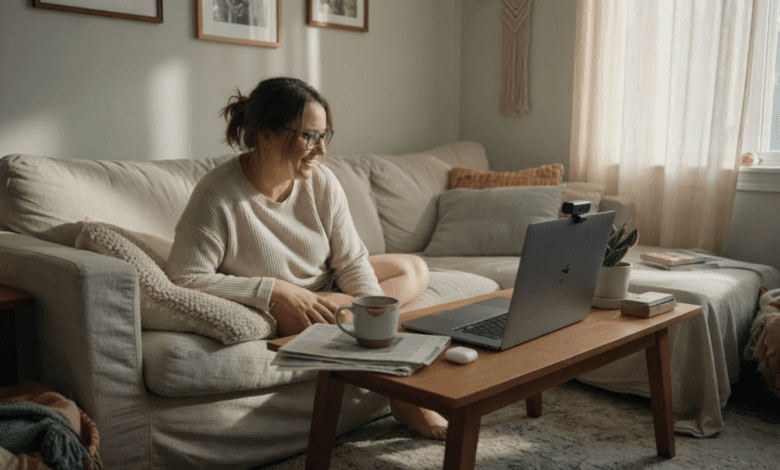
How Telehealth Can Make Healthcare More Accessible for Disabled Australians — When It Works Well

If you’re disabled, you probably already know that accessing healthcare involves a lot more than just the appointment itself.
There’s the transport to organise, sometimes days in advance. The parking that may or may not be accessible. The waiting room that’s too loud, too bright, or too crowded. The fatigue that builds before you’ve even seen the doctor. And if you rely on a carer or support worker, there’s the added layer of coordinating their time around yours.
For many disabled people, carers, and families, these barriers can make healthcare genuinely hard to access — not because of the condition itself, but because of how healthcare is still largely designed to be delivered.
Telehealth doesn’t solve all of that. But for a growing number of people, it has quietly removed enough of those barriers to make a real difference.
What telehealth actually changes
The shift sounds simple: instead of travelling to a clinic, you speak with a doctor, psychologist, or allied health provider from home by phone or video call. But for many disabled Australians, that shift removes a surprising amount of strain.
It means not having to calculate whether you’ll have enough energy left after travel to actually communicate clearly with a clinician. It means being in a familiar environment where you’re more comfortable, rather than a fluorescent-lit waiting room surrounded by strangers. It means support workers and carers can be involved without the logistics of fitting everyone into a consulting room, or a family member interstate can dial in and actually be part of the conversation.
For people in regional or remote areas, it can also mean accessing healthcare that would otherwise require hours of travel — or simply not happen at all.
The accessibility benefits aren’t only physical either. Many people find they communicate more openly from home, particularly around mental health or sensitive issues. The removal of travel, waiting-room anxiety, and the performance of getting ready and going somewhere can make it easier to actually say what you came to say.
When telehealth works well
Telehealth is well-suited to a wide range of everyday healthcare needs — far more than many people initially expect.
Repeat prescriptions, medication reviews, referrals, and follow-up appointments are all straightforward by phone or video. So are discussions about test results, ongoing management of chronic conditions, and general health advice for milder illnesses like skin conditions, UTIs, or colds.
Mental health support has been one of telehealth’s most significant success stories. Many people find it much easier to discuss sensitive issues from home — and when the barrier of travel and waiting rooms is removed, people who might have delayed or avoided seeking support altogether are more likely to reach out.
For people managing ongoing or complex health conditions, the ability to have regular check-ins without the physical and logistical cost of in-person visits can genuinely change how sustainable healthcare feels over time.
When you still need to go in person
It’s worth being honest here: telehealth isn’t the right fit for everything, and not every provider gets this balance right.
Any situation involving physical examination, urgent assessment, or hands-on treatment still requires in-person care. Severe chest pain, breathing difficulties, major injuries, heavy bleeding, sudden neurological changes — these should always be assessed face to face.
Some conditions that seem routine can turn out to need physical review, and a good telehealth doctor will tell you clearly when that’s the case. That’s not a limitation of telehealth — it’s just good clinical practice, and it’s one of the things worth looking for when choosing a provider.
It’s also worth acknowledging that telehealth doesn’t work equally well for everyone. Unreliable internet in regional areas, unfamiliarity with video platforms, communication needs that require in-person interaction, or cognitive or sensory factors that make remote consultations harder — these are real barriers that telehealth can create just as often as it removes. Access isn’t automatically improved just because something is online.
You can ask for adjustments — and you should
This is the part most guides leave out.
Telehealth is often more flexible than people realise, and many providers are willing to adapt how they deliver appointments if you ask. The problem is that most people don’t know to ask, and many providers don’t proactively offer.
If there are things that would make a telehealth appointment easier for you, it’s worth raising them before the appointment starts. Longer appointment times are often available if you mention you may need more time. You can usually choose between phone and video — and if one is significantly harder for you, that’s a legitimate preference to state. If you’d like written follow-up notes rather than just a verbal summary, many providers can arrange that.
Interpreter services are available through most Australian telehealth providers, including AUSLAN and other languages. If you want a carer, support worker, or family member present, you don’t need to justify that — you can simply say they’ll be joining.
Other adjustments that are worth knowing you can request: clearer or more direct communication, a slower pace, reduced background noise, camera-off consultations if video feels overwhelming, or extra processing time during the conversation. None of these are unusual requests, and a provider worth seeing won’t make you feel like they are.
The healthcare system isn’t always designed to offer these things upfront. But many clinicians genuinely want to support you well — they just need to know what that looks like for you.
How to prepare for a smoother appointment
A bit of preparation can take a lot of the stress out of telehealth appointments, particularly if fatigue, brain fog, or anxiety can affect how you communicate in the moment.
Before your appointment:
- Test your internet, camera, and microphone if you’re using video
- Write down your symptoms, questions, or concerns in advance so you don’t have to hold them in your head
- Have your Medicare card and any relevant medications nearby
- Keep recent test results or readings accessible if they’re relevant
- Find a quiet, comfortable space where you won’t be interrupted
- If you’d like someone with you, arrange that ahead of time
If you know you often lose track of what was said or find it hard to absorb information under pressure, having a support person present can make a real difference — and it’s entirely appropriate to ask for that.
What to look for in a provider
Not all telehealth services operate to the same standard, and it’s worth taking a few minutes to check before booking.
A reputable Australian telehealth provider should use AHPRA-registered clinicians, offer real-time phone or video consultations (not just chat-based messaging), follow Australian privacy laws, use secure encrypted systems, and be transparent about fees and Medicare eligibility.
Importantly, a good provider should also tell you when telehealth isn’t appropriate for your situation and recommend in-person care when that’s what you actually need. Be wary of services that appear to offer prescriptions or certificates with minimal genuine medical assessment — if it seems too quick and frictionless to be real healthcare, it probably isn’t.
Good telehealth should feel like proper healthcare delivered differently — not a shortcut around it.
A step forward, not a complete fix
Telehealth won’t replace face-to-face medicine, and it shouldn’t. But for many disabled Australians, it has meaningfully improved access to healthcare in ways that go beyond convenience.
The most important thing isn’t the technology. It’s that more people can now access healthcare safely and comfortably, with fewer of the barriers that have historically made it harder for disabled people to get the care they need.
That’s worth making the most of — and worth pushing providers to do better at, for the people it still isn’t reaching.
Dr. Gurbakhshish “GB” Singh MBBS, FACRRM is an Australian telehealth GP with experience in emergency medicine, chronic disease management, and digital healthcare delivery. He works across several Australian general practices and consults with patients nationally through Medicly, an Australian telehealth platform offering GP consultations, e-scripts, medical certificates, and specialist referrals.
FAQ for telehealth access
How can telehealth help disabled Australians access healthcare?
Telehealth can reduce barriers such as travel, inaccessible parking, waiting-room stress, fatigue, and support coordination. It can also make it easier for carers, support workers, or family members to join appointments.
What types of appointments work well by telehealth?
Telehealth can work well for repeat prescriptions, medication reviews, referrals, follow-up appointments, test result discussions, mental health support, and some general health advice.
When is telehealth not suitable?
Telehealth is not suitable for emergencies, severe symptoms, major injuries, heavy bleeding, sudden neurological changes, or situations where a physical examination is needed.
Can disabled people ask for telehealth adjustments?
Yes. Disabled people can ask for longer appointments, phone instead of video, written follow-up notes, interpreter support, slower communication, camera-off appointments, or a support person to join.
