Travel & Holidays

Accessible Weekend Break in Newcastle upon Tyne: Travel Tips for Disabled People

Newcastle has a reputation for being rowdy on a Saturday night. It is famous for its nightlife around areas such as Bigg Market, but the city also has museums, riverside routes, restaurants and cultural venues that can work well for an accessible weekend break.

Accessibility varies across Newcastle. Cobblestones and steep gradients remain in some older areas, while many modern developments along the Quayside have smoother surfaces and step-free routes. Planning ahead is particularly important for wheelchair users and people with limited mobility.

Accessibility information and venue facilities can change, so check directly with transport providers, attractions and accommodation before travelling.

Tips for Tackling the City Layout
Newcastle has a reputation for being rowdy on a Saturday night. It is famous for its nightlife around areas such as Bigg Market, but the city also has museums, riverside routes, restaurants and cultural venues that can work well for an accessible weekend break.Accessibility varies across Newcastle. Cobblestones and steep gradients remain in some older areas, while many modern developments along the Quayside have smoother surfaces and step-free routes. Planning ahead is particularly important for wheelchair users and people with limited mobility. Accessibility information and venue facilities can change, so check directly with transport providers, attractions and accommodation before travelling. Tips for Tackling the City Layout The city centre itself is relatively compact, which may help wheelchair and mobility scooter users conserve battery power or arm strength, but Newcastle is not entirely flat: Gradients: There are some steep hills to consider, particularly around Dean Street, Grey Street and the descent to the Quayside. Manual wheelchair users may prefer to plan an accessible taxi, bus or other step-free vehicle route for travelling uphill. Dropped kerbs: Dropped kerbs are common on the main retail routes and at many street crossings and junctions. However, there may still be gaps, poorly aligned kerbs or temporary obstacles such as bins, roadworks and market stalls. If you are driving into town, you can find dedicated Blue Badge parking bays across key city-centre locations, including: Eldon Garden Car Park Dean Street Multi-storey Quayside Car Park Parking charges, concessions and Blue Badge rules can vary between locations, so check the current conditions before travelling. Access guides for Newcastle emphasise that routes between the compact centre and the riverside can involve sustained slopes. Using Blue Badge bays close to the Quayside or planning journeys that start from the top or bottom of key hills can reduce pushing effort and make the day more manageable for wheelchair users and people with limited mobility. A wide view across the River Tyne in Newcastle shows The Glasshouse International Centre for Music on the left and the Tyne Bridge spanning the river in the distance. by Ryan Booth (@boothryan_) Accessible Things to Do Along Newcastle Quayside The Quayside used to be an industrial and coal-shipping area, but it is now a largely paved riverside stretch that lets visitors get close to the water. The paths are generally wide, making it easier for wheelchair users, mobility scooter users and pedestrians to pass comfortably. Some older sections may have uneven surfaces, and wind or rain can make the exposed riverside route more difficult. Conditions may also vary during events and busy periods. The Gateshead Millennium Bridge tilts to let boats pass underneath. When it is open for crossing, the pedestrian and cycle deck provides a level route across the river. From the Quayside, you can see the Tyne Bridge, Swing Bridge, High Level Bridge and the River Tyne. The flatter riverside section offers a more manageable sightseeing route than some of the steeper streets between the Quayside and the city centre. Local accessibility guides note that while the Quayside itself is largely level, several approaches from the city centre involve steep downhill or uphill sections. Disabled visitors may find it easier to use accessible taxis, buses or nearby parking for journeys between the Quayside and central areas, rather than relying solely on walking or pushing up the hills. Free Attractions, Discounts and Companion Tickets Several of Newcastle and Gateshead’s major attractions are free to enter: Baltic Centre for Contemporary Art: The Baltic offers free entry, step-free access and lifts between its public floors. The Level 5 Viewing Box can be reached by lift and offers views across the Tyne and NewcastleGateshead. Discovery Museum: The museum offers free entry, step-free access, lifts and accessible facilities. Space and circulation may vary between exhibitions. Great North Museum: Hancock: The museum offers free entry, step-free access and lifts to its public galleries. Visitors should check the museum’s current access information before travelling. Newcastle Castle presents more access barriers because of the age and design of the buildings. The Castle Keep contains historic staircases and is not accessible to wheelchair users. The Black Gate museum space has step-free access and accessible interpretation. Admission prices and concession rates should be checked directly before visiting. For ticketed entertainment, such as a show at the Theatre Royal or a concert at The Glasshouse International Centre for Music, many venues operate access schemes. These may include free or discounted companion tickets or personal assistant places for disabled visitors. Visitors may need to register for an access scheme or provide information about their requirements in advance. Policies differ between venues, so check the booking conditions before purchasing tickets. Accessible Public Transport, Lifts and Toilets Newcastle Central Station offers step-free routes to most platforms using lifts and ramps. However, some routes have steep gradients and lift coverage does not extend to every platform. The station also has tactile paving and accessible ticket facilities. Passengers who need assistance should arrange Passenger Assist in advance or speak to station staff on arrival. A Disabled Persons Railcard can reduce eligible rail fares by one-third for the cardholder and an accompanying adult. Check the current eligibility rules and conditions before applying. Once you are in the city, public transport options include: Tyne and Wear Metro: Major hubs such as Monument, Haymarket, Central Station and Gateshead provide step-free access and lifts. Some older or out-of-centre stations still have stairs, steep routes or non-level access, so check the individual station before travelling. Accessible taxis: Several local firms, including Blueline Taxis, LA Taxis and Budget Taxis, operate some wheelchair-accessible vehicles. Availability varies, so pre-book and clearly explain your access needs, wheelchair dimensions and whether you need to remain seated in your wheelchair. Knowing where accessible toilets are located can make a full day in the city easier to plan. Some toilets require a RADAR key. Standard accessible toilets: Accessible toilets are available at locations including Newcastle Central Station, Eldon Square, the Great North Museum and The Glasshouse. Changing Places facilities: These are available at several central venues, including Discovery Museum, Eldon Square, Newcastle City Library and Newcastle Civic Centre. Facilities are generally only available during each building’s opening hours. The Baltic and The Glasshouse also provide enhanced accessible toilet facilities, but visitors should check the current equipment and access arrangements directly with each venue before travelling. Accessible Accommodation in Newcastle for Wheelchair Users Accessible hotel rooms vary considerably. Some provide only basic adaptations, while others offer larger turning spaces, roll-in showers, adjustable beds or connecting rooms. Finding accommodation that meets specific mobility requirements is often easier when listings include detailed measurements, photographs and clear access information. Comparing short stay apartments Newcastle may help travellers find properties offering features such as step-free entrances, additional floor space, roll-in wet rooms and kitchen facilities. However, apartment accessibility also varies. Before booking, ask for measurements of doorways, lifts and turning spaces, and confirm whether the advertised step-free route covers the entrance, bedroom, bathroom and communal areas. Having a kitchen can reduce the need to eat every meal out, which may help travellers managing fatigue, sensory needs, dietary requirements or limited budgets. A separate living area can also provide more space to rest between activities. Accessible Restaurants in Newcastle Grey’s Quarter in Eldon Square contains a large selection of restaurants within a shopping centre that has step-free entrances, lifts and accessible toilets. Restaurant layouts still differ, particularly in relation to table spacing, fixed seating and room for larger wheelchairs or mobility equipment.  The Quayside and Grey Street also have a wide range of restaurants, but the steep surrounding streets and steps at some heritage properties require more planning.  Before booking a table, check independent access reviews on platforms such as AccessAble or Euan’s Guide. It can also help to contact the restaurant directly to ask about entrance steps, ramp gradients, accessible toilets and space around tables. Newcastle’s central nightlife areas can be busy, noisy and visually intense at peak times, which may be difficult for some autistic visitors or people with sensory sensitivities. Choosing earlier evening visits, quieter side streets or venues that describe calmer atmospheres and softer lighting can help reduce sensory overload while still enjoying the city’s restaurants and bars.
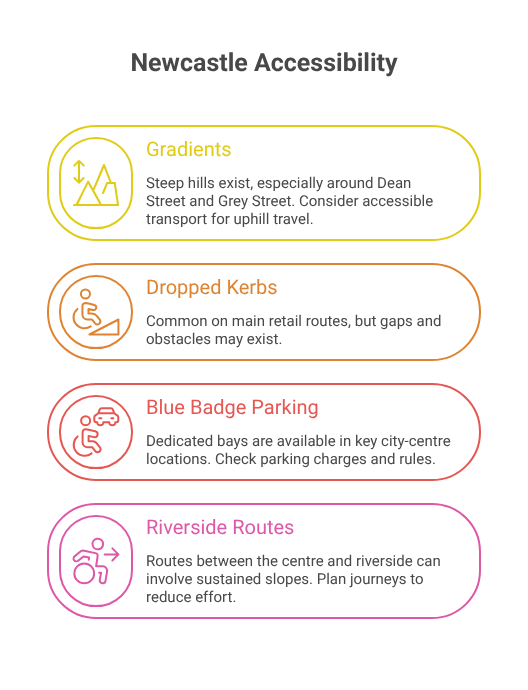
Infographic summarising key accessibility considerations for getting around Newcastle.

The city centre itself is relatively compact, which may help wheelchair and mobility scooter users conserve battery power or arm strength, but Newcastle is not entirely flat:

  • Gradients: There are some steep hills to consider, particularly around Dean Street, Grey Street and the descent to the Quayside. Manual wheelchair users may prefer to plan an accessible taxi, bus or other step-free vehicle route for travelling uphill.
  • Dropped kerbs: Dropped kerbs are common on the main retail routes and at many street crossings and junctions. However, there may still be gaps, poorly aligned kerbs or temporary obstacles such as bins, roadworks and market stalls.

If you are driving into town, you can find dedicated Blue Badge parking bays across key city-centre locations, including:

  • Eldon Garden Car Park
  • Dean Street Multi-storey
  • Quayside Car Park

Parking charges, concessions and Blue Badge rules can vary between locations, so check the current conditions before travelling.

Access guides for Newcastle emphasise that routes between the compact centre and the riverside can involve sustained slopes. Using Blue Badge bays close to the Quayside or planning journeys that start from the top or bottom of key hills can reduce pushing effort and make the day more manageable for wheelchair users and people with limited mobility.
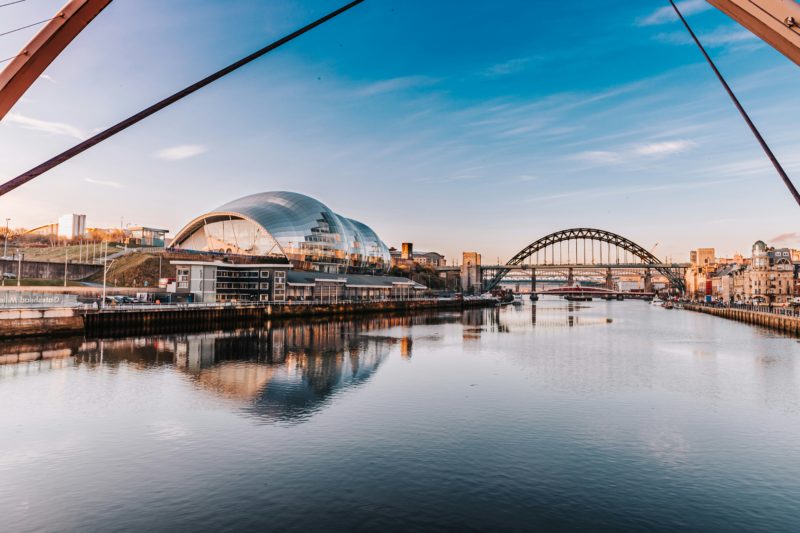
Panoramic view of the River Tyne with the Tyne Bridge and The Glasshouse reflected in calm water beneath a blue sky.
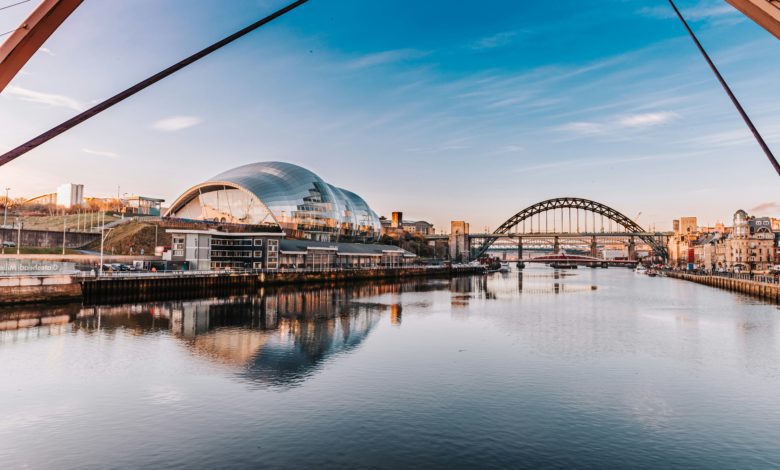
A wide view across the River Tyne in Newcastle shows The Glasshouse International Centre for Music on the left and the Tyne Bridge spanning the river in the distance. by Ryan Booth (@boothryan_)

Accessible Things to Do Along Newcastle Quayside

The Quayside used to be an industrial and coal-shipping area, but it is now a largely paved riverside stretch that lets visitors get close to the water. The paths are generally wide, making it easier for wheelchair users, mobility scooter users and pedestrians to pass comfortably.

Some older sections may have uneven surfaces, and wind or rain can make the exposed riverside route more difficult. Conditions may also vary during events and busy periods.

The Gateshead Millennium Bridge tilts to let boats pass underneath. When it is open for crossing, the pedestrian and cycle deck provides a level route across the river.

From the Quayside, you can see the Tyne Bridge, Swing Bridge, High Level Bridge and the River Tyne. The flatter riverside section offers a more manageable sightseeing route than some of the steeper streets between the Quayside and the city centre.

Local accessibility guides note that while the Quayside itself is largely level, several approaches from the city centre involve steep downhill or uphill sections. Disabled visitors may find it easier to use accessible taxis, buses or nearby parking for journeys between the Quayside and central areas, rather than relying solely on walking or pushing up the hills.

Free Attractions, Discounts and Companion Tickets

Several of Newcastle and Gateshead’s major attractions are free to enter:

  • Baltic Centre for Contemporary Art: The Baltic offers free entry, step-free access and lifts between its public floors. The Level 5 Viewing Box can be reached by lift and offers views across the Tyne and Newcastle and Gateshead.
  • Discovery Museum: The museum offers free entry, step-free access, lifts and accessible facilities. Space and circulation may vary between exhibitions.
  • Great North Museum: Hancock: The museum offers free entry, step-free access and lifts to its public galleries. Visitors should check the museum’s current access information before travelling.

Newcastle Castle presents more access barriers because of the age and design of the buildings. The Castle Keep contains historic staircases and is not accessible to wheelchair users. The Black Gate museum space has step-free access and accessible interpretation. Admission prices and concession rates should be checked directly before visiting.

For ticketed entertainment, such as a show at the Theatre Royal or a concert at The Glasshouse International Centre for Music, many venues operate access schemes. These may include free or discounted companion tickets or personal assistant places for disabled visitors.

Visitors may need to register for an access scheme or provide information about their requirements in advance. Policies differ between venues, so check the booking conditions before purchasing tickets.

Accessible Public Transport, Lifts and Toilets

Newcastle Central Station offers step-free routes to most platforms using lifts and ramps. However, some routes have steep gradients and lift coverage does not extend to every platform.

The station also has tactile paving and accessible ticket facilities. Passengers who need assistance should arrange Passenger Assist in advance or speak to station staff on arrival.

A Disabled Persons Railcard can reduce eligible rail fares by one-third for the cardholder and an accompanying adult. Check the current eligibility rules and conditions before applying.

Once you are in the city, public transport options include:

  • Tyne and Wear Metro: Major hubs such as Monument, Haymarket, Central Station and Gateshead provide step-free access and lifts. Some older or out-of-centre stations still have stairs, steep routes or non-level access, so check the individual station before travelling.
  • Accessible taxis: Several local firms, including Blueline Taxis, LA Taxis and Budget Taxis, operate some wheelchair-accessible vehicles. Availability varies, so pre-book and clearly explain your access needs, wheelchair dimensions and whether you need to remain seated in your wheelchair.

Knowing where accessible toilets are located can make a full day in the city easier to plan. Some toilets require a RADAR key.

  • Standard accessible toilets: Accessible toilets are available at locations including Newcastle Central Station, Eldon Square, the Great North Museum and The Glasshouse.
  • Changing Places facilities: These are available at several central venues, including Discovery Museum, Eldon Square, Newcastle City Library and Newcastle Civic Centre. Facilities are generally only available during each building’s opening hours.

The Baltic and The Glasshouse also provide enhanced accessible toilet facilities, but visitors should check the current equipment and access arrangements directly with each venue before travelling.

Accessible Accommodation in Newcastle for Wheelchair Users

Accessible hotel rooms vary considerably. Some provide only basic adaptations, while others offer larger turning spaces, roll-in showers, adjustable beds or connecting rooms.

Finding accommodation that meets specific mobility requirements is often easier when listings include detailed measurements, photographs and clear access information. Comparing short stay apartments Newcastle may help travellers find properties offering features such as step-free entrances, additional floor space, roll-in wet rooms and kitchen facilities.

However, apartment accessibility also varies. Before booking, ask for measurements of doorways, lifts and turning spaces, and confirm whether the advertised step-free route covers the entrance, bedroom, bathroom and communal areas.

Having a kitchen can reduce the need to eat every meal out, which may help travellers managing fatigue, sensory needs, dietary requirements or limited budgets. A separate living area can also provide more space to rest between activities.

Accessible Restaurants in Newcastle

Grey’s Quarter in Eldon Square contains a large selection of restaurants within a shopping centre that has step-free entrances, lifts and accessible toilets.

Restaurant layouts still differ, particularly in relation to table spacing, fixed seating and room for larger wheelchairs or mobility equipment.

The Quayside and Grey Street also have a wide range of restaurants, but the steep surrounding streets and steps at some heritage properties require more planning.

Before booking a table, check independent access reviews on platforms such as AccessAble or Euan’s Guide. It can also help to contact the restaurant directly to ask about entrance steps, ramp gradients, accessible toilets and space around tables.

Newcastle’s central nightlife areas can be busy, noisy and visually intense at peak times, which may be difficult for some autistic visitors or people with sensory sensitivities. Choosing earlier evening visits, quieter side streets or venues that describe calmer atmospheres and softer lighting can help reduce sensory overload while still enjoying the city’s restaurants and bars.

FAQS for Accessible Breaks in Newcastle

Is Newcastle good for wheelchair users?

Newcastle has many accessible attractions, step-free public buildings and riverside routes. Some parts of the city centre include steep hills and older streets, so planning accessible transport and routes in advance can make travelling easier.

Are there Changing Places toilets in Newcastle city centre?

Yes. Changing Places toilets are available at several locations, including Discovery Museum, Eldon Square, Newcastle City Library and Newcastle Civic Centre. Opening hours vary, so it is worth checking before visiting.

Is Newcastle Quayside wheelchair accessible?

Much of the Quayside has wide, paved paths that are suitable for wheelchair users and mobility scooter users. The riverside itself is relatively level, although some routes connecting it to the city centre involve steep gradients.

Does Newcastle have accessible public transport?

Yes. Newcastle Central Station provides step-free access to most platforms, while many Tyne and Wear Metro stations have lifts and step-free routes. Some older stations remain less accessible, so checking ahead is recommended.

Where can disabled visitors park in Newcastle?

Blue Badge parking is available at several city centre locations, including Eldon Garden Car Park, Dean Street Multi-storey and Quayside Car Park. Parking rules and charges vary by location.

Are companion tickets available at Newcastle attractions?

Many theatres, music venues and attractions offer companion or personal assistant tickets through their accessibility schemes. Requirements differ, so check each venue’s policy before booking.

Duncan Edwards

Duncan Edwards is editor of Disability Horizons, one of the UK's leading disability lifestyle publications. He brings to the role something no editorial brief can manufacture: a life lived close to disability in all its complexity. His wife Clare, an artist and designer, co-founded Trabasack after sustaining a spinal injury that made her a wheelchair user. Her experience reshaped how Duncan understands independence, adaptation, and what it means to design for real life. Their son Joe lives with Dravet syndrome, a rare and severe form of epilepsy — a condition that has given Duncan an unflinching awareness of how healthcare, support systems, and everyday products either serve disabled people or fall short of them. That awareness drives his editorial instincts. Disability Horizons exists to inform, represent, and advocate — and Duncan ensures it does so with honesty rather than sentiment. He's less interested in inspiration than in accuracy, and more concerned with what disabled people actually experience than with how the world prefers to imagine them. He doesn't edit from the outside looking in.
Back to top button